Electric Counterbalance Stacker | Is Ride-On Type Suitable for Warehouse
Many warehouse owners wonder Is Ride-On Counterbalance Stacker Worth Buying, especially for 1.5 to 2 ton models. This guide analyzes actual working conditions, structural advantages, applicable scenarios and cost performance, helping you make a reliable procurement decision.
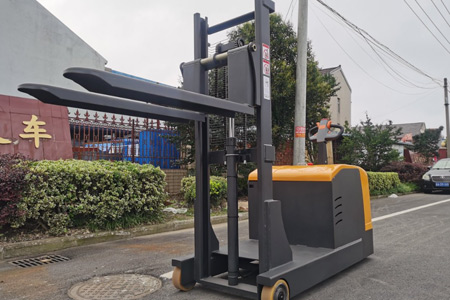
The biggest feature of the Electric Counterbalance Stacker is no front support legs and adopts counterweight design. It will not be restricted by pallets or cargo obstruction, unlike leg-type stackers that easily get stuck with non-standard pallets. The 1.5-2 ton capacity perfectly covers raw material and finished pallet transportation for most small and medium factories, making it a common and practical specification without budget waste or insufficient load capacity.
In terms of operation experience, the ride-on design is easy to learn with simple worker training. Travel and lifting run smoothly with a small turning radius, suitable for narrow aisles above 2.2 meters. Compact and flexible, it supports indoor short-distance handling as well as stacking and unloading for 3-5m low-level racks, doubling overall working efficiency.
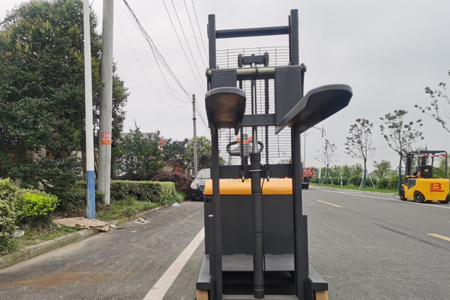
Equipped with lithium battery power, it delivers stable endurance and continuous operation for 6 to 8 hours after full charge, meeting all-day warehouse inbound and outbound turnover. Ideal for hardware, pipe materials and heavy finished goods stacking, it features reasonable counterweight design, anti-tilt performance and complete safety protection configuration.
From cost performance and practicality, the 1.5-2 ton Electric Counterbalance Stacker works perfectly for small and medium factories, e-commerce warehouses, sites with many non-standard pallets and narrow aisles. Without restriction on pallet types, general load capacity, labor-saving operation and stable lithium battery life, it reduces labor costs and adapts to multiple scenarios.
Contact us for quotation and customized warehouse handling solutions.
-
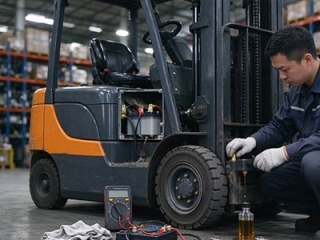 Reliability Of Newnewton Warehouse Forklifts For Heavy-Duty ShiftsWarehouse forklift reliability relies on industrial parts, reinforced frames and factory durability tests. Proper operation and maintenance reduce unexpected downtime.
Do you like ?0
Read more -
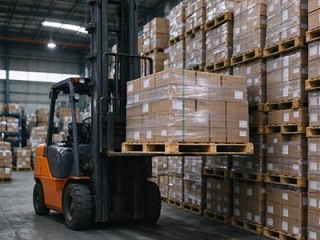 Forklift Configuration Strategy For Dense Warehousing, Warehouse ForkliftDense warehousing needs matched forklifts besides racks. Reach and trilateral stackers fit different layouts, coordinate aisle, load curve and floor for smooth handling.
Do you like ?0
Read more -
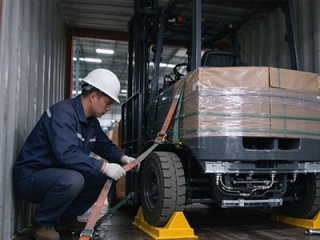 Full Container Supply For Export Forklifts, Forklift ManufacturerBulk forklift orders for overseas can ship by FCL or LCL. Newnewton FCL offers stable freight, safer packing and mixed models for large purchases.
Do you like ?0
Read more -
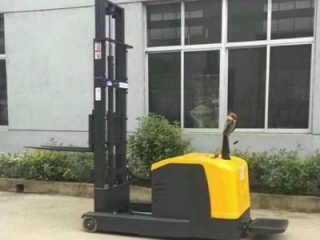 Stand-on Reach Stacker For Narrow Aisle Stacking, Mast Reach StructureStand-on reach stackers feature sliding masts that stay outside racks. They boost storage density in narrow aisles and require flat floors and standard pallets.
Do you like ?0
Read more -
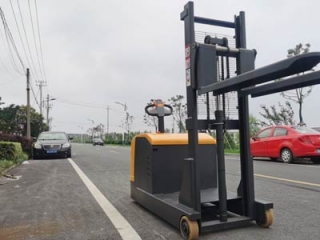 Stand-on Counterbalance Stacker For Various Pallets, Why No Leg RestrictionCounterbalance stackers have no front outriggers, using rear counterweight to avoid pallet interference. They fit various odd pallets yet need wider warehouse aisles.
Do you like ?0
Read more -
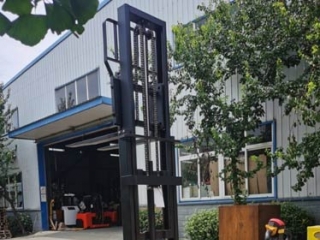 Custom Walk-Behind Counterbalance Stacker | Non-Standard ModificationsStandard walk-behind counterbalance stackers struggle with non-standard pallets and tight aisles. Customize load, lift, forks and structure, share working conditions for safe design.
Do you like ?0
Read more