
Price List & Cost Advantages of Lithium Battery Self-lifting Stacker
Nowadays, warehouse operators pursue both higher efficiency and lower operating costs. Purchasing a High Cost-performance Self-lifting Stacker is the perfect starting point to meet this business goal. Let’s break down the pricing of the Full Electric Self-lifting Stacker in 2026. Exchange rate reference: 1 CNY ≈ 0.148 USD
1-ton Lithium Battery Model: $1,184 – $1,480
Price varies based on three optional lifting heights: 1.3m, 1.5m, 1.6m. This stacker features thickened mast and double sealed hydraulic cylinders for long service life. Equipped with industrial lithium iron phosphate batteries, it only takes 2 hours for full fast charging to support all-day continuous operation.
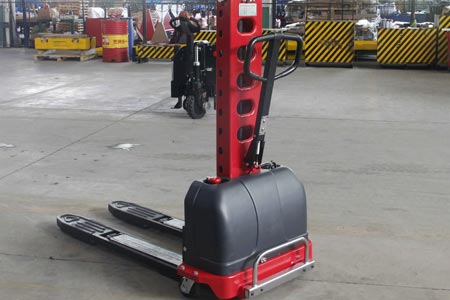
1.5-ton Load Model Factory Price: $1,628 – $2,220
Higher load capacity adopts thicker reinforced frame and forged components. It comes with thickened hydraulic cylinders, strengthened chassis and increased ground clearance, ideal for heavy pallet loading onto trucks and bulk distribution. This version is also equipped with lithium batteries as standard.
If the lithium version exceeds your budget, lead-acid battery alternatives are available, priced $118.4 – $296 cheaper. However, lead-acid batteries have obvious drawbacks: shorter cycle life, longer charging hours and higher routine maintenance expenses, which should be taken into consideration.
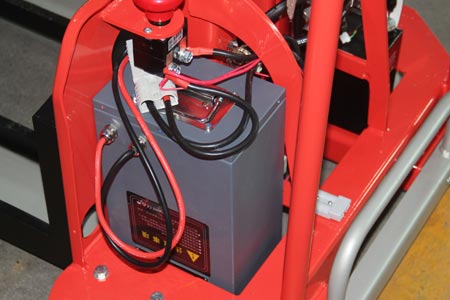
The High Cost-performance Self-lifting Stacker boasts outstanding material and performance advantages, perfectly matching truck-mounted delivery and narrow aisle stacking scenarios. It costs far less than standard forklifts while greatly boosting handling efficiency for all compact-space operations.
The 2026 new Lithium Battery Self-lifting Stacker comes standard with brushless motors, anti-drop pressure-maintaining cylinders and overload protection, cutting breakdowns including hydraulic leakage and motor wear by 70%. Though the initial purchase cost is slightly higher, its long-life maintenance-free lithium battery and fast charging ability slash labor, repair and battery replacement costs within a 3–5 year service cycle.
Therefore, the Lithium Battery Self-lifting Stacker delivers far better overall value. You can choose the suitable model based on your actual budget and working demands.
-
 Reliability Of Newnewton Warehouse Forklifts For Heavy-Duty ShiftsWarehouse forklift reliability relies on industrial parts, reinforced frames and factory durability tests. Proper operation and maintenance reduce unexpected downtime.
Do you like ?0
Read more -
 Forklift Configuration Strategy For Dense Warehousing, Warehouse ForkliftDense warehousing needs matched forklifts besides racks. Reach and trilateral stackers fit different layouts, coordinate aisle, load curve and floor for smooth handling.
Do you like ?0
Read more -
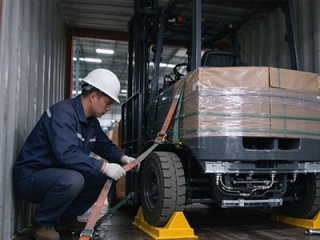 Full Container Supply For Export Forklifts, Forklift ManufacturerBulk forklift orders for overseas can ship by FCL or LCL. Newnewton FCL offers stable freight, safer packing and mixed models for large purchases.
Do you like ?0
Read more -
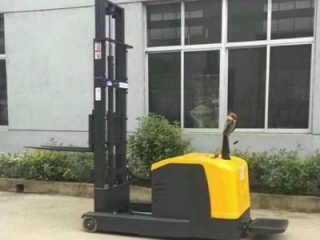 Stand-on Reach Stacker For Narrow Aisle Stacking, Mast Reach StructureStand-on reach stackers feature sliding masts that stay outside racks. They boost storage density in narrow aisles and require flat floors and standard pallets.
Do you like ?0
Read more -
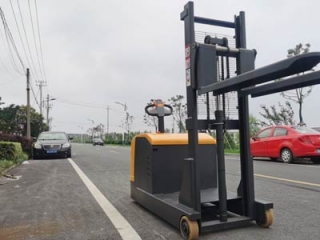 Stand-on Counterbalance Stacker For Various Pallets, Why No Leg RestrictionCounterbalance stackers have no front outriggers, using rear counterweight to avoid pallet interference. They fit various odd pallets yet need wider warehouse aisles.
Do you like ?0
Read more -
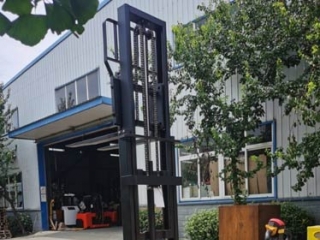 Custom Walk-Behind Counterbalance Stacker | Non-Standard ModificationsStandard walk-behind counterbalance stackers struggle with non-standard pallets and tight aisles. Customize load, lift, forks and structure, share working conditions for safe design.
Do you like ?0
Read more








