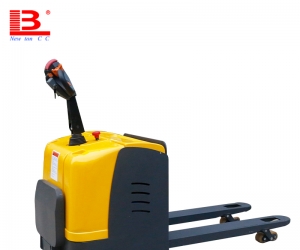
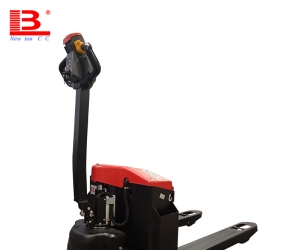
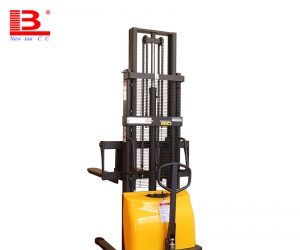
The power supply system of electric forklift is composed of battery, generator, regulator and working condition indicator. All components are coordinated and work together. As the second power supply of the electric forklift, the battery mainly supplies power to the starter, and acts as an auxiliary power supply when the generator does not generate power or the power supply is insufficient. It is a kind of chemical energy. It is a reusable energy storage device used for discharging and receiving charging, also known as secondary battery. What is the structure of the battery of an electric forklift? The electric forklift manufacturer will introduce it to you.
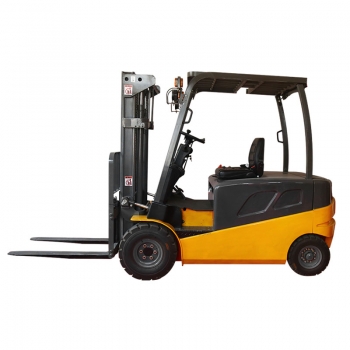
The battery of an electric forklift consists of a plate, a partition, an electrolyte, a shell, a pole and a connecting plate. The terminal voltage of each cell is 2V, and six identical cells are connected in series to obtain a battery with a nominal voltage of 2V. The electrode plate comprises a positive plate and a negative plate, and is composed of a grid frame and active substances coated on it. The active material on the positive grid frame is lead dioxide, which is brown; The active material on the negative grid frame is sponge lead, which is green gray. The positive plate is clamped between two negative plates, one less than the negative plate. There is also a partition between the positive and negative plates, which is used to avoid internal short circuit caused by the contact between the positive and negative plates. The clapboard is usually made of wood, microporous rubber, glass fiber, etc. Electric forklift manufacturer tell us that microcellular rubber and microcellular plastic are the most widely used.
The battery shell of the electric forklift is used to hold the electrolyte and the plate group. The shell is mainly made of hard rubber and engineering plastics, which are relatively acid resistant, heat resistant and vibration resistant. The connecting plate and the pole are used to connect the internal and external circuits of the battery. The shape of the battery pole is cylindrical or lug shaped, usually marked with "+" and "-", or the positive pole is painted with red paint. The connecting plate and pole of the rubber hard shell battery are exposed on the surface of the battery, while the connecting plate of the plastic shell battery is inside the battery, leaving only positive and negative poles. Finally, the electrolyte of the battery is made of pure sulfuric acid and pure water in a certain proportion. During use, the density of electrolyte varies from 1.01 to 1.28g/cm ³。 The electric forklift manufacturer told us that distilled water and ion exchange water are needed to prepare electrolyte, which can improve the performance and service life of the battery.

The above is the structure of the battery and their introduction. The battery is a very important part of the electric forklift, and understanding its structure will help buyers and drivers judge the quality of the electric forklift, maintain the electric forklift, and repair the electric forklift. If you still have any questions about the battery, you can consult the electric forklift manufacturer.
-
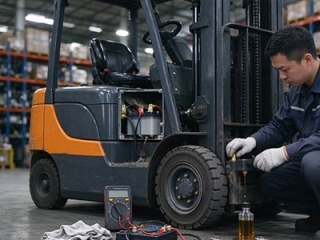 Reliability Of Newnewton Warehouse Forklifts For Heavy-Duty ShiftsWarehouse forklift reliability relies on industrial parts, reinforced frames and factory durability tests. Proper operation and maintenance reduce unexpected downtime.
Do you like ?0
Read more -
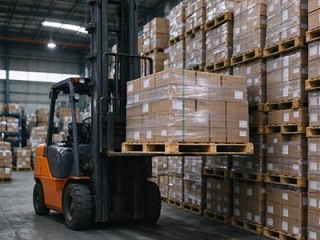 Forklift Configuration Strategy For Dense Warehousing, Warehouse ForkliftDense warehousing needs matched forklifts besides racks. Reach and trilateral stackers fit different layouts, coordinate aisle, load curve and floor for smooth handling.
Do you like ?0
Read more -
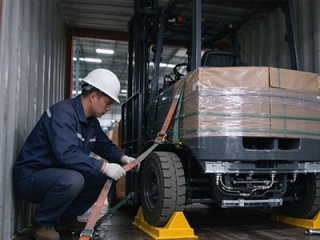 Full Container Supply For Export Forklifts, Forklift ManufacturerBulk forklift orders for overseas can ship by FCL or LCL. Newnewton FCL offers stable freight, safer packing and mixed models for large purchases.
Do you like ?0
Read more -
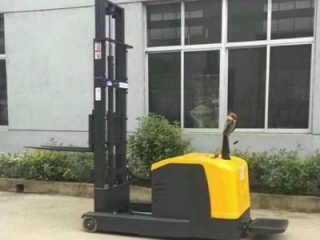 Stand-on Reach Stacker For Narrow Aisle Stacking, Mast Reach StructureStand-on reach stackers feature sliding masts that stay outside racks. They boost storage density in narrow aisles and require flat floors and standard pallets.
Do you like ?0
Read more -
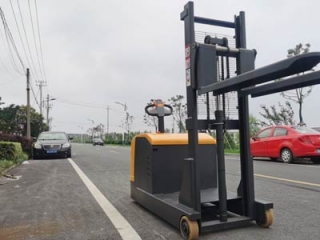 Stand-on Counterbalance Stacker For Various Pallets, Why No Leg RestrictionCounterbalance stackers have no front outriggers, using rear counterweight to avoid pallet interference. They fit various odd pallets yet need wider warehouse aisles.
Do you like ?0
Read more -
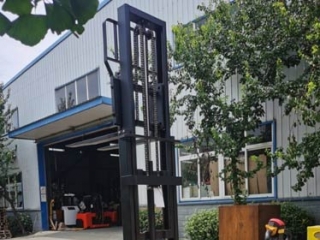 Custom Walk-Behind Counterbalance Stacker | Non-Standard ModificationsStandard walk-behind counterbalance stackers struggle with non-standard pallets and tight aisles. Customize load, lift, forks and structure, share working conditions for safe design.
Do you like ?0
Read more