
Is the generator of electric forklift DC or AC? Which is better?
The generator is a very important part of the electric forklift. It is the power source of the electric forklift. It is responsible for supplying power to the electrical equipment and charging the battery when the engine works normally. Many enterprises will do a lot of homework before purchasing forklifts. Careful enterprises will have questions. Internal combustion forklifts use alternators, so is the generator of electric forklift DC or AC? Which is better? Today, the electric forklift manufacturer will introduce the generator of electric forklift.
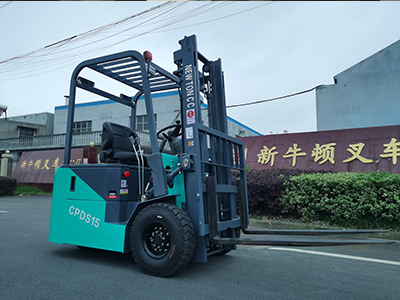
The generator of electric forklift has both DC and AC power, but AC power is the most commonly used at present, because it has no commutator, is simpler in structure, is also very solid, and is easier to achieve high speed, high voltage, large current, and large capacity. Therefore, it has many advantages over DC generators. Alternators are also divided into different types. According to the different structures of alternators, they can be divided into common type (JFxxx), integral type (JFZxxx), brushless type (JFWxxx) and pumped type (JFBxxx). According to different rectifier structures, it can be divided into six tube, eight tube, nine tube and eleven tube alternators. The electric forklift manufacturer told us that according to different grounding forms of magnetic field winding, it can be divided into internal grounding type and external grounding type.
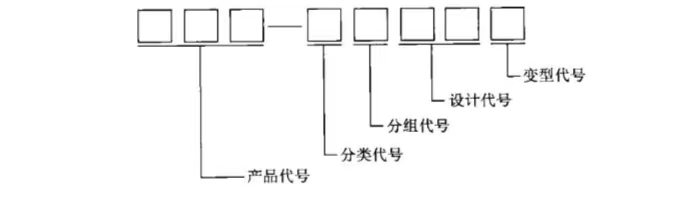
How to express the alternator of electric forklift manufacturer? The electric forklift manufacturer teaches you this. The first three cells represent product codes, namely JF, JFZ, JFW and JFB mentioned above. The first cell after the "-" is the product code, from which we can see the voltage level of the generator, 1 - for 12V electrical system, 2 - for 24W electrical system. The second cell is the grouping code, which represents the output current and output power of the generator. 1 - below 180W, 2 - 180~250W, 3 - 250~350W, 5 - 350~750W, 7 - 500~750W, 8 - 750~1000W, 9 - above 1000W. The fourth and fifth cells are design codes, representing the order of product design. The last cell of the electric forklift generator is the variant code.
The above is some basic knowledge about the electric forklift generator. Drivers can learn to repair and maintain electric forklifts more skillfully, and enterprises can better purchase the most cost-effective electric forklifts and electric forklift accessories. But don't worry if you don't understand. The parameter list of the electric forklift manufacturer will provide some basic data for your reference and comparison.
-
 Reliability Of Newnewton Warehouse Forklifts For Heavy-Duty ShiftsWarehouse forklift reliability relies on industrial parts, reinforced frames and factory durability tests. Proper operation and maintenance reduce unexpected downtime.
Do you like ?0
Read more -
 Forklift Configuration Strategy For Dense Warehousing, Warehouse ForkliftDense warehousing needs matched forklifts besides racks. Reach and trilateral stackers fit different layouts, coordinate aisle, load curve and floor for smooth handling.
Do you like ?0
Read more -
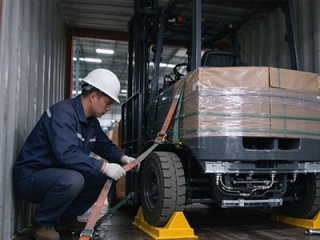 Full Container Supply For Export Forklifts, Forklift ManufacturerBulk forklift orders for overseas can ship by FCL or LCL. Newnewton FCL offers stable freight, safer packing and mixed models for large purchases.
Do you like ?0
Read more -
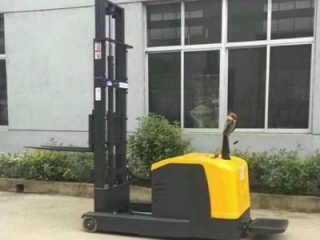 Stand-on Reach Stacker For Narrow Aisle Stacking, Mast Reach StructureStand-on reach stackers feature sliding masts that stay outside racks. They boost storage density in narrow aisles and require flat floors and standard pallets.
Do you like ?0
Read more -
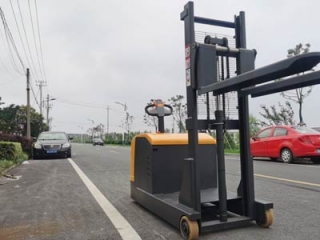 Stand-on Counterbalance Stacker For Various Pallets, Why No Leg RestrictionCounterbalance stackers have no front outriggers, using rear counterweight to avoid pallet interference. They fit various odd pallets yet need wider warehouse aisles.
Do you like ?0
Read more -
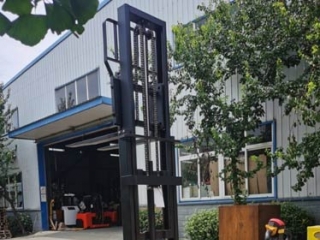 Custom Walk-Behind Counterbalance Stacker | Non-Standard ModificationsStandard walk-behind counterbalance stackers struggle with non-standard pallets and tight aisles. Customize load, lift, forks and structure, share working conditions for safe design.
Do you like ?0
Read more








