How to deal with the air leakage at the valve root of the electric forklift tire
Electric forklift has a wide range of applications and can work in many places. However, the most durable things will have problems because of the long service time or unsuitable use environment. This is especially true of the tyres of electric forklifts. Their working environment is complex, and they will become less and less durable with the increase of their service life. Therefore, air leakage is likely to occur. Then, how to deal with the air leakage at the valve root of the electric forklift tire? The electric forklift manufacturer will give you an answer.

If the valve root of the electric forklift tire leaks, do not throw away the tire in a hurry. Correct repair can save a lot of costs. First, unscrew the fixing nut of the valve and push the valve into the tire. Then, remove the thread layer at the valve mouth until the adhesive primer is exposed, and file the adhesive primer. After that, we need to prepare three pieces of canvas, which are 30mm, 30mm and 50mm in diameter. A piece of raw rubber with a diameter of 60mm shall also be prepared. A small hole is cut in the middle of the canvas, and the size of the hole is consistent with the diameter of the upper end of the valve. The electric forklift manufacturer told us that the next step is to apply raw glue on the front and back sides of the canvas and the fuzz of the valve , apply 3 to 4 times on the canvas, and apply twice on the valve.
When the glue dries, we can then repair the tires of the electric forklift. Lay the canvas at the valve in the order of small to large, make the hole in the middle of the canvas align with the valve, then place a small paper ball at the hole of the canvas, and finally place the raw rubber. Next, we need to heat it for vulcanization, which will take a long time. After repairing, make a small opening in the middle of the raw rubber and take out the paper ball. After completing these steps, the valve can be installed back. The electric forklift manufacturer reminds that the nut must be tightened.
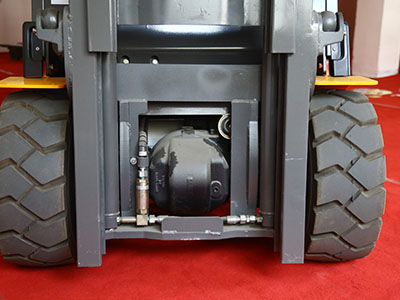
If the valve root of the electric forklift tire is damaged rather than leaking, it should be replaced immediately. When replacing, a small hole can be opened near the valve. After loosening the nut, push the valve into the inner tube and take it out from the newly opened hole. The new valve should also be installed from the small hole. After everything is completed, the electric forklift manufacturer tells us to fill the hole with fire repair glue or raw rubber.
-
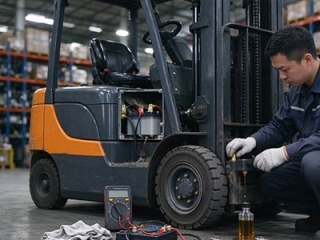 Reliability Of Newnewton Warehouse Forklifts For Heavy-Duty ShiftsWarehouse forklift reliability relies on industrial parts, reinforced frames and factory durability tests. Proper operation and maintenance reduce unexpected downtime.
Do you like ?0
Read more -
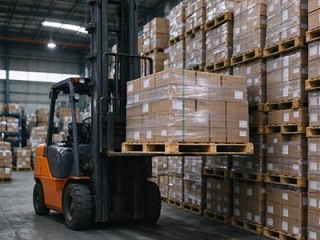 Forklift Configuration Strategy For Dense Warehousing, Warehouse ForkliftDense warehousing needs matched forklifts besides racks. Reach and trilateral stackers fit different layouts, coordinate aisle, load curve and floor for smooth handling.
Do you like ?0
Read more -
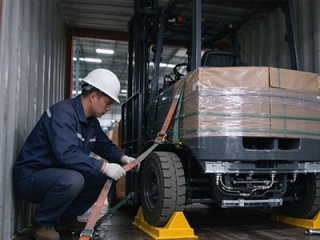 Full Container Supply For Export Forklifts, Forklift ManufacturerBulk forklift orders for overseas can ship by FCL or LCL. Newnewton FCL offers stable freight, safer packing and mixed models for large purchases.
Do you like ?0
Read more -
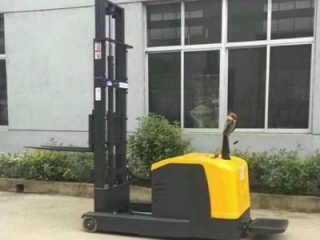 Stand-on Reach Stacker For Narrow Aisle Stacking, Mast Reach StructureStand-on reach stackers feature sliding masts that stay outside racks. They boost storage density in narrow aisles and require flat floors and standard pallets.
Do you like ?0
Read more -
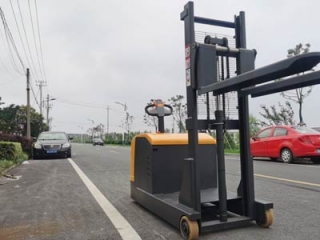 Stand-on Counterbalance Stacker For Various Pallets, Why No Leg RestrictionCounterbalance stackers have no front outriggers, using rear counterweight to avoid pallet interference. They fit various odd pallets yet need wider warehouse aisles.
Do you like ?0
Read more -
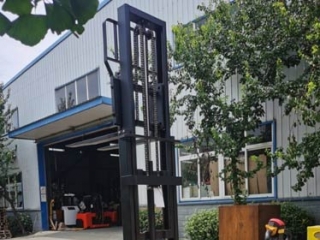 Custom Walk-Behind Counterbalance Stacker | Non-Standard ModificationsStandard walk-behind counterbalance stackers struggle with non-standard pallets and tight aisles. Customize load, lift, forks and structure, share working conditions for safe design.
Do you like ?0
Read more