
The electric forklift battery is the most vulnerable part of the electric forklift. The actual scrapping time of most forklift battery is much earlier than the design life of the electric forklift battery. The reason is the same, not using the forklift and maintaining the forklift battery according to the specifications!

The daily maintenance and maintenance of the electric forklift battery should be highly concerned by every operator and manager. Adding water to the forklift battery is a very simple matter, but it is also very knowledgeable. If it is not possible, it will cause more damage to the electric forklift battery.
Let's take a look at the two misunderstandings about the replenishment of the forklift battery:
Misunderstanding 1: Can the pure drinking water be used for electric forklift battery?
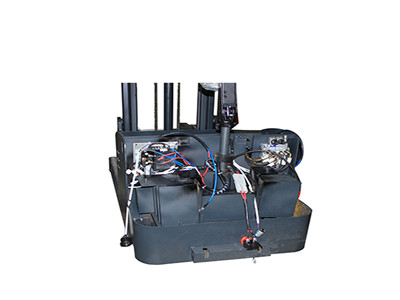
Can not be applied, because the daily consumption of pure water, the impurity content of the people is much higher than the forklift battery water requirements, pure water contains a variety of trace elements, will have a bad impact on the electric forklift battery.
The water of the forklift battery should meet the requirements of JB/T10053-1999 standard, which can not be achieved. Therefore, we must remember that when the electric forklift battery is in the absence of electrolyte, it should be supplemented with distilled water or special rehydration, and should not be replaced with pure drinking water.
Myth 2: Can the forklift battery be added with distilled water at any time?
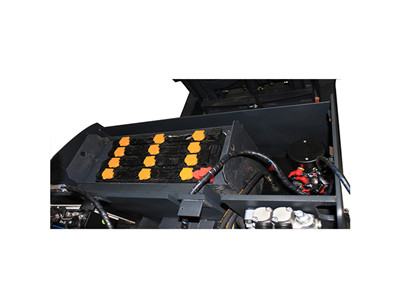
In the routine maintenance of the electric forklift battery, when the electrolyte of the forklift battery is insufficient, it is generally necessary to add distilled water to the electric forklift battery. However, sometimes the electrolyte of the forklift battery is reduced due to cracks in the battery casing of the forklift or the leakage of the liquid-filled cover buckle causes the electrolyte to leak. However, some drivers often do not pay attention to distinguish between the liquid level of the electric forklift battery due to damage or other causes of electrolyte leakage, or normal loss, as long as the electrolyte level is reduced, adding distilled water, resulting in a significant decrease in electrolyte density. So that the forklift battery does not work properly.
Some drivers often add distilled water to the electric forklift battery after the end of the forklift. As a result, the added distilled water cannot be fully mixed with the original electrolyte of the forklift battery, thus easily causing the electric forklift battery to self-discharge or damage the forklift battery plate in the severe cold area. It also causes local freezing of the electric forklift battery, which affects the service life of the forklift battery.
Conversely, if distilled water is added to the electric forklift battery before using the forklift, the distilled water can be fully mixed with the original electrolyte in the forklift battery, and the performance of the electric forklift battery will not be affected. Therefore, distilled water should be added before using the forklift, and it is not advisable to add distilled water after using the forklift.
Generally, the electrolyte in the forklift battery will evaporate during charging and use, so the concentration will increase, generally adding water, and adding 1.26% of the electrolyte when the specific gravity is low. The proportion of the electric forklift battery after charging is 1.28.
Pay attention to the above, the forklift battery will be used for a longer time, and the forklift battery life can be maintained.
-
 Reliability Of Newnewton Warehouse Forklifts For Heavy-Duty ShiftsWarehouse forklift reliability relies on industrial parts, reinforced frames and factory durability tests. Proper operation and maintenance reduce unexpected downtime.
Do you like ?0
Read more -
 Forklift Configuration Strategy For Dense Warehousing, Warehouse ForkliftDense warehousing needs matched forklifts besides racks. Reach and trilateral stackers fit different layouts, coordinate aisle, load curve and floor for smooth handling.
Do you like ?0
Read more -
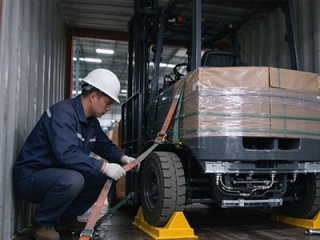 Full Container Supply For Export Forklifts, Forklift ManufacturerBulk forklift orders for overseas can ship by FCL or LCL. Newnewton FCL offers stable freight, safer packing and mixed models for large purchases.
Do you like ?0
Read more -
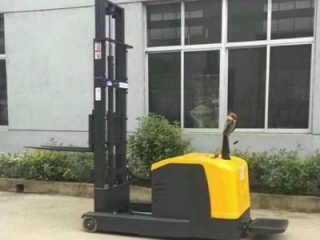 Stand-on Reach Stacker For Narrow Aisle Stacking, Mast Reach StructureStand-on reach stackers feature sliding masts that stay outside racks. They boost storage density in narrow aisles and require flat floors and standard pallets.
Do you like ?0
Read more -
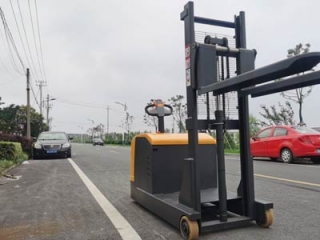 Stand-on Counterbalance Stacker For Various Pallets, Why No Leg RestrictionCounterbalance stackers have no front outriggers, using rear counterweight to avoid pallet interference. They fit various odd pallets yet need wider warehouse aisles.
Do you like ?0
Read more -
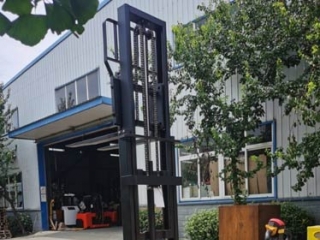 Custom Walk-Behind Counterbalance Stacker | Non-Standard ModificationsStandard walk-behind counterbalance stackers struggle with non-standard pallets and tight aisles. Customize load, lift, forks and structure, share working conditions for safe design.
Do you like ?0
Read more








