
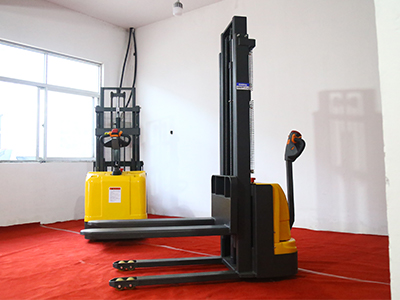
Why do we need to maintain electric forklifts? The significance and classification of maintenance levels for electric forklifts
In the long-term use of electric forklifts and tractors, the technical performance of forklifts and tractors gradually deteriorates due to the wear and tear, natural corrosion and aging of the components, as well as external accidental factors. The reliability of the components also decreases, and the working ability decreases or even cannot complete normal work. Therefore, electric forklift manufacturers must promptly maintain and lubricate their machinery.
The purpose of forklift and tractor maintenance is to restore their normal technical condition, maintain good usability and reliability, and maximize their service life; Reduce energy and equipment consumption; Prevent accidents and ensure work safety. The maintenance levels of electric forklifts and electric tractors are generally divided into initial maintenance, daily maintenance, seasonal maintenance, sealed maintenance, and regular maintenance. Among them, electric forklift manufacturers divide regular maintenance into first level maintenance and second level maintenance; The Elo rating system of repair is divided into major repair, medium repair and minor repair.
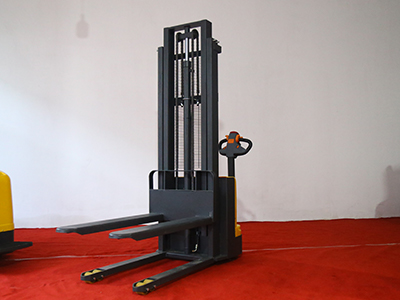
Initial maintenance is the maintenance carried out during the initial use of newly manufactured or overhauled machinery. Its content and methods should not only be carried out according to daily maintenance requirements, but also undergo loading tests, and all performance indicators should meet the requirements of the manual.
The daily maintenance of electric forklift manufacturers mainly focuses on cleaning machinery and external inspections, usually carried out by operators before and after each operation. Seasonal maintenance refers to the maintenance of machinery in areas where the lowest temperature throughout the year is below -15C, before winter or summer. If it overlaps with secondary maintenance, it can be combined.
Sealed maintenance refers to the storage of forklifts and tractors that are expected to be unused for more than two months. The sealed electric forklifts and tractors must be in good technical condition. Before sealing, corresponding types and levels of maintenance should be carried out according to different vehicle conditions, and they must be in good technical condition; Forklifts and tractors after new or major repairs should generally be sealed after initial operation.
Regular maintenance is a type of maintenance carried out by electric forklifts and tractors after a certain period of use, divided into first level maintenance and second level maintenance; Regular maintenance can be carried out together with major and medium maintenance. The first level maintenance of electric forklift manufacturers is carried out every 1 month of use; The second level maintenance is carried out every 6 months of use, with cycles of: 1, 1, 1, 1, 1, 1, 2, 1, 1, 1, 1, 2
-
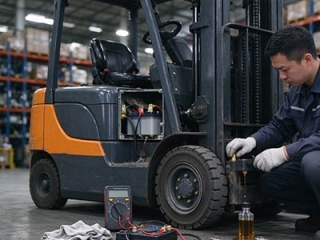 Reliability Of Newnewton Warehouse Forklifts For Heavy-Duty ShiftsWarehouse forklift reliability relies on industrial parts, reinforced frames and factory durability tests. Proper operation and maintenance reduce unexpected downtime.
Do you like ?0
Read more -
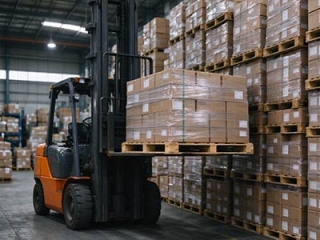 Forklift Configuration Strategy For Dense Warehousing, Warehouse ForkliftDense warehousing needs matched forklifts besides racks. Reach and trilateral stackers fit different layouts, coordinate aisle, load curve and floor for smooth handling.
Do you like ?0
Read more -
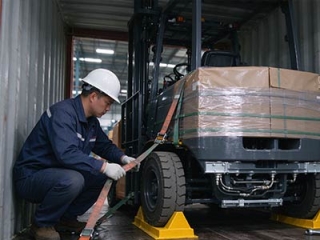 Full Container Supply For Export Forklifts, Forklift ManufacturerBulk forklift orders for overseas can ship by FCL or LCL. Newnewton FCL offers stable freight, safer packing and mixed models for large purchases.
Do you like ?0
Read more -
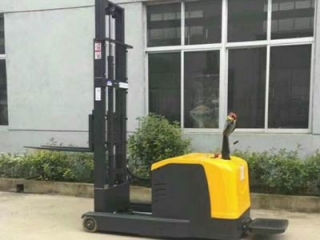 Stand-on Reach Stacker For Narrow Aisle Stacking, Mast Reach StructureStand-on reach stackers feature sliding masts that stay outside racks. They boost storage density in narrow aisles and require flat floors and standard pallets.
Do you like ?0
Read more -
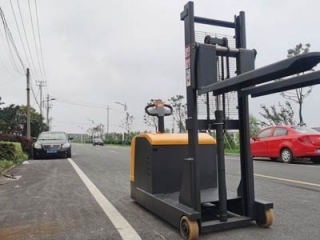 Stand-on Counterbalance Stacker For Various Pallets, Why No Leg RestrictionCounterbalance stackers have no front outriggers, using rear counterweight to avoid pallet interference. They fit various odd pallets yet need wider warehouse aisles.
Do you like ?0
Read more -
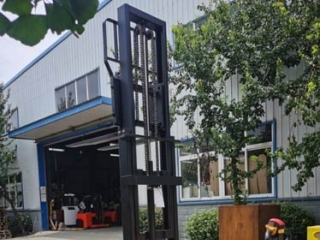 Custom Walk-Behind Counterbalance Stacker | Non-Standard ModificationsStandard walk-behind counterbalance stackers struggle with non-standard pallets and tight aisles. Customize load, lift, forks and structure, share working conditions for safe design.
Do you like ?0
Read more








