What terms do you need to know before purchasing an electric stacker?
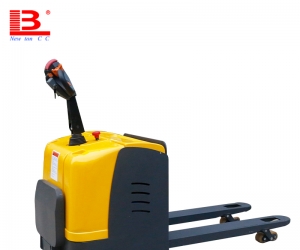
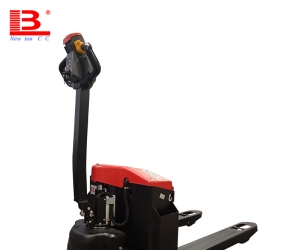
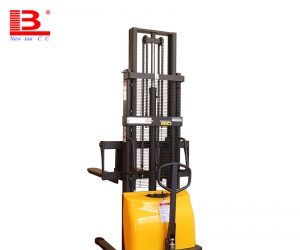
Electric stacker is a logistics storage equipment for lifting, stacking and short distance transportation of goods. In recent years, it has become popular and its sales volume has risen sharply. Compared with other stacker trucks, it is more efficient, time-saving and labor-saving. However, many enterprises that are willing to buy do not know how to express clearly, although they have many requirements and questions when consulting the electric stacker manufacturer. This is mostly because enterprises do not understand the terms of electric stacker, so it is hard to say. Now, the electric stacker manufacturer will popularize the terms of electric stacker for enterprises.
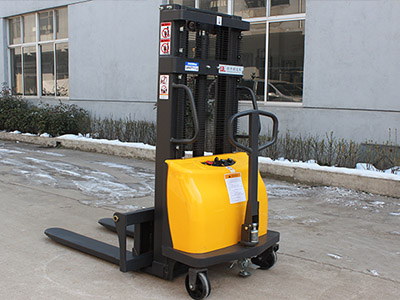
First, let's talk about the most important term, the rated load of the electric stacker. It refers to the maximum weight of the cargo allowed to be lifted when the distance from the center of gravity of the cargo to the fork forearm is not greater than the load center distance. To put it simply, it can tell us that the electric stacker can carry multiple goods at most. Another important term is lifting height. It refers to the maximum height that the electric stacker can rise when the fork carries the goods that reach the rated load on the flat ground. Load center distance refers to the distance from the center of gravity of the cargo to the forearm of the vertical section of the fork when a standard weight cargo is placed on the fork. For example, the distance between the load centers of the electric stacker manufacturer's station drive electric stacker is 500mm.
The lifting speed of the electric stacker is divided into the lifting speed when it is unloaded and the lifting speed when it is fully loaded. It is easy to understand, the lifting speed of the fork when it is carrying the goods that reach the rated load and when it is not carrying the goods. It is closely related to the working efficiency of electric stacker. For example, the lifting speed of the electric stacker manufacturer's station drive electric stacker is 0.08m/s when it is fully loaded and 0.1m/s when it is unloaded, which is the leading level in China. It is not that the faster the lifting speed is, the better. Too fast the lifting speed may damage the goods and shorten the life of the electric stacker. The electric stacker manufacturer told us that there are two other data that have a great impact on the working efficiency, namely, the max travel speed and the descending speed. They are also divided into full load and no-load speeds, which are the same as the lifting speed.
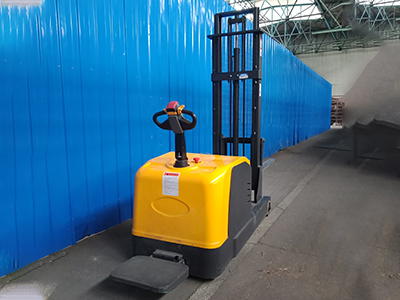
The above terms are commonly used when purchasing electric stacker. Enterprises can put forward their own requirements and consult according to these terms. However, enterprises do not need to memorize these words. The products of electric stacker manufacturer are equipped with parameter tables, which will provide these data in detail for enterprise reference. However, the parameter list is very complicated. The enterprise should consult the electric forklift manufacturer, and we will recommend the most cost-effective electric stacker for the enterprise.
-
 Reliability Of Newnewton Warehouse Forklifts For Heavy-Duty ShiftsWarehouse forklift reliability relies on industrial parts, reinforced frames and factory durability tests. Proper operation and maintenance reduce unexpected downtime.
Do you like ?0
Read more -
 Forklift Configuration Strategy For Dense Warehousing, Warehouse ForkliftDense warehousing needs matched forklifts besides racks. Reach and trilateral stackers fit different layouts, coordinate aisle, load curve and floor for smooth handling.
Do you like ?0
Read more -
 Full Container Supply For Export Forklifts, Forklift ManufacturerBulk forklift orders for overseas can ship by FCL or LCL. Newnewton FCL offers stable freight, safer packing and mixed models for large purchases.
Do you like ?0
Read more -
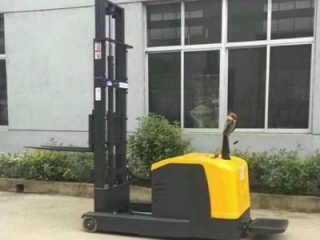 Stand-on Reach Stacker For Narrow Aisle Stacking, Mast Reach StructureStand-on reach stackers feature sliding masts that stay outside racks. They boost storage density in narrow aisles and require flat floors and standard pallets.
Do you like ?0
Read more -
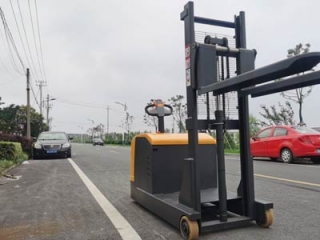 Stand-on Counterbalance Stacker For Various Pallets, Why No Leg RestrictionCounterbalance stackers have no front outriggers, using rear counterweight to avoid pallet interference. They fit various odd pallets yet need wider warehouse aisles.
Do you like ?0
Read more -
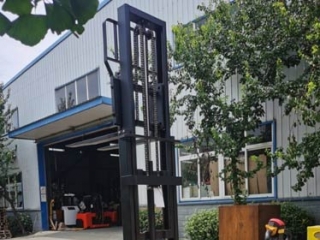 Custom Walk-Behind Counterbalance Stacker | Non-Standard ModificationsStandard walk-behind counterbalance stackers struggle with non-standard pallets and tight aisles. Customize load, lift, forks and structure, share working conditions for safe design.
Do you like ?0
Read more