How to Operate a Full Electric Walk-Behind Stacker? Operation Guide (2026)
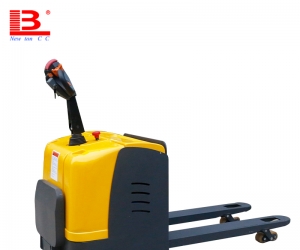
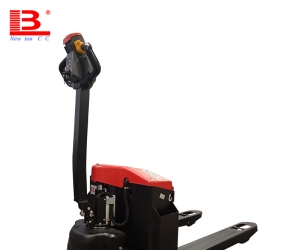
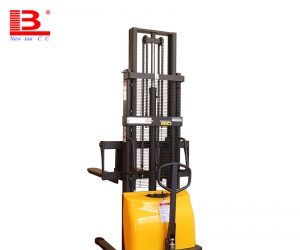
In 2026, the electric walk-behind stacker has been increasingly widely used in front-line logistics scenarios such as warehouses and workshops. With its simple operation, labor-saving and high-efficiency characteristics, it has won unanimous praise from the majority of logistics practitioners! However, new operators often have a question: how to operate a full electric walk-behind stacker? In fact, you can easily get started as long as you master a few key steps.
Before Operation
Check the vehicle’s power, tires, forks and hydraulic system in advance, ensure there are no obstacles around, wear necessary protective equipment, and stand in a stable position on the side of the equipment.
When Starting
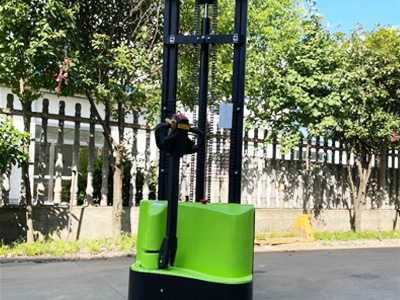
Turn on the power switch, gently lift the handle to a suitable angle, and slowly toggle the speed control switch to make the vehicle move smoothly. It should be noted that the electric walk-behind stacker is easy to operate, with a precise handle controller. Forward, backward and steering are all flexible, and it can easily turn in narrow aisles.
When Forking Goods
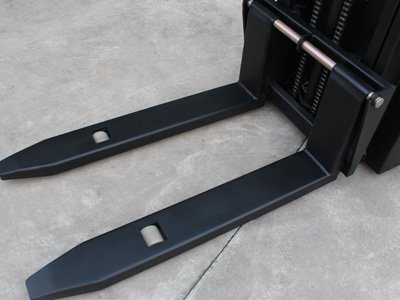
First, adjust the forks to a suitable width, slowly drive under the pallet, toggle the lifting switch to lift the forks, and make the goods leave the ground stably. It is worth noting that you should keep a low speed during driving, do not start or stop suddenly to avoid goods shaking, which is also to protect your own safety.
When Stacking or Unloading
Stop the vehicle stably after approaching the shelf, control the forks to rise to the corresponding height, slowly send the goods to the designated position, then lower the forks and exit.
After Operation
Lower the forks to the lowest position, turn off the power, and park the electric walk-behind stacker in the designated area.
As long as you pay attention to these operation points of the electric walk-behind stacker, the operation will be very easy and simple, while ensuring safety and high efficiency.
-
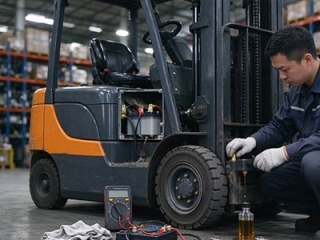 Reliability Of Newnewton Warehouse Forklifts For Heavy-Duty ShiftsWarehouse forklift reliability relies on industrial parts, reinforced frames and factory durability tests. Proper operation and maintenance reduce unexpected downtime.
Do you like ?0
Read more -
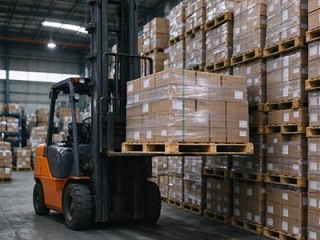 Forklift Configuration Strategy For Dense Warehousing, Warehouse ForkliftDense warehousing needs matched forklifts besides racks. Reach and trilateral stackers fit different layouts, coordinate aisle, load curve and floor for smooth handling.
Do you like ?0
Read more -
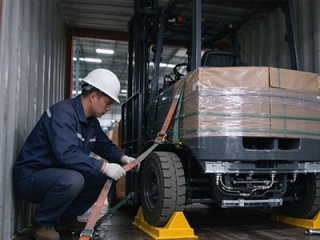 Full Container Supply For Export Forklifts, Forklift ManufacturerBulk forklift orders for overseas can ship by FCL or LCL. Newnewton FCL offers stable freight, safer packing and mixed models for large purchases.
Do you like ?0
Read more -
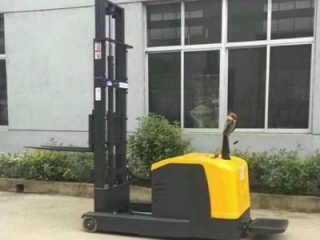 Stand-on Reach Stacker For Narrow Aisle Stacking, Mast Reach StructureStand-on reach stackers feature sliding masts that stay outside racks. They boost storage density in narrow aisles and require flat floors and standard pallets.
Do you like ?0
Read more -
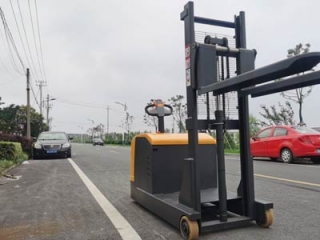 Stand-on Counterbalance Stacker For Various Pallets, Why No Leg RestrictionCounterbalance stackers have no front outriggers, using rear counterweight to avoid pallet interference. They fit various odd pallets yet need wider warehouse aisles.
Do you like ?0
Read more -
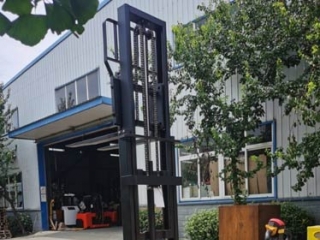 Custom Walk-Behind Counterbalance Stacker | Non-Standard ModificationsStandard walk-behind counterbalance stackers struggle with non-standard pallets and tight aisles. Customize load, lift, forks and structure, share working conditions for safe design.
Do you like ?0
Read more