Today's Tips: Safety Regulations and Operating Points for High-Level Order Picke
As high-level order pickers are commonly used for order picking at heights of 3 meters and above, ensuring the safety of operators and goods is the top priority. Therefore, standard and safe operation is essential when using order pickers. This article provides a detailed guide to the safety regulations and operating points for high-level order pickers.
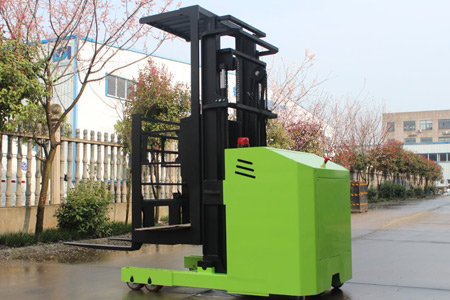
Always inspect the vehicle before operation. Check that the platform guardrails are intact, the emergency stop switch is responsive, the hydraulic lifting system runs smoothly, and the battery is fully charged. Tires and brakes should also be carefully examined. Do not operate the equipment with any defects to avoid sudden failures during high-altitude work.
Operators must receive professional training before taking up their posts. Safety belts must be fastened during operation, and personnel should stand entirely within the platform of the electric high-level order picker. Leaning out, climbing, or standing on the forks or outside the guardrails is strictly prohibited. The number of people on the platform must comply with the manufacturer’s requirements, and overloading or overcrowding is forbidden.
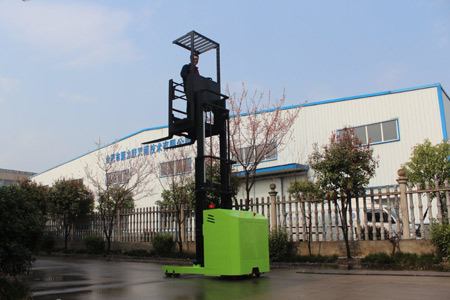
Lifting and traveling functions should be operated separately. Most electric high-level order pickers require lifting when stationary and moving at low speeds; lifting while driving is not allowed. Slow down in advance when turning or entering/exiting aisles, and avoid sudden braking or sharp turns to prevent rollovers caused by center-of-gravity shift. When picking goods at high levels, confirm the shelf position clearly, handle goods gently, and avoid cargo swaying that may destabilize the vehicle.
Keep warehouse aisles clear, free of oil and debris. Maintain a safe distance from shelves and walls during operation. In case of strong winds, slippery floors, or poor lighting, lower the lifting height, reduce speed, and stop operations if necessary.
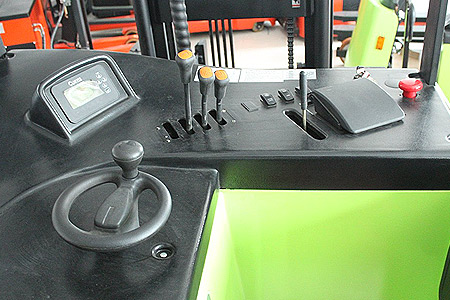
After use, lower the platform to the minimum height, park the order picker in the designated area, apply the parking brake, turn off the power, and perform cleaning and routine maintenance. Regularly inspect the hydraulic system, brakes, guardrails, and limit switches. Report any abnormalities promptly for repair, and never operate the equipment with unresolved faults.
We hope that by following these guidelines, you can operate warehouse high-level order pickers efficiently, conveniently, and safely in daily work.
-
 Reliability Of Newnewton Warehouse Forklifts For Heavy-Duty ShiftsWarehouse forklift reliability relies on industrial parts, reinforced frames and factory durability tests. Proper operation and maintenance reduce unexpected downtime.
Do you like ?0
Read more -
 Forklift Configuration Strategy For Dense Warehousing, Warehouse ForkliftDense warehousing needs matched forklifts besides racks. Reach and trilateral stackers fit different layouts, coordinate aisle, load curve and floor for smooth handling.
Do you like ?0
Read more -
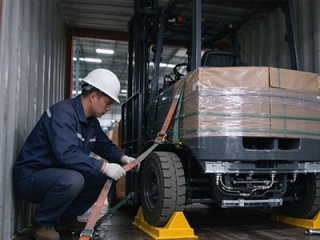 Full Container Supply For Export Forklifts, Forklift ManufacturerBulk forklift orders for overseas can ship by FCL or LCL. Newnewton FCL offers stable freight, safer packing and mixed models for large purchases.
Do you like ?0
Read more -
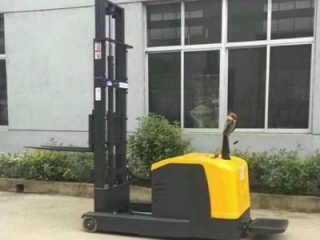 Stand-on Reach Stacker For Narrow Aisle Stacking, Mast Reach StructureStand-on reach stackers feature sliding masts that stay outside racks. They boost storage density in narrow aisles and require flat floors and standard pallets.
Do you like ?0
Read more -
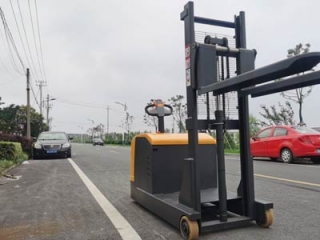 Stand-on Counterbalance Stacker For Various Pallets, Why No Leg RestrictionCounterbalance stackers have no front outriggers, using rear counterweight to avoid pallet interference. They fit various odd pallets yet need wider warehouse aisles.
Do you like ?0
Read more -
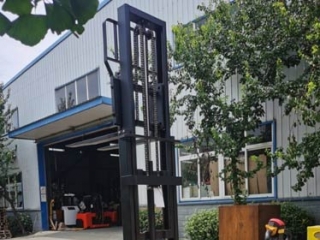 Custom Walk-Behind Counterbalance Stacker | Non-Standard ModificationsStandard walk-behind counterbalance stackers struggle with non-standard pallets and tight aisles. Customize load, lift, forks and structure, share working conditions for safe design.
Do you like ?0
Read more