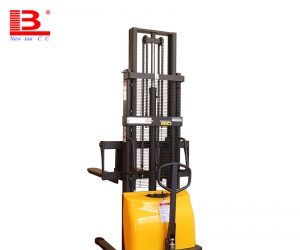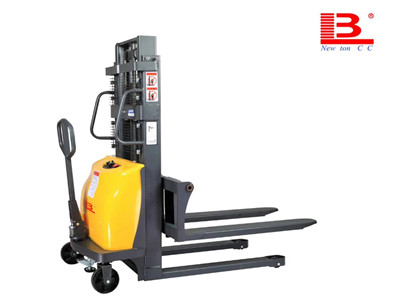
When you buy a semi-electric stacker, you often encounter various manufacturers' boasting behaviors. So how do you tell which one is better for a semi-electric stacker? What is the strength of each semi-electric stacker manufacturer? How should we distinguish their quality? First of all, we need to comprehensively understand the many important parameters of the semi-electric stacker:

Model Unit B/LBBDD optional
Rated load kilogram (KG) 1000/1500/2000 ▲
Door frame steel C ▲
Material 345B
Driving mode/driving mode manual/walking
Load center distance mm (mm) 500
Axle load (front/rear when fully loaded) kg (KG) 611/1319
Axle load (front/rear when no load) kg (KG) 325/105
Wheel nylon
Number of front/rear wheels (X=drive) 2/2
Front track millimeter (mm) 720
Rear wheelbase mm (mm) 520
Lifting height mm (mm) 1600/2000/2500/3000/3500 ▲
Static height of mast mm (mm) 2090/1590/1840/2090/2340 ▲
Maximum height of gantry operation mm (mm) 2090/2410/2910/3410/3910 ▲
Load center distance mm (mm) 500
Ground clearance of wheelbase center mm (mm) 40
Turning radius mm (mm) 1425
Minimum channel requirement mm (mm) 2305
Overall length mm (mm) 1735
Overall width mm (mm) 800
Fork width mm (mm) 320-1000 ▲
Fork size mm (mm) 1100*160*50 ▲
Lifting speed (no load/full load) mm/s (mm/s) 100/80 ▲
Lowering speed (no load/full load) mm/s (mm/s) 120/150
Wheel Nylon wheel ▲
Wheel size (front/rear) mm (mm) Φ180*50/φ80*70
Driving style walking
Drive mode manual
Lifting method button
Service brake machinery
Battery Volt/Ampere hour (V/AH) 12/120 ▲
Lifting motor kilowatt (KW) 1.6 ▲
Weight kilogram (KG) ≈400 ▲
Battery size mm (mm) 360*70*250
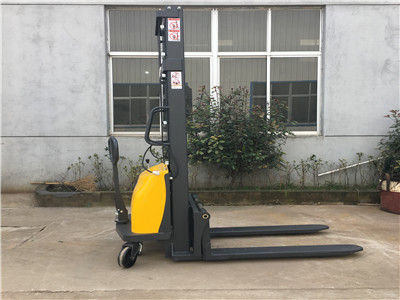
Among them, several major items such as increased load, door frame material, battery capacity, motor size, and controller brand are essential items. After asking these items clearly and comparing them one by one, you will know which semi-electric stacker is better?
Of course, as a professional warehouse forklift manufacturer, it will also change the configuration according to the needs of customers. For example, some customers have relatively low requirements for increased load. From the customer's point of view, customized models that save customers' costs are exceptions!
-
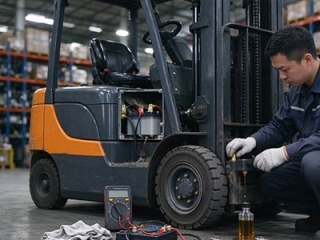 Reliability Of Newnewton Warehouse Forklifts For Heavy-Duty ShiftsWarehouse forklift reliability relies on industrial parts, reinforced frames and factory durability tests. Proper operation and maintenance reduce unexpected downtime.
Do you like ?0
Read more -
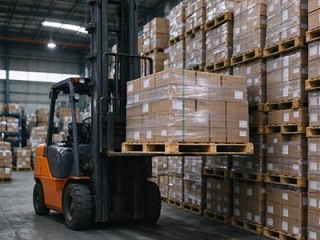 Forklift Configuration Strategy For Dense Warehousing, Warehouse ForkliftDense warehousing needs matched forklifts besides racks. Reach and trilateral stackers fit different layouts, coordinate aisle, load curve and floor for smooth handling.
Do you like ?0
Read more -
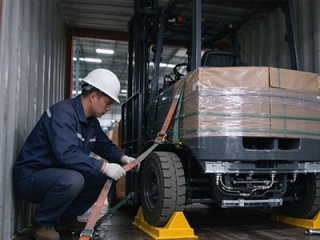 Full Container Supply For Export Forklifts, Forklift ManufacturerBulk forklift orders for overseas can ship by FCL or LCL. Newnewton FCL offers stable freight, safer packing and mixed models for large purchases.
Do you like ?0
Read more -
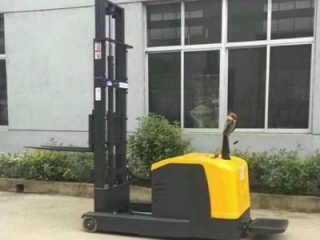 Stand-on Reach Stacker For Narrow Aisle Stacking, Mast Reach StructureStand-on reach stackers feature sliding masts that stay outside racks. They boost storage density in narrow aisles and require flat floors and standard pallets.
Do you like ?0
Read more -
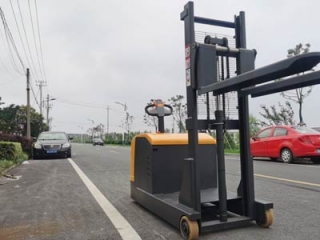 Stand-on Counterbalance Stacker For Various Pallets, Why No Leg RestrictionCounterbalance stackers have no front outriggers, using rear counterweight to avoid pallet interference. They fit various odd pallets yet need wider warehouse aisles.
Do you like ?0
Read more -
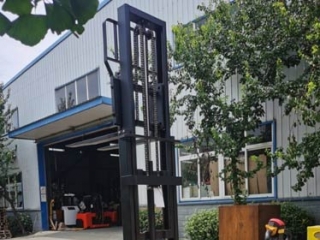 Custom Walk-Behind Counterbalance Stacker | Non-Standard ModificationsStandard walk-behind counterbalance stackers struggle with non-standard pallets and tight aisles. Customize load, lift, forks and structure, share working conditions for safe design.
Do you like ?0
Read more