Is the fully automatic lifting platform truck a special equipment?
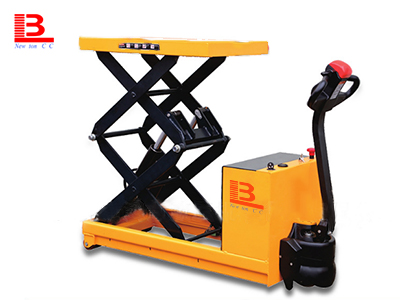
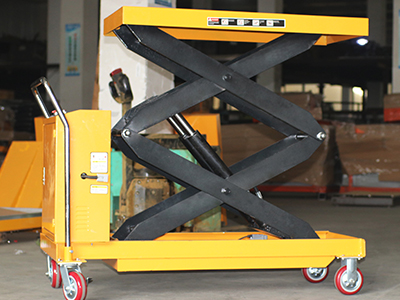
The fully automatic lifting platform truck can also be called an electric lifting platform. Prior to 2014, the lifting platform was a special equipment. In November 2014, the Quality Supervision Bureau and other relevant departments issued relevant policies for lifting equipment. Lifting work platforms are no longer special equipment.
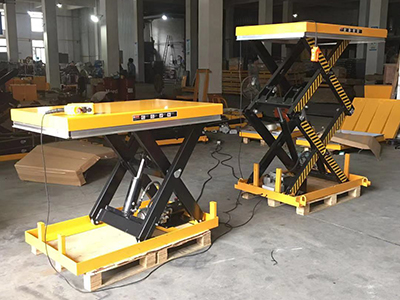
So what are the classifications of lifting platforms? There are about 170 subdivisions, mainly including mobile scissor lift platforms, fixed scissor lift platforms, aluminum alloy lifts, cylinder-cylinder lifts, vehicle lifts, rail chain lifts, and guide rail lift platforms. Loading and unloading platform, lifting stage, rotating stage, lifting rotating stage, crank arm lifting platform, self-propelled lifting platform, aerial work lifting platform, boarding bridge, etc.
So what is special equipment? The latest catalog of special equipment is defined as: hoisting machinery, which refers to electromechanical equipment used for vertical lifting or vertical lifting and moving heavy objects horizontally. Its scope is specified as a lift with a rated lifting capacity greater than or equal to 0.5; a rated lifting capacity greater than or equal to 3t (or tower crane with a rated lifting moment greater than or equal to 40t·m, or a loading bridge with a productivity greater than or equal to 300t/h) and a crane with a lifting height greater than or equal to 2m; machinery with a number of floors greater than or equal to 2 Parking equipment.
See details:
Announcement of the General Administration of Quality Supervision, Inspection and Quarantine on the revision of the "Special Equipment Catalog" 2014 No. 114
In accordance with the "Special Equipment Safety Law of the People's Republic of China" and "Special Equipment Safety Supervision Regulations", the General Administration of Quality Supervision, Inspection and Quarantine has revised the "Special Equipment Catalog", which is now promulgated and implemented with the approval of the State Council. At the same time, the "Notice on Promulgating the "Special Equipment Catalog" (National Quality Inspection Pot [2004] No. 31) and the "Notice on Supplementing the Special Equipment Catalogue" (National Quality Inspection Special [2010] No. 22) were abolished. The "Special Equipment Catalog" is interpreted by the General Administration of Quality Supervision, Inspection and Quarantine.
Special announcement.
Attachment: Special Equipment Catalog
Administration of Quality Supervision
October 30, 2014
-
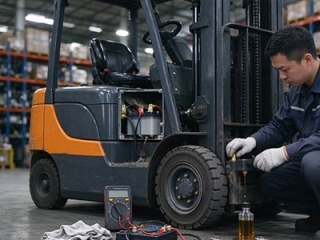 Reliability Of Newnewton Warehouse Forklifts For Heavy-Duty ShiftsWarehouse forklift reliability relies on industrial parts, reinforced frames and factory durability tests. Proper operation and maintenance reduce unexpected downtime.
Do you like ?0
Read more -
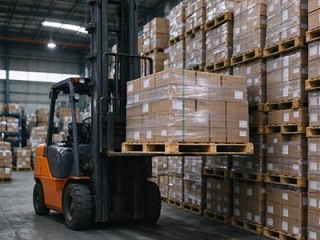 Forklift Configuration Strategy For Dense Warehousing, Warehouse ForkliftDense warehousing needs matched forklifts besides racks. Reach and trilateral stackers fit different layouts, coordinate aisle, load curve and floor for smooth handling.
Do you like ?0
Read more -
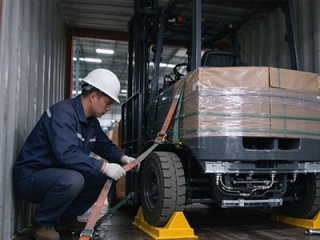 Full Container Supply For Export Forklifts, Forklift ManufacturerBulk forklift orders for overseas can ship by FCL or LCL. Newnewton FCL offers stable freight, safer packing and mixed models for large purchases.
Do you like ?0
Read more -
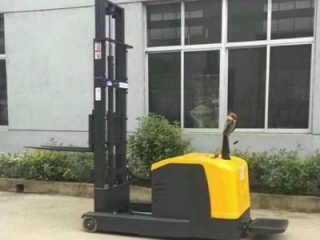 Stand-on Reach Stacker For Narrow Aisle Stacking, Mast Reach StructureStand-on reach stackers feature sliding masts that stay outside racks. They boost storage density in narrow aisles and require flat floors and standard pallets.
Do you like ?0
Read more -
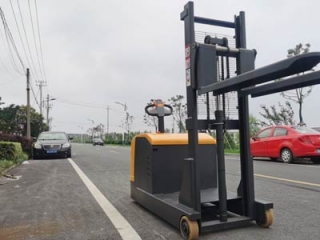 Stand-on Counterbalance Stacker For Various Pallets, Why No Leg RestrictionCounterbalance stackers have no front outriggers, using rear counterweight to avoid pallet interference. They fit various odd pallets yet need wider warehouse aisles.
Do you like ?0
Read more -
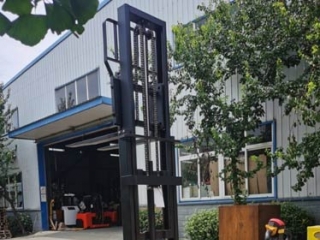 Custom Walk-Behind Counterbalance Stacker | Non-Standard ModificationsStandard walk-behind counterbalance stackers struggle with non-standard pallets and tight aisles. Customize load, lift, forks and structure, share working conditions for safe design.
Do you like ?0
Read more