Why is manual lift platform more advantage than electric drive in rainy summer?
The small scissor lift platform also encounters various challenges when carrying out construction work on the construction site. How to choose the appropriate manual lift platform to easily cope with this damp and harsh working environment? The small scissor lift platform with different driving modes is What kind of performance will there be in the rainy season? Today is the science for everyone: Why use the manual lift platform in the rainy summer season is more advantageous than the electric drive!
Hydraulic Drive VS Electric Drive: Failure Rate Performance
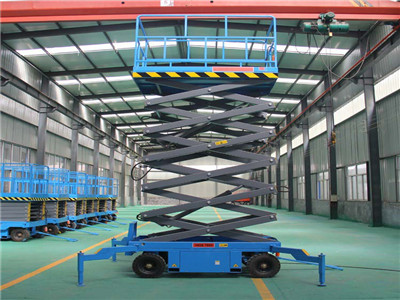
Small scissor lift platform for unobstructed operation in wet, rainy environments
The moving parts of the hydraulic drive system of the manual lift platform work in the sealed environment of the hydraulic oil, which can be self-lubricated and dissipated. Therefore, the parts of the small scissor lift platform have long working life and good sealing performance, and can easily cope with any harsh environment. The manual lift platform can work normally even if it is in the water. The internal components of the small scissor lift platform are not affected by the moisture of the wet weather, and the operation is stable and reliable.
Electric drive has a high failure rate during wet and rainy seasons
The core component of the manual lift platform is the motor. The motor of the small scissor lift platform generates heat during operation. If the manual lift platform is not sealed properly during the cooling process, the humid air will be sucked into the motor of the small scissor lift platform. The cavity forms a condensed water droplet, which causes the metal parts of the manual lift platform to rust and the coil insulation to be reduced. The motor damage of the small scissor lift platform is invalid for a long time.
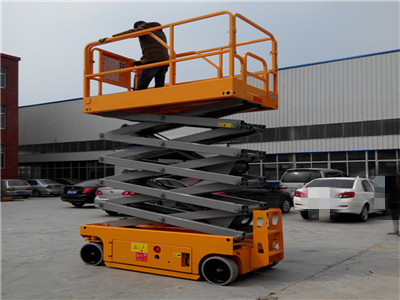
The low failure rate means maximizing the normal working hours of the manual lift platform, which greatly increases the return on investment.
-
 Reliability Of Newnewton Warehouse Forklifts For Heavy-Duty ShiftsWarehouse forklift reliability relies on industrial parts, reinforced frames and factory durability tests. Proper operation and maintenance reduce unexpected downtime.
Do you like ?0
Read more -
 Forklift Configuration Strategy For Dense Warehousing, Warehouse ForkliftDense warehousing needs matched forklifts besides racks. Reach and trilateral stackers fit different layouts, coordinate aisle, load curve and floor for smooth handling.
Do you like ?0
Read more -
 Full Container Supply For Export Forklifts, Forklift ManufacturerBulk forklift orders for overseas can ship by FCL or LCL. Newnewton FCL offers stable freight, safer packing and mixed models for large purchases.
Do you like ?0
Read more -
 Stand-on Reach Stacker For Narrow Aisle Stacking, Mast Reach StructureStand-on reach stackers feature sliding masts that stay outside racks. They boost storage density in narrow aisles and require flat floors and standard pallets.
Do you like ?0
Read more -
 Stand-on Counterbalance Stacker For Various Pallets, Why No Leg RestrictionCounterbalance stackers have no front outriggers, using rear counterweight to avoid pallet interference. They fit various odd pallets yet need wider warehouse aisles.
Do you like ?0
Read more -
 Custom Walk-Behind Counterbalance Stacker | Non-Standard ModificationsStandard walk-behind counterbalance stackers struggle with non-standard pallets and tight aisles. Customize load, lift, forks and structure, share working conditions for safe design.
Do you like ?0
Read more