Daily Operation Rules | Standard Usage Guide for Manual Hydraulic Pallet Jack
Irregular operation of handling tools in warehouses and workshops will shorten the service life of equipment, and even cause cargo tipping, personnel collision and other safety accidents, bringing extra operating costs. Here are complete daily operation specifications for manual pallet truck to make your warehouse work safer and more efficient.
Pre-operation Inspection
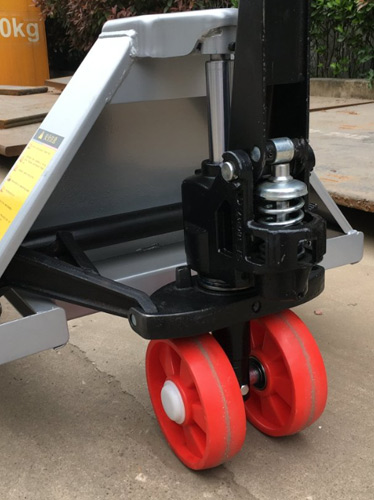
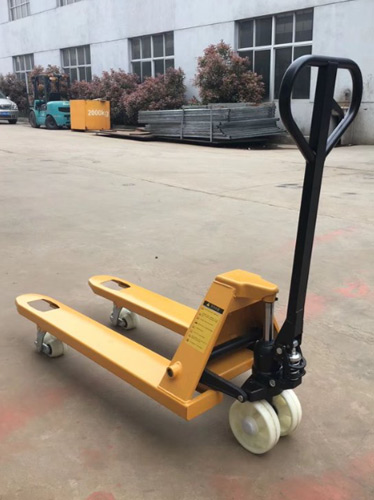
Check the hydraulic handle, lifting lever and oil cylinder for oil leakage. Confirm wheels rotate flexibly, forks are free from deformation and cracks, and pushing handles are firm and intact. Never put faulty manual hydraulic pallet truck into service.
Loading Rules
Follow rated load capacity strictly. Overloading, eccentric loading and one-sided loading are forbidden. Place goods evenly and centrally on two forks to keep balanced. Do not carry over-height, over-width or over-length goods forcibly to prevent cargo falling and tipping. Total weight of pallets and goods shall be lower than the maximum load of the hydraulic pallet jack.
Lifting & Lowering Operation
Insert forks fully into the bottom of pallets without gaps. Press the lifting lever to raise goods slowly, stop when goods are 5 to 10 centimeters off the ground to reduce vehicle load. Pull the pressure relief lever gently to lower goods steadily. Avoid sudden quick dropping which may damage goods and damage the hydraulic system. Keep all lifting movements smooth and gentle.
Driving Requirements
Push the pallet truck at a steady low speed. Running fast, sharp turning and spot U-turn are prohibited. Yield to pedestrians and obstacles in narrow aisles. When going uphill and downhill, keep goods on the front side and drive slowly. Never travel sideways on steep slopes.
Parking & Storage Rules
After work, lower forks completely to the lowest position and fold back operating handles. Park the manual hydraulic pallet truck on dry, flat and ventilated designated areas, and do not block fire exits and main passages.
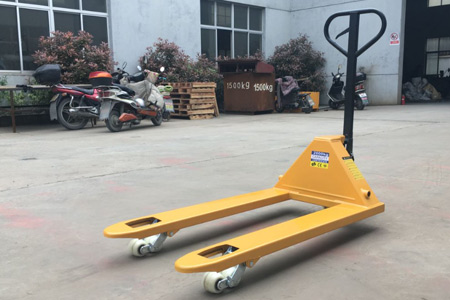
For long-term idle storage, clean dust and debris on the body, check hydraulic oil level, and take dustproof and rustproof measures. Store it indoors away from direct sunlight and rain to slow down component aging and rusting.
Standard use of warehouse handling equipment is the foundation of safe production. Feel free to contact us if you have questions about operation and maintenance of the hydraulic pallet jack.
-
 Reliability Of Newnewton Warehouse Forklifts For Heavy-Duty ShiftsWarehouse forklift reliability relies on industrial parts, reinforced frames and factory durability tests. Proper operation and maintenance reduce unexpected downtime.
Do you like ?0
Read more -
 Forklift Configuration Strategy For Dense Warehousing, Warehouse ForkliftDense warehousing needs matched forklifts besides racks. Reach and trilateral stackers fit different layouts, coordinate aisle, load curve and floor for smooth handling.
Do you like ?0
Read more -
 Full Container Supply For Export Forklifts, Forklift ManufacturerBulk forklift orders for overseas can ship by FCL or LCL. Newnewton FCL offers stable freight, safer packing and mixed models for large purchases.
Do you like ?0
Read more -
 Stand-on Reach Stacker For Narrow Aisle Stacking, Mast Reach StructureStand-on reach stackers feature sliding masts that stay outside racks. They boost storage density in narrow aisles and require flat floors and standard pallets.
Do you like ?0
Read more -
 Stand-on Counterbalance Stacker For Various Pallets, Why No Leg RestrictionCounterbalance stackers have no front outriggers, using rear counterweight to avoid pallet interference. They fit various odd pallets yet need wider warehouse aisles.
Do you like ?0
Read more -
 Custom Walk-Behind Counterbalance Stacker | Non-Standard ModificationsStandard walk-behind counterbalance stackers struggle with non-standard pallets and tight aisles. Customize load, lift, forks and structure, share working conditions for safe design.
Do you like ?0
Read more