Working Principle of Manual Hydraulic Pallet Truck | Full Explanation
Many users are curious about the mechanism that makes manual hydraulic pallet trucks so light and labor-saving. Understanding the working principle of manual hydraulic pallet truck and its core hydraulic system will help you realize why it can easily lift hundreds of kilograms or even several tons of cargo, and also improve your daily operation and maintenance.
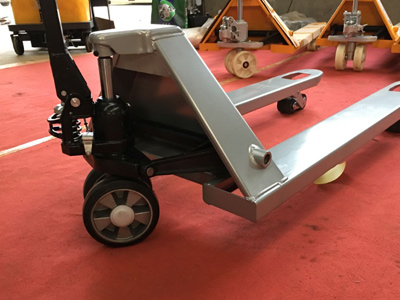
The core power of a manual hydraulic pallet truck comes from its hydraulic transmission system. Simply put, it uses the incompressible physical property of liquid to amplify small manual force into strong lifting power through hydraulic oil, similar to the lever principle.
The working principle of the hydraulic system can be divided into three steps:
First, when pumping the handle, the manual oil pump transfers force to the hydraulic oil. The small cylinder continuously pushes oil into the large cylinder, creating high pressure to push the piston upward.
Second, the high-pressure oil lifts the forks, raising the cargo smoothly. This is the key reason why operation feels effortless.
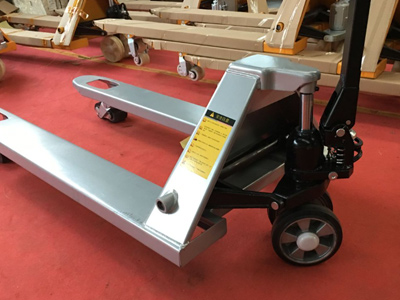
Third, when lowering is needed, gently open the pressure relief valve. The hydraulic oil flows back to the oil tank, pressure drops, and the forks slowly lower under gravity.
Besides the core hydraulic system, components such as cylinders, seals, oil pumps and relief valves work together for stable performance. This truck features simple structure, low failure rate, no electricity or fuel required. It only relies on human power and hydraulics to complete handling and lifting, which is why it is widely used in workshops, warehouses, supermarkets and logistics sites.
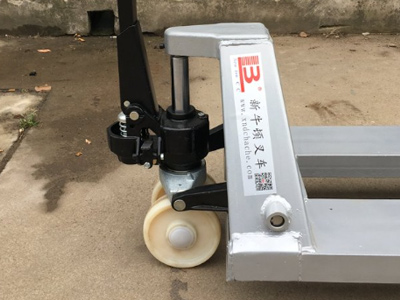
In short, the working principle of manual hydraulic pallet truck is not complicated. Its core is a stable and reliable small hydraulic system. Understanding the working principle of hydraulic system helps you operate better, quickly diagnose issues such as slow lifting, oil leakage or failure to lift, reduce maintenance costs and extend service life.
-
 Reliability Of Newnewton Warehouse Forklifts For Heavy-Duty ShiftsWarehouse forklift reliability relies on industrial parts, reinforced frames and factory durability tests. Proper operation and maintenance reduce unexpected downtime.
Do you like ?0
Read more -
 Forklift Configuration Strategy For Dense Warehousing, Warehouse ForkliftDense warehousing needs matched forklifts besides racks. Reach and trilateral stackers fit different layouts, coordinate aisle, load curve and floor for smooth handling.
Do you like ?0
Read more -
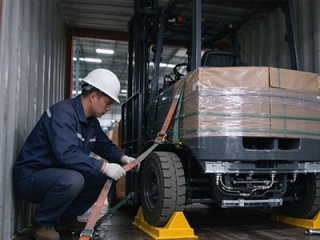 Full Container Supply For Export Forklifts, Forklift ManufacturerBulk forklift orders for overseas can ship by FCL or LCL. Newnewton FCL offers stable freight, safer packing and mixed models for large purchases.
Do you like ?0
Read more -
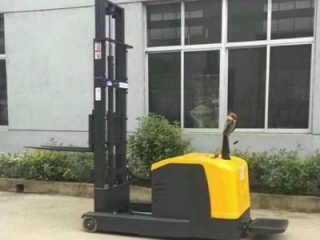 Stand-on Reach Stacker For Narrow Aisle Stacking, Mast Reach StructureStand-on reach stackers feature sliding masts that stay outside racks. They boost storage density in narrow aisles and require flat floors and standard pallets.
Do you like ?0
Read more -
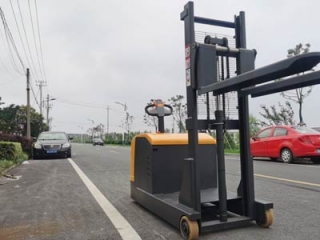 Stand-on Counterbalance Stacker For Various Pallets, Why No Leg RestrictionCounterbalance stackers have no front outriggers, using rear counterweight to avoid pallet interference. They fit various odd pallets yet need wider warehouse aisles.
Do you like ?0
Read more -
 Custom Walk-Behind Counterbalance Stacker | Non-Standard ModificationsStandard walk-behind counterbalance stackers struggle with non-standard pallets and tight aisles. Customize load, lift, forks and structure, share working conditions for safe design.
Do you like ?0
Read more