
Off-Road vs Standard Electric Stackers: Which to Choose for Outdoor Use?
When working outdoors, choosing the right forklift matters a lot. Standard stackers are not well suited for outdoor use, especially on rough terrain. For these scenarios, an off-road electric stacker is the far better choice. To help you understand why, let’s take a detailed look at the differences between standard & off-road stackers.
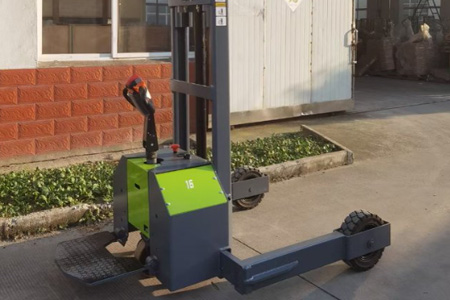
Suitable Scenarios
Standard stackers are designed for indoor, flat, paved surfaces such as warehouses, workshops and supermarkets. With lightweight bodies and small tires, they work well for short-distance stacking on smooth ground. However, on uneven outdoor surfaces like dirt roads, gravel and potholes, they easily slip, get stuck or run unstably. Prolonged use on rough ground damages the chassis and hydraulic system, leading to higher failure rates.
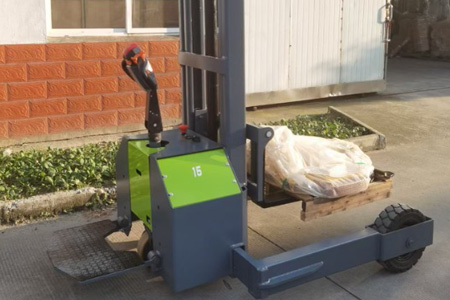
In contrast, the all-electric off-road stacker for outdoor use is built specifically for tough outdoor conditions with reinforced structure and upgraded components. It features large, deep-tread off-road tires for excellent grip, ensuring stable movement on mud, sand, slopes and gravel without slipping or getting stuck. A higher chassis improves ground clearance to avoid damage from bumps. The reinforced frame also offers greater load capacity and impact resistance, ideal for construction sites, farms, building material markets and logistics yards.
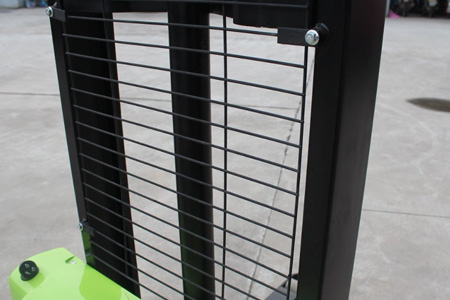
Power & Practicality
Off-road models usually come with high-power motors and large-capacity batteries for longer runtime and stronger performance, enabling stable starts on slopes and reliable heavy-duty lifting. Standard stackers have milder power, suitable only for light loads on flat ground. Additionally, off-road electric stacker trucks have higher waterproof and dustproof ratings, allowing stable operation in sun and rain. Standard stackers are prone to moisture damage when used outdoors long-term.
In short, standard stackers may work occasionally outdoors, but for regular, long hours of outdoor work, an off-road electric stacker is the more reliable and cost-effective choice.
-
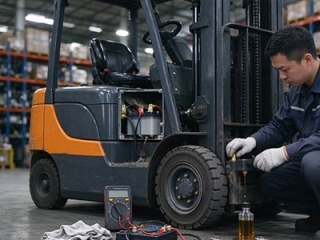 Reliability Of Newnewton Warehouse Forklifts For Heavy-Duty ShiftsWarehouse forklift reliability relies on industrial parts, reinforced frames and factory durability tests. Proper operation and maintenance reduce unexpected downtime.
Do you like ?0
Read more -
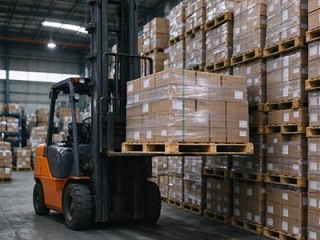 Forklift Configuration Strategy For Dense Warehousing, Warehouse ForkliftDense warehousing needs matched forklifts besides racks. Reach and trilateral stackers fit different layouts, coordinate aisle, load curve and floor for smooth handling.
Do you like ?0
Read more -
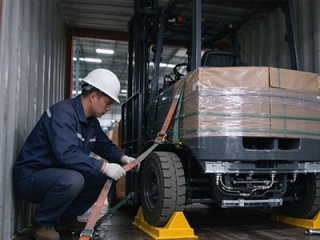 Full Container Supply For Export Forklifts, Forklift ManufacturerBulk forklift orders for overseas can ship by FCL or LCL. Newnewton FCL offers stable freight, safer packing and mixed models for large purchases.
Do you like ?0
Read more -
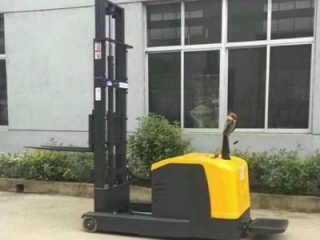 Stand-on Reach Stacker For Narrow Aisle Stacking, Mast Reach StructureStand-on reach stackers feature sliding masts that stay outside racks. They boost storage density in narrow aisles and require flat floors and standard pallets.
Do you like ?0
Read more -
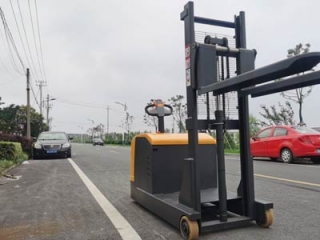 Stand-on Counterbalance Stacker For Various Pallets, Why No Leg RestrictionCounterbalance stackers have no front outriggers, using rear counterweight to avoid pallet interference. They fit various odd pallets yet need wider warehouse aisles.
Do you like ?0
Read more -
 Custom Walk-Behind Counterbalance Stacker | Non-Standard ModificationsStandard walk-behind counterbalance stackers struggle with non-standard pallets and tight aisles. Customize load, lift, forks and structure, share working conditions for safe design.
Do you like ?0
Read more








