
Is the automatic lifting platform not as safe as the manual lifting platform?
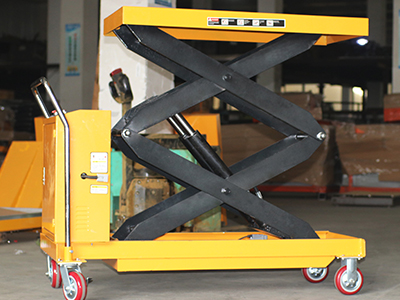
Before discussing the safety of the fully automatic lifting platform and the manual platform scissor lift, let's first understand some of the working principles and uses of these two models.
There are many kinds of automatic lifting platforms. Here we mainly introduce small electric lifting platform vehicles, which are lifting equipment with electric power as the power source. Fully automatic lifting platform vehicles are often used for material transportation of assembly line parts in production workshops. Supporting use of work equipment with a drop. Some of the electric platforms are plug-in, the length of the cable is limited, and the operating range of the car is also limited. Now few customers use it. The most commonly used is the electric lifting platform equipped with a battery, and the operating range is not limited. In general, the electric lifting platform is equipped with a device to limit overload. If the platform truck is overweight, it cannot be lifted, and the overweight will relieve the pressure. The lifting and lowering of the electric platform truck has a guide wheel that moves on a fixed track to promote the expansion and contraction of the scissor fork to raise or lower the table.
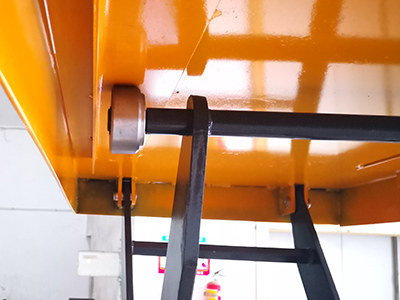
The lifting height of the fully automatic lifting platform truck can be lifted freely within the maximum height range, and the height can be adjusted according to the needs. The lifting speed is uniform and there is no speed adjustment. It can be started and stopped at any time by button operation.
The manual lifting platform is completely operated by manpower to carry out a series of movements such as lifting and moving. Its function is the same as that of the electric lifting platform. Of course, the work efficiency is not as good as electric. The manual lifting platform is raised by foot and lowered by hand. The speed is also not adjustable, and the lifting height can be adjusted at will within the maximum lifting range. If the load is overweight, there will be pressure relief restrictions.
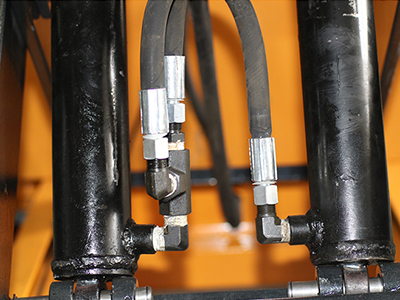
Judging from the above content, in addition to the different power sources, many of these two lifting platform vehicles are technically mature mechanical equipment, and they can be used with confidence.
-
 Reliability Of Newnewton Warehouse Forklifts For Heavy-Duty ShiftsWarehouse forklift reliability relies on industrial parts, reinforced frames and factory durability tests. Proper operation and maintenance reduce unexpected downtime.
Do you like ?0
Read more -
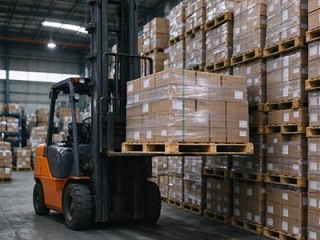 Forklift Configuration Strategy For Dense Warehousing, Warehouse ForkliftDense warehousing needs matched forklifts besides racks. Reach and trilateral stackers fit different layouts, coordinate aisle, load curve and floor for smooth handling.
Do you like ?0
Read more -
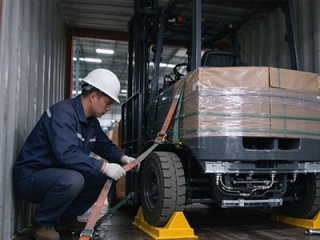 Full Container Supply For Export Forklifts, Forklift ManufacturerBulk forklift orders for overseas can ship by FCL or LCL. Newnewton FCL offers stable freight, safer packing and mixed models for large purchases.
Do you like ?0
Read more -
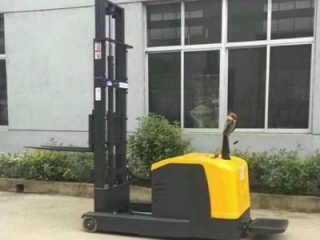 Stand-on Reach Stacker For Narrow Aisle Stacking, Mast Reach StructureStand-on reach stackers feature sliding masts that stay outside racks. They boost storage density in narrow aisles and require flat floors and standard pallets.
Do you like ?0
Read more -
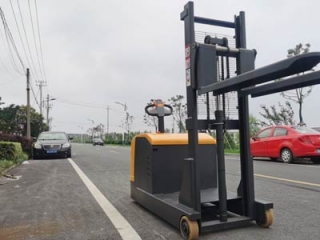 Stand-on Counterbalance Stacker For Various Pallets, Why No Leg RestrictionCounterbalance stackers have no front outriggers, using rear counterweight to avoid pallet interference. They fit various odd pallets yet need wider warehouse aisles.
Do you like ?0
Read more -
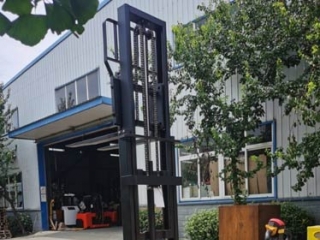 Custom Walk-Behind Counterbalance Stacker | Non-Standard ModificationsStandard walk-behind counterbalance stackers struggle with non-standard pallets and tight aisles. Customize load, lift, forks and structure, share working conditions for safe design.
Do you like ?0
Read more








