
Stand-on Counterbalance Stacker | Application & Suitable Warehouse Types
It is tough to stack heavy goods in industrial warehouses, raw material storage areas and large cargo yards. Ordinary forklifts feature low chassis and large overall size, which require wide aisles for normal operation and waste lots of storage space. If you are troubled by heavy cargo stacking under space constraints, the stand-on legless stacker will be your perfect choice.
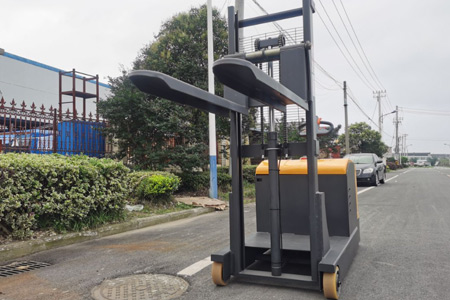
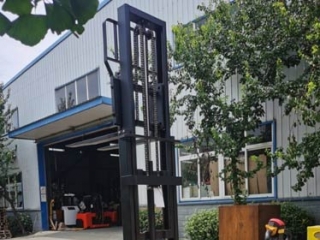
This kind of stand-on counterbalance stacker adopts legless structure and rear counterweight design, ensuring excellent stability and superior flexibility during operation. Operators never need to worry about support legs colliding with racks or chassis being damaged. It breaks various site restrictions and solves the difficulty of working in narrow spaces perfectly.
Designed with stand-on operation mode, the whole vehicle owns more compact structure. It saves physical strength greatly since workers do not need to walk while working. The open operating view effectively reduces operating risks. Equipped with sensitive control system and small turning radius, the stand-on legless stacker delivers outstanding convenience and agility.
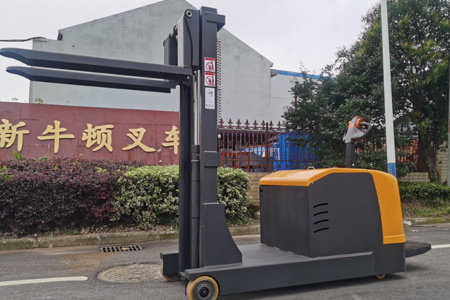
Made of high-strength solid materials, its mast boasts stable load-bearing capacity. It is fully capable of high-level stacking and short-distance transportation of heavy materials and full pallets with smooth and steady lifting movement, greatly improving overall working safety. Since no extra space is reserved for support legs, it can work closely alongside shelves and goods, effectively raising warehouse space utilization rate.
After learning all advantages, you will clearly know what warehouses are suitable for stand-on counterbalance stacker. It works well not only in standardized regular warehouses, but also in old-style warehouses with messy layout, realizing efficient heavy goods stacking even in compact storage areas.
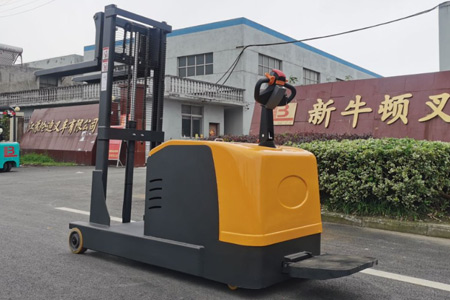
Widely applicable scenarios include large logistics warehouses, industrial raw material depots, hardware and building material storage, furniture goods warehouses and heavy parts workshop storehouses. The stand-on counterbalance stacker is not limited by site layout and cargo placement ways, balancing strong load capacity and flexible passing performance perfectly. Contact us now for customized solutions or come to our factory for on-site experience.
-
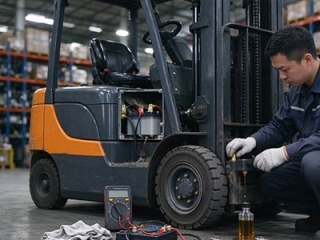 Reliability Of Newnewton Warehouse Forklifts For Heavy-Duty ShiftsWarehouse forklift reliability relies on industrial parts, reinforced frames and factory durability tests. Proper operation and maintenance reduce unexpected downtime.
Do you like ?0
Read more -
 Forklift Configuration Strategy For Dense Warehousing, Warehouse ForkliftDense warehousing needs matched forklifts besides racks. Reach and trilateral stackers fit different layouts, coordinate aisle, load curve and floor for smooth handling.
Do you like ?0
Read more -
 Full Container Supply For Export Forklifts, Forklift ManufacturerBulk forklift orders for overseas can ship by FCL or LCL. Newnewton FCL offers stable freight, safer packing and mixed models for large purchases.
Do you like ?0
Read more -
 Stand-on Reach Stacker For Narrow Aisle Stacking, Mast Reach StructureStand-on reach stackers feature sliding masts that stay outside racks. They boost storage density in narrow aisles and require flat floors and standard pallets.
Do you like ?0
Read more -
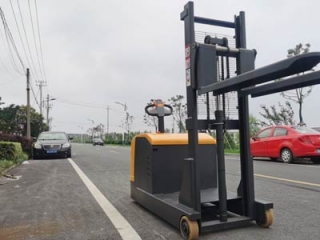 Stand-on Counterbalance Stacker For Various Pallets, Why No Leg RestrictionCounterbalance stackers have no front outriggers, using rear counterweight to avoid pallet interference. They fit various odd pallets yet need wider warehouse aisles.
Do you like ?0
Read more -
 Custom Walk-Behind Counterbalance Stacker | Non-Standard ModificationsStandard walk-behind counterbalance stackers struggle with non-standard pallets and tight aisles. Customize load, lift, forks and structure, share working conditions for safe design.
Do you like ?0
Read more








