Step by Step Stability — A Guide to Pedestrian Stackers Operation Management
In modern warehousing and logistics systems, the walk-behind stacker, as an important member of light and small handling equipment, is widely used in warehouses, workshops, supermarkets, and distribution centers due to its flexibility, convenience, and efficiency. It not only improves cargo handling efficiency but also plays an irreplaceable role in the 'last mile' of logistics. To ensure the safe operation and standardized handling of walk-behind stackers, this article is specially written to popularize operating knowledge, strengthen safety awareness, and improve work efficiency.
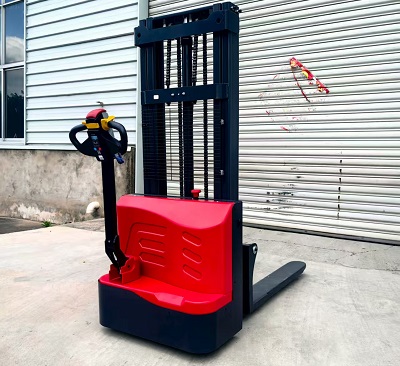
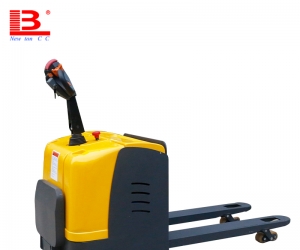
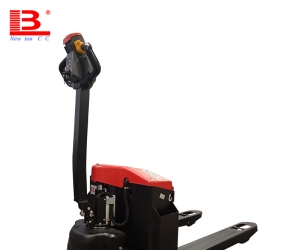
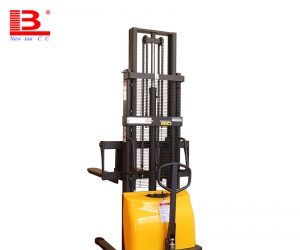
1. Understanding Walk-Behind Stackers: Small size, great powerWalk-behind stackers (also known as manual stackers or semi-electric stackers) mainly rely on human power for movement, while some models are equipped with an electric lifting system to achieve short-distance transport and vertical stacking of goods. They have a compact structure, simple operation, and low maintenance costs, making them suitable for medium-to-low height stacking operations and an ideal choice for small and medium enterprises and high-frequency handling scenarios.2. Pre-Operation Preparation: Safety Starts with Details1. Personnel Requirements: Operators must be at least 18 years old, physically healthy, and free from diseases or disabilities that could affect operation. They must receive professional training, be familiar with equipment performance and operating procedures, and possess basic safety awareness and emergency handling skills.
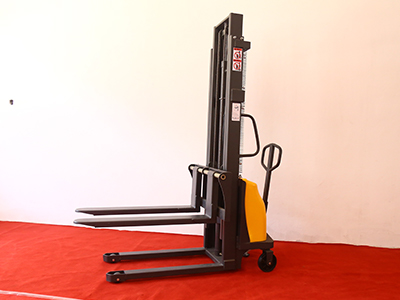
2. Equipment: Operators must wear personal protective equipment such as safety helmets, anti-smash shoes, and protective gloves before operation. Wearing watches, bracelets, or other items that can get caught is strictly prohibited.3. Equipment Inspection:- Check whether the forks and fork arms are deformed or worn, and replace them if necessary;- Ensure the hydraulic system has no leaks and that the pipelines are securely connected;- Check whether the wheels rotate smoothly and whether the braking device is effective;- For semi-electric models, ensure the battery is sufficiently charged and control buttons are responsive and reliable;- Clear obstacles in the working area, ensure the floor is flat, dry, and free of oil.
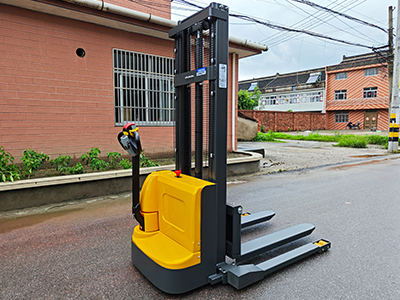
3. Operation Norms: Steady First, Safety Foremost1. Loading and Handling:- Goods should be placed steadily in the center of the forks and moved as far back as possible to the fork heel to prevent tipping;- Overloading is strictly prohibited; strictly follow the rated load indicated on the equipment nameplate;- Maintain a uniform speed while pushing, avoid sudden stops or starts, and slow down when turning.
2. Stacking Operations:- Before lifting, ensure there are no people or obstacles nearby and the lifting area is safe;- Operate the lifting process smoothly, prohibiting rapid ascent or sudden descent;- Stacked goods should be neat and stable, not exceeding the specified height limit, to avoid tilting or falling;- Personnel are forbidden to stand on or under the forks during operation.
3. Driving and Parking:- Remain alert while moving, watch for pedestrians and obstacles, and follow aisle signage;- Keep the forks 10-15cm off the ground when empty to avoid dragging and wear;- When parking, choose a flat and stable surface, engage the handbrake, turn off the power (if applicable), and lower the forks to the lowest position.4. Emergency Handling: Stay Calm and Respond Scientifically- If abnormal noises, vibrations, or brake failures are detected, stop using immediately, hang a 'Fault Warning' sign, and report for maintenance;- In the event of cargo tipping or equipment overturning, quickly evacuate the danger area.
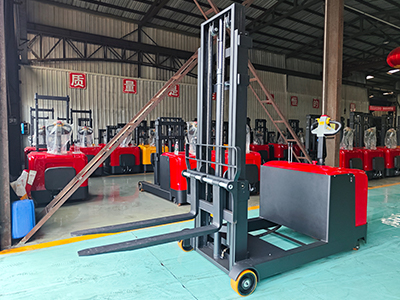
● In case of cargo spillage or equipment overturning, quickly evacuate the danger area, set up warning lines, and promptly report to the supervisor;
● In the event of electrical faults, never touch the circuits with bare hands; power should be cut off and handled by professionals;
● If someone is injured, immediately initiate the emergency plan, provide first aid, and call emergency services.V. Daily Maintenance and Management: Train a soldier for a thousand days, use him for one moment
● After daily operations, clean the vehicle and remove oil stains and debris;
● Regularly lubricate parts such as chains and axles;
● Check hydraulic oil levels and the tightness of fasteners weekly;
● Maintain an equipment ledger to record usage, inspections, and maintenance;
● Strictly implement the "certified operator" system, and regularly organize safety training and assessments.VI. Safety Culture Promotion: Everyone is a Safety OfficerSafety relies not only on regulations but also on awareness. Enterprises should cultivate a culture of "safety first, prevention foremost," commend operators for standard practices, and strictly address violations. Employees are encouraged to proactively report hazards and participate in safety improvements to jointly create a zero-accident working environment.Conclusion:Although pedestrian stackers are small, they carry the dual mission of efficiency and safety. Standardized operation is not only a respect for equipment but also a responsibility for life. Let us start with each push and each stacking, safeguarding safety with professionalism, achieving efficiency through attention to detail, and making every step steady and strong.
-
 Reliability Of Newnewton Warehouse Forklifts For Heavy-Duty ShiftsWarehouse forklift reliability relies on industrial parts, reinforced frames and factory durability tests. Proper operation and maintenance reduce unexpected downtime.
Do you like ?0
Read more -
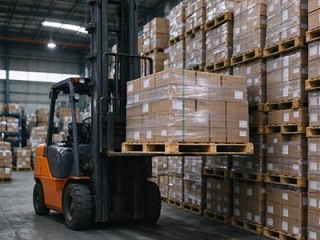 Forklift Configuration Strategy For Dense Warehousing, Warehouse ForkliftDense warehousing needs matched forklifts besides racks. Reach and trilateral stackers fit different layouts, coordinate aisle, load curve and floor for smooth handling.
Do you like ?0
Read more -
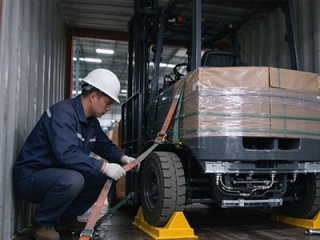 Full Container Supply For Export Forklifts, Forklift ManufacturerBulk forklift orders for overseas can ship by FCL or LCL. Newnewton FCL offers stable freight, safer packing and mixed models for large purchases.
Do you like ?0
Read more -
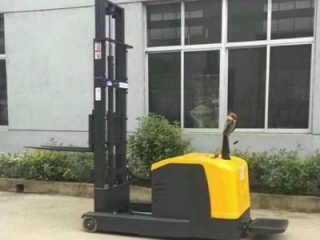 Stand-on Reach Stacker For Narrow Aisle Stacking, Mast Reach StructureStand-on reach stackers feature sliding masts that stay outside racks. They boost storage density in narrow aisles and require flat floors and standard pallets.
Do you like ?0
Read more -
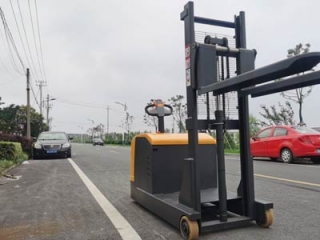 Stand-on Counterbalance Stacker For Various Pallets, Why No Leg RestrictionCounterbalance stackers have no front outriggers, using rear counterweight to avoid pallet interference. They fit various odd pallets yet need wider warehouse aisles.
Do you like ?0
Read more -
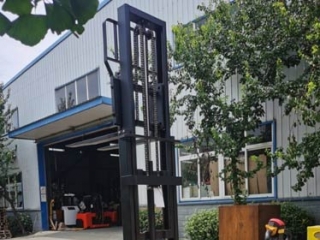 Custom Walk-Behind Counterbalance Stacker | Non-Standard ModificationsStandard walk-behind counterbalance stackers struggle with non-standard pallets and tight aisles. Customize load, lift, forks and structure, share working conditions for safe design.
Do you like ?0
Read more