What Scenarios Are Suitable for a Ride-On Reach Truck? A Complete Guide
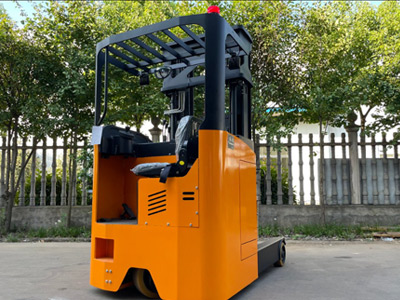
Many people know that reach trucks can work freely in narrow aisles and work well with racking systems. But since a ride‑on reach truck has a larger body, many customers ask: what scenarios are ride‑on reach truck applications most suitable for?
Scenario 1: High‑Level Rack Warehousing (Lifting Height 3m–8m+)
Standard stackers cannot reach high levels, and counterbalance forklifts lack stability.A ride‑on reach truck features extendable forks, making high‑level loading and unloading much safer.
Scenario 2: Narrow‑Aisle Warehouses (Aisle Width Only 1.8–2.5m)
No large turning radius is needed. The forks extend forward while the body stays steady.This makes ride‑on reach truck applications ideal for extremely narrow passages and greatly improves warehouse space utilization.
Scenario 3: High‑Density & High‑Rack Storage
E-commerce warehouses, third‑party logistics centers, auto parts warehouses, cold‑chain warehouses, and more.These sites need more pallet positions, saved space, and fast turnover — all supported by a stable ride‑on reach truck.
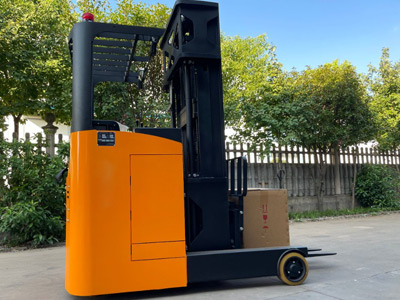
Scenario 4: Long‑Distance & High‑Frequency Handling
With a ride‑on design, operators do not need to walk and feel less fatigued.Faster travel speed makes ride‑on reach truck applications perfect for large warehouses and long‑distance tasks.
Scenario 5: Standard Palletized Cargo Handling
A ride‑on reach truck works best with standard pallets for full‑pallet inbound and outbound operations.Typical industries include food, electronics, hardware, daily chemicals, pharmaceuticals, and other regulated warehouses.
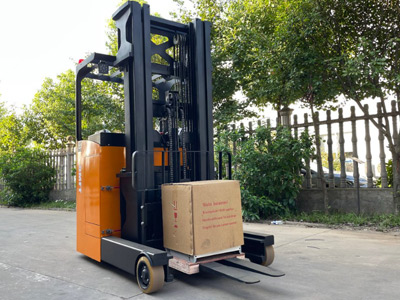
The ride‑on reach truck offers clear advantages in safety, comfort, and maneuverability.By understanding real ride‑on reach truck applications, you can greatly improve operational efficiency, solve low turnover and poor space usage issues, and help factories and warehouses work more smoothly and efficiently.
-
 Reliability Of Newnewton Warehouse Forklifts For Heavy-Duty ShiftsWarehouse forklift reliability relies on industrial parts, reinforced frames and factory durability tests. Proper operation and maintenance reduce unexpected downtime.
Do you like ?0
Read more -
 Forklift Configuration Strategy For Dense Warehousing, Warehouse ForkliftDense warehousing needs matched forklifts besides racks. Reach and trilateral stackers fit different layouts, coordinate aisle, load curve and floor for smooth handling.
Do you like ?0
Read more -
 Full Container Supply For Export Forklifts, Forklift ManufacturerBulk forklift orders for overseas can ship by FCL or LCL. Newnewton FCL offers stable freight, safer packing and mixed models for large purchases.
Do you like ?0
Read more -
 Stand-on Reach Stacker For Narrow Aisle Stacking, Mast Reach StructureStand-on reach stackers feature sliding masts that stay outside racks. They boost storage density in narrow aisles and require flat floors and standard pallets.
Do you like ?0
Read more -
 Stand-on Counterbalance Stacker For Various Pallets, Why No Leg RestrictionCounterbalance stackers have no front outriggers, using rear counterweight to avoid pallet interference. They fit various odd pallets yet need wider warehouse aisles.
Do you like ?0
Read more -
 Custom Walk-Behind Counterbalance Stacker | Non-Standard ModificationsStandard walk-behind counterbalance stackers struggle with non-standard pallets and tight aisles. Customize load, lift, forks and structure, share working conditions for safe design.
Do you like ?0
Read more