
What should do if the fork lifting of self loading pallet stacker has problems?
Self loading pallet stacker is a kind of storage and logistics equipment used for short distance transportation, loading and unloading and stacking of goods. The driver needs to control the lifting, lowering, forward tilting and backward tilting of the fork through the joystick to move the goods to or from the shelf to complete the work. However, any machine may have some minor problems in the case of long working hours or high working intensity. If there is a problem with the fork lifting, the driver will have a headache. What should we do if there is a problem with the fork lifting of the self loading pallet stacker? The stacker truck manufacturer has something to say.
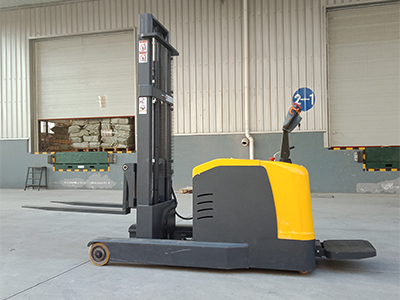
First of all, what if the forks of the self loading pallet stacker automatically descend after lifting or the gantry automatically tilts forward? The reasons may be as follows: First, the valve core and valve body of the distribution valve are seriously worn, and the oil automatically flows back to the oil tank; Second, the hydraulic system leaks; Third, the sealing rings of the lifting and tilting cylinders are damaged, causing the front and rear cavities to be connected; Fourth, the one-way speed limiting valve is damaged. In this case, first check each hydraulic component and connecting pipe for leakage. If not, check and repair according to different problems. If the self loading pallet stacker only drops automatically, check and repair the one-way speed limiting valve and reversing valve. If only the automatic forward tilting of the tilt cylinder occurs to the self loading pallet stacker, the sealing ring and reversing valve of the tilt cylinder need to be overhauled. The stacker truck manufacturer told us that this problem needs to be treated appropriately.
What should we do if the fork lifting speed of the self loading pallet stacker is too slow, which seriously affects the working efficiency? There are many possible reasons for this: First, the oil supply of the gear pump is insufficient; Second, the safety valve fails; Third, the lifting cylinder is seriously worn, resulting in excessive fit clearance between the valve core and valve body; Fourth, there is air in the system; Fifth, there is oil leakage in the system. In this case, it is necessary to check whether there is oil leakage at each connector, element, pipeline and gasket. If not, bleed the system to see if it works. If the problem has not been solved, it is necessary to remove the lifting cylinder, gear pump and safety valve, check whether they can operate normally, and replace them as required. According to the method told by the stacker truck manufacturer, the problem will be solved quickly.
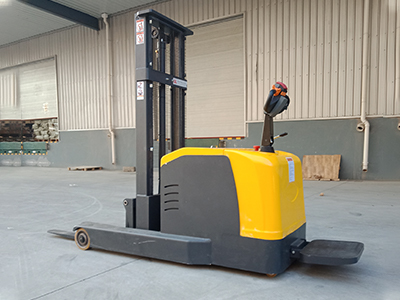
In case of any problem with fork lifting of self loading pallet stacker again, don't worry, just check it step by step, find the root of the problem, and repair or replace the parts. If it is really difficult, you need to ask professional maintenance personnel. The stacker truck manufacturer is equipped with perfect and high-quality after-sales service, and will solve problems online 24 hours a day, so you can consult.
-
 Reliability Of Newnewton Warehouse Forklifts For Heavy-Duty ShiftsWarehouse forklift reliability relies on industrial parts, reinforced frames and factory durability tests. Proper operation and maintenance reduce unexpected downtime.
Do you like ?0
Read more -
 Forklift Configuration Strategy For Dense Warehousing, Warehouse ForkliftDense warehousing needs matched forklifts besides racks. Reach and trilateral stackers fit different layouts, coordinate aisle, load curve and floor for smooth handling.
Do you like ?0
Read more -
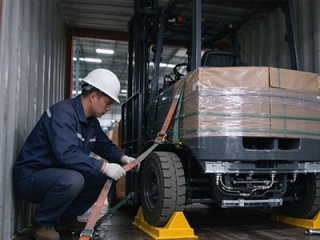 Full Container Supply For Export Forklifts, Forklift ManufacturerBulk forklift orders for overseas can ship by FCL or LCL. Newnewton FCL offers stable freight, safer packing and mixed models for large purchases.
Do you like ?0
Read more -
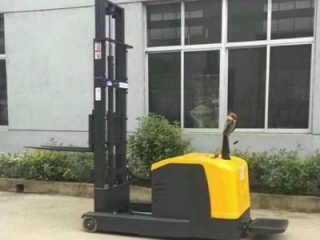 Stand-on Reach Stacker For Narrow Aisle Stacking, Mast Reach StructureStand-on reach stackers feature sliding masts that stay outside racks. They boost storage density in narrow aisles and require flat floors and standard pallets.
Do you like ?0
Read more -
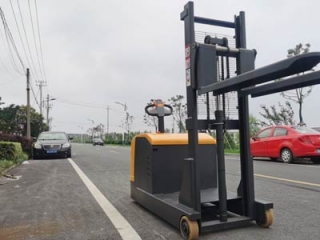 Stand-on Counterbalance Stacker For Various Pallets, Why No Leg RestrictionCounterbalance stackers have no front outriggers, using rear counterweight to avoid pallet interference. They fit various odd pallets yet need wider warehouse aisles.
Do you like ?0
Read more -
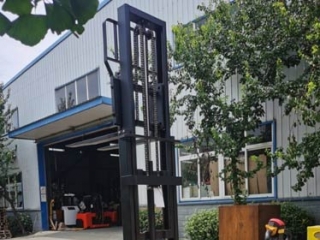 Custom Walk-Behind Counterbalance Stacker | Non-Standard ModificationsStandard walk-behind counterbalance stackers struggle with non-standard pallets and tight aisles. Customize load, lift, forks and structure, share working conditions for safe design.
Do you like ?0
Read more








