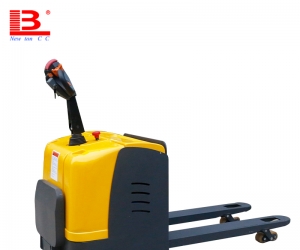
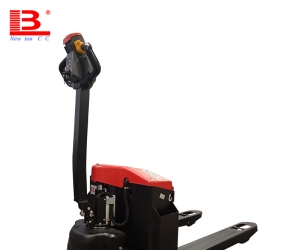
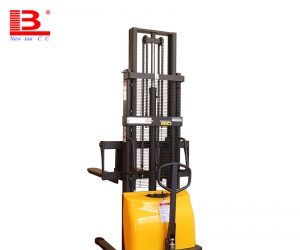
Semi-electric Stacker: Rain Protection & Daily Maintenance Tips
As rainy season approaches, many users ask: Will semi-electric stacker get damaged in rain? The result depends on rainfall duration and daily maintenance. Below is a complete guide for rain protection and routine upkeep.
Different Rain Conditions & Risks
Light short rain If the vehicle is only slightly splashed, wipe off water timely and it will work normally. Standard protective structures can resist a small amount of moisture.
Heavy rain, prolonged exposure or water immersion (High Risk) This will severely damage the semi-electric stacker, mainly affecting three core parts:
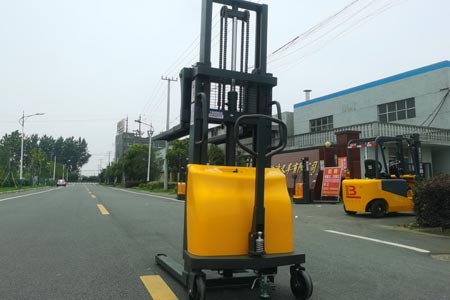
Electrical system: Water seeps into control handles, electric boxes, terminals and motors, causing short circuits, unresponsive buttons and burnt components with high repair costs.
Metal structure: Frame, mast, lifting chains and rollers rust rapidly. It leads to stuck parts and slow lifting movement.
Hydraulic system: Mixed rainwater makes hydraulic oil emulsify. The oil loses performance, resulting in weak lifting, oil leakage and accelerated wear of cylinders and pumps.
Hidden troubles after rain Trapped moisture will cause corrosion and electric leakage over time, leading to frequent minor faults within months. Always keep the stacker away from rain.
Emergency Solutions After Getting Wet
Precaution: Park the vehicle indoors or under shelters in heavy rain. Use waterproof covers for electric boxes and handles during temporary outdoor work.
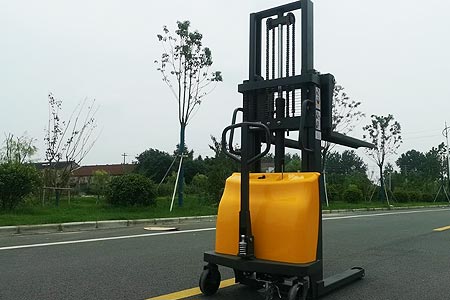
Power off immediately after rain. Do not operate lifting functions to avoid short circuits.
Wipe all water on the body and connectors. Open the electric box and dry internal moisture with a low-temperature hair dryer. Leave it ventilated for 1-2 hours before use.
Test all functions after powering on. Check for abnormal noise and leakage. Clean metal parts and reapply lubricant.
Daily Maintenance for Semi-electric Stacker
Daily Checks
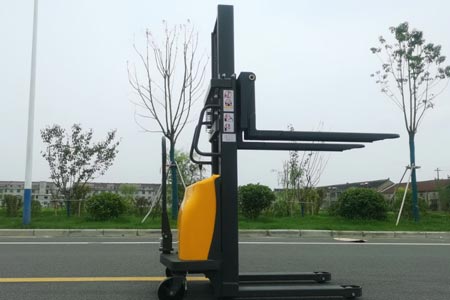
Inspect sealing strips of the body and electric box, replace damaged strips to block moisture.
Clean dust and water on masts, chains and rollers.
Lubricate chains and rotating shafts for rust and jam prevention.
Park in dry and ventilated areas, never stay in low-lying waterlogged zones.
Weekly Checks
Examine wires for breakage and loose or oxidized terminals, repair issues in time.
Check hydraulic oil level and quality. Replace emulsified oil and clean the tank once found.
Remove rust on exposed metal surfaces and apply anti-rust paint when necessary.
Monthly Checks
Disassemble and clean electric components, replace aging sealing rings.
Fully lubricate all moving parts including mast rails, bearings and chains.
Test lifting performance under load to eliminate potential faults.
Proper protection and maintenance in daily work and rainy days can cut maintenance costs by over 30% and reduce breakdowns. Follow these tips to keep your semi-electric stacker in good condition all year round.
-
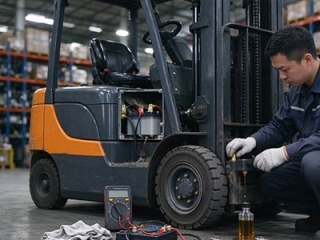 Reliability Of Newnewton Warehouse Forklifts For Heavy-Duty ShiftsWarehouse forklift reliability relies on industrial parts, reinforced frames and factory durability tests. Proper operation and maintenance reduce unexpected downtime.
Do you like ?0
Read more -
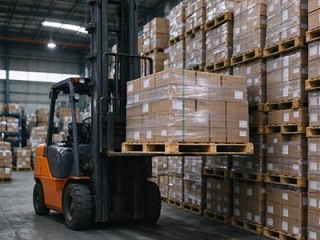 Forklift Configuration Strategy For Dense Warehousing, Warehouse ForkliftDense warehousing needs matched forklifts besides racks. Reach and trilateral stackers fit different layouts, coordinate aisle, load curve and floor for smooth handling.
Do you like ?0
Read more -
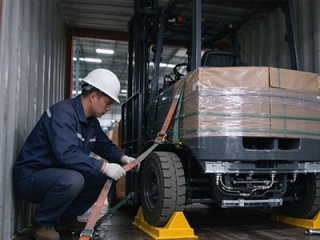 Full Container Supply For Export Forklifts, Forklift ManufacturerBulk forklift orders for overseas can ship by FCL or LCL. Newnewton FCL offers stable freight, safer packing and mixed models for large purchases.
Do you like ?0
Read more -
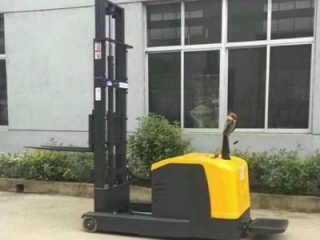 Stand-on Reach Stacker For Narrow Aisle Stacking, Mast Reach StructureStand-on reach stackers feature sliding masts that stay outside racks. They boost storage density in narrow aisles and require flat floors and standard pallets.
Do you like ?0
Read more -
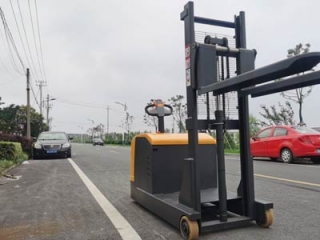 Stand-on Counterbalance Stacker For Various Pallets, Why No Leg RestrictionCounterbalance stackers have no front outriggers, using rear counterweight to avoid pallet interference. They fit various odd pallets yet need wider warehouse aisles.
Do you like ?0
Read more -
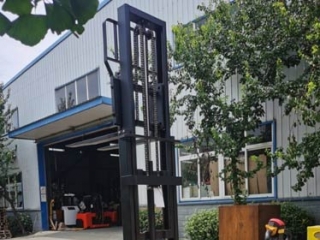 Custom Walk-Behind Counterbalance Stacker | Non-Standard ModificationsStandard walk-behind counterbalance stackers struggle with non-standard pallets and tight aisles. Customize load, lift, forks and structure, share working conditions for safe design.
Do you like ?0
Read more