
Stainless Steel Manual Hydraulic Pallet Jack | Tonnage Selection Guide
If you are planning to purchase a Stainless Steel Manual Hydraulic Pallet Jack, this guide will help you select the right tonnage according to your factory and warehouse conditions. Choosing the proper capacity allows you to buy the most suitable equipment without wasting budget or picking the wrong model.
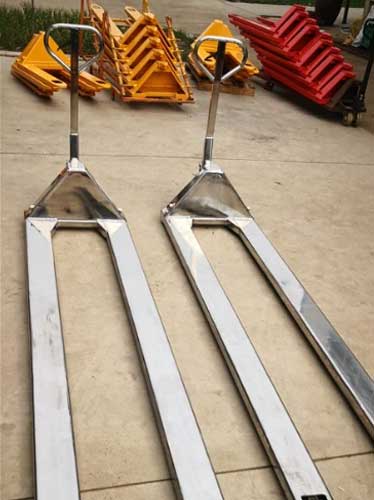
This is especially important for humid, acid-base, food, chemical and cold storage environments, where a stainless steel pallet jack is essential. Selecting the wrong tonnage may cause overload deformation, oil leakage, or even cargo tipping and safety risks. With the right capacity, the pallet jack can stay rust-free and trouble-free for years with simple maintenance.
Standard Tonnage Load Specifications
2.0 Ton: Rated load 2000kg, ideal for light cartons, small goods and daily scattered handling.
2.5 Ton: General standard model with 2500kg capacity, widely used in regular warehouses and retail stock replenishment.
3.0 Ton: Heavy-duty 3000kg, suitable for full pallet heavy goods, raw material boxes and standard industrial pallet transportation.
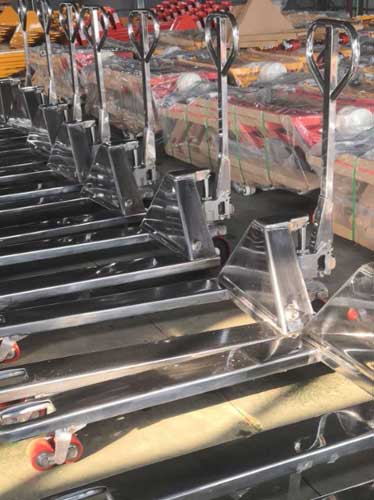
5.0 Ton: Max load 5000kg, only for large factory goods and heavy equipment pallet movement.
Recommended Tonnage for Different Industries
Food Workshops & Medical Warehouses
Humid and frequently cleaned environments require anti-corrosion performance. Mainly light full pallet cargo, the 2.5 ton model is the preferred option with good rust and corrosion resistance.
Cold Storage & Cold Chain Warehouses
Large temperature differences and high humidity easily corrode ordinary pallet trucks. For standard pallet goods, choose 3 ton for stable performance and cold resistance.
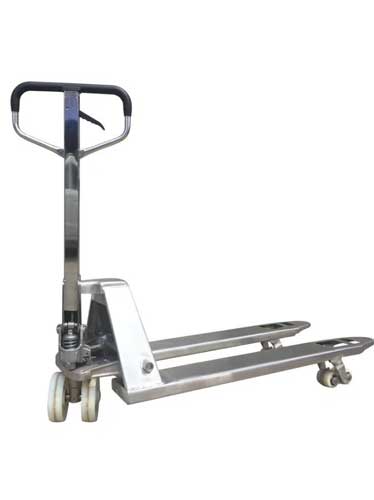
Chemical Corrosive Workshops
Acid and alkali fumes and corrosive floors require stronger load capacity and material durability. Choose 3 ton or above for solid frame strength and excellent corrosion resistance.
Small Stores & E-commerce Mini Warehouses
Mainly small parcels and cartons with low handling frequency. 2.0 ton or 2.5 ton models fully meet daily needs with high cost performance.
When learning How to Choose Tonnage for Stainless Steel Pallet Jack, always leave a reasonable load margin. The total weight of goods plus pallets should be lower than the rated capacity to avoid overloading. Never choose a smaller tonnage just to save cost. Long-term overload will cause deformation and oil leakage, greatly shortening service life. If you still have questions about tonnage selection, feel free to contact us for professional advice.
-
 Reliability Of Newnewton Warehouse Forklifts For Heavy-Duty ShiftsWarehouse forklift reliability relies on industrial parts, reinforced frames and factory durability tests. Proper operation and maintenance reduce unexpected downtime.
Do you like ?0
Read more -
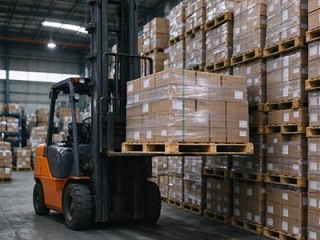 Forklift Configuration Strategy For Dense Warehousing, Warehouse ForkliftDense warehousing needs matched forklifts besides racks. Reach and trilateral stackers fit different layouts, coordinate aisle, load curve and floor for smooth handling.
Do you like ?0
Read more -
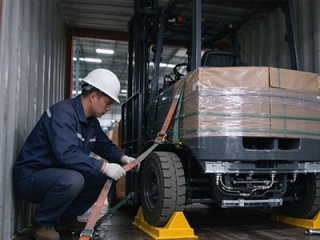 Full Container Supply For Export Forklifts, Forklift ManufacturerBulk forklift orders for overseas can ship by FCL or LCL. Newnewton FCL offers stable freight, safer packing and mixed models for large purchases.
Do you like ?0
Read more -
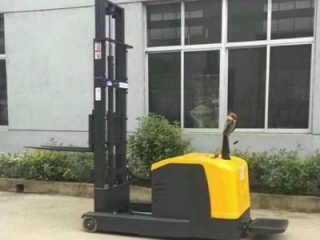 Stand-on Reach Stacker For Narrow Aisle Stacking, Mast Reach StructureStand-on reach stackers feature sliding masts that stay outside racks. They boost storage density in narrow aisles and require flat floors and standard pallets.
Do you like ?0
Read more -
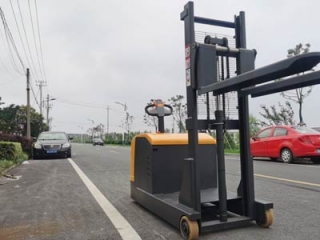 Stand-on Counterbalance Stacker For Various Pallets, Why No Leg RestrictionCounterbalance stackers have no front outriggers, using rear counterweight to avoid pallet interference. They fit various odd pallets yet need wider warehouse aisles.
Do you like ?0
Read more -
 Custom Walk-Behind Counterbalance Stacker | Non-Standard ModificationsStandard walk-behind counterbalance stackers struggle with non-standard pallets and tight aisles. Customize load, lift, forks and structure, share working conditions for safe design.
Do you like ?0
Read more








