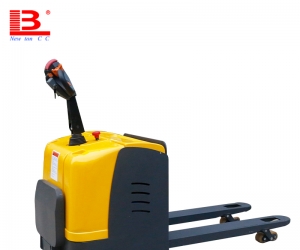
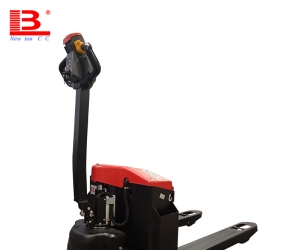
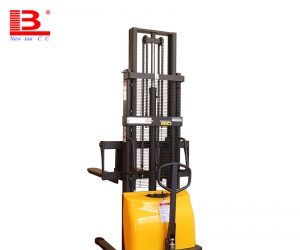
At present, the ride-on counterbalance stacker has become the core equipment for medium and small tonnage material handling. Many enterprises and factories are attracted by its strong handling capacity and flexible operation, hoping to solve traditional problems such as difficult unloading, narrow aisle jamming and pallet limitation caused by standard leg-type forklifts. Today I will give a detailed explanation of this product to help you fully understand this equipment.
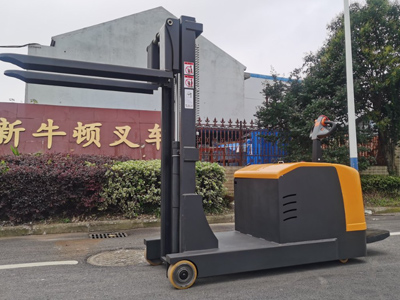
Structural Advantages: No Front Legs, Rear Counterweight
This forklift mainly relies on cast iron counterweights at the rear to maintain load balance, which achieves the same effect as supporting legs. To overcome the problems of traditional leg-type forklifts, the rear counterweight design is adopted. This allows the forks to directly enter various pallets and keep stable without ground support points. The emergence of the legless counterbalance stacker brings new handling solutions.
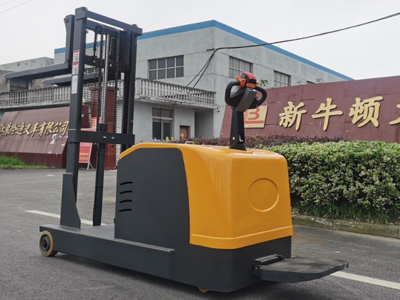
After optimization in 2026, further improvements have been made based on the shortcomings of traditional counterbalance forklifts and the characteristics of the ride-on electric stacker, with better flexibility and stability, making operation easier and more efficient.
Space AdaptabilityThe overall design is more scientific and compact, reducing the turning radius. It can turn flexibly in 2‑meter narrow aisles, and works well in small and medium‑sized e‑commerce warehouses and workshop material areas.
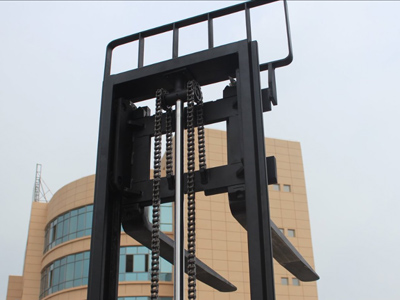
Mast UpgradeTo expand application scenarios and improve efficiency for high stacking and heavy load handling, the mast adopts imported high‑strength steel over 2 cm thick, with tilt functions to ensure goods stay stable during lifting.
Durable ForksForged and integrally cast forks provide stronger load capacity. Without front legs, the forklift fits all kinds of pallets including Tian‑style, Jiu‑style, Chuan‑style and customized non‑standard pallets.
In short, this equipment not only keeps the flexibility of the traditional ride-on electric stacker, but also performs better in pallet handling and high stacking. It is suitable for various scenarios and demands, and greatly improves work efficiency.
-
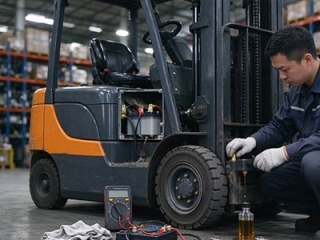 Reliability Of Newnewton Warehouse Forklifts For Heavy-Duty ShiftsWarehouse forklift reliability relies on industrial parts, reinforced frames and factory durability tests. Proper operation and maintenance reduce unexpected downtime.
Do you like ?0
Read more -
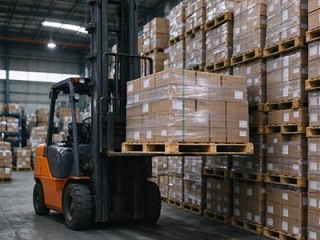 Forklift Configuration Strategy For Dense Warehousing, Warehouse ForkliftDense warehousing needs matched forklifts besides racks. Reach and trilateral stackers fit different layouts, coordinate aisle, load curve and floor for smooth handling.
Do you like ?0
Read more -
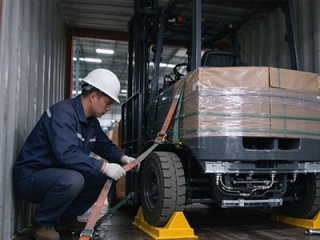 Full Container Supply For Export Forklifts, Forklift ManufacturerBulk forklift orders for overseas can ship by FCL or LCL. Newnewton FCL offers stable freight, safer packing and mixed models for large purchases.
Do you like ?0
Read more -
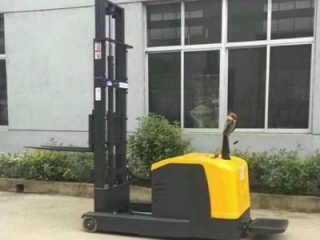 Stand-on Reach Stacker For Narrow Aisle Stacking, Mast Reach StructureStand-on reach stackers feature sliding masts that stay outside racks. They boost storage density in narrow aisles and require flat floors and standard pallets.
Do you like ?0
Read more -
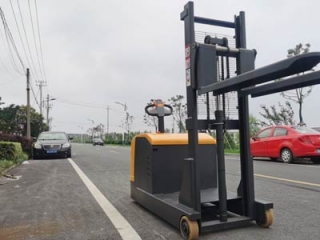 Stand-on Counterbalance Stacker For Various Pallets, Why No Leg RestrictionCounterbalance stackers have no front outriggers, using rear counterweight to avoid pallet interference. They fit various odd pallets yet need wider warehouse aisles.
Do you like ?0
Read more -
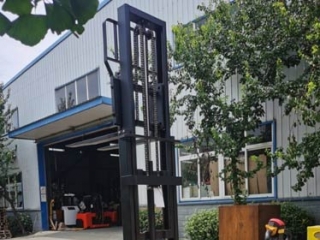 Custom Walk-Behind Counterbalance Stacker | Non-Standard ModificationsStandard walk-behind counterbalance stackers struggle with non-standard pallets and tight aisles. Customize load, lift, forks and structure, share working conditions for safe design.
Do you like ?0
Read more