2026 Load Capacity Selection Guide for Walk-behind Counterbalance Stacker
Planning to purchase a counterbalance stacker in 2026? If warehouse managers and purchasers lack knowledge about this walk-behind handling equipment, take one minute to read this article. We will elaborate on What Are Standard Load Capacities of Walk-behind Counterbalance Stacker and share practical selection skills.
Mass-produced Walk-behind Counterbalance Stacker comes in six standard tonnage grades. Among them, 1 ton, 1.5 ton and 2 ton are the three mainstream models dominating the market, while 0.5 ton, 0.8 ton and 1.2 ton are lightweight segmented variants:
0.5 Ton (500kg) Mini Model
It features a lightweight narrow frame with a minimum turning radius of only 1.2m and lifting heights ranging from 1.6m to 2.5m. Its effective load capacity drops to merely 300kg when lifting to 3m. Ideal for mini retail stores, office supply storage rooms and laboratory sample transport, with daily pallet loads under 500kg and fewer than 10 pallets handled per day. Advantages: Low price and ultra-small footprint; Drawbacks: Insufficient load margin, not suitable for long-term full-load high-lifting operations.
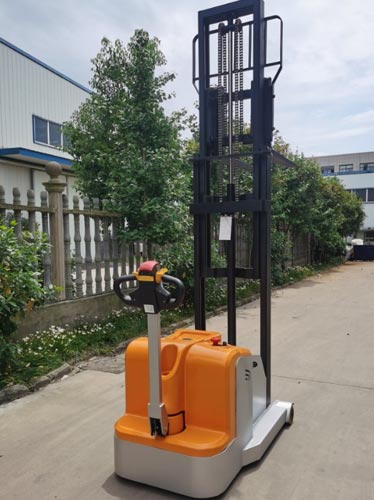
0.8 Ton (800kg) Lightweight Model
Specially designed for daily chemical and apparel small-item warehouses. It can pass through 1.6m-wide aisles, matching low-frequency restocking needs with balanced flexibility and basic load capacity.
1 Ton (1000kg) Entry-level General Bestseller
A top-selling basic model for small and micro enterprises in 2026. Moderate overall weight and low power consumption, with an effective load of roughly 600kg at 3m lifting height. Perfect for regular cartons and food packaging goods weighing 500–800kg per pallet. Suitable for 50–500㎡ warehouses handling 10–30 pallets daily. It is the priority choice for budget-limited buyers, supporting both rack stacking and flat-ground truck loading & unloading.
1.2 Ton (1200kg) Advanced General Model
Its load margin is 20% higher than the 1-ton version, stably carrying 800kg even at 3m lifting height. Suitable for medium-throughput warehouses processing over 30 pallets every day, transporting medium-weight pallets of hardware fittings, grain and oil raw materials.
1.5 Ton (1500kg) All-round Bestseller with Hot Sales in 2026
This Walk-behind Counterbalance Stacker is equipped with thickened manganese steel masts and an upgraded hydraulic system. It still retains a 1-ton effective load at 3m lifting height without body shaking during full-load high-level stacking, handling pallets of 700–1200kg. Widely applied in supermarket back storage, small processing plants and express sorting warehouses. It supports narrow aisle stacking and frequent truck loading without docks, delivering outstanding all-round cost performance as a versatile small electric forklift.
2 Ton (2000kg) Heavy-duty Reinforced Model
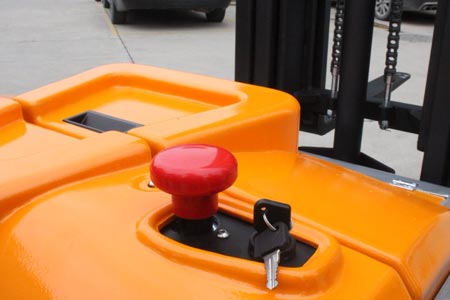
Fitted with thickened masts, heavy counterweights and high-power drive motors, its load capacity barely declines under lifting heights below 2.5m. Made for heavy goods such as hardware castings, barreled chemicals and full pallet construction materials. Choose this model if your warehouse regularly handles pallets over 1.2 tons with continuous heavy-duty operations. Drawbacks: Heavier overall weight and higher procurement cost; it will lead to idle performance and increased power consumption if used in light-goods warehouses.
Core Critical Selection Rules (Must-read for 2026 Procurement)
1. Principle of Reserving Extra Load Margin
Selection standard: Pick one tonnage grade higher than the maximum daily single pallet weight. Example: If your heaviest regular pallet weighs 1 ton, do not select a 1-ton stacker; prioritize the 1.5-ton model instead. Long-term full-load high lifting causes load attenuation, mast deformation and hydraulic oil seal leakage, drastically shortening equipment service life.
2. Lifting Height Directly Reduces Actual Load Capacity (Top Priority)
The higher the stacker lifts, the higher the center of gravity, resulting in synchronous load reduction:
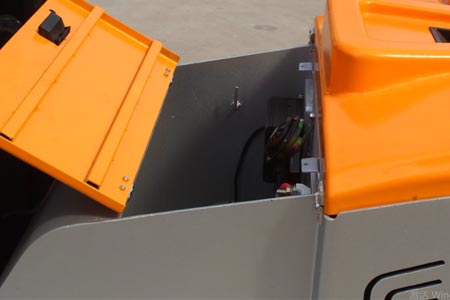
Low-level stacking within 2.5m: Slight rated load attenuation;
Three-layer racks at 3m and above: Actual load capacity of the same model drops by 30%–40%. Upgrade to a higher tonnage model for high-rise rack storage to avoid insufficient lifting power at height.
3. Match Tonnage According to Warehouse Area & Throughput Intensity
50–500㎡, daily throughput < 30 pallets: 0.8t / 1t models suffice;
500–1200㎡, daily throughput 30–60 pallets: All-round 1.2t / 1.5t versions;
Over 800㎡ warehouses, heavy cargo and frequent daily truck loading: 2-ton heavy-duty model.
4. Site Aisle Matching Reference
Narrow-body 1t / 1.5t models require a minimum passage width of 1.6m; the wider 2-ton heavy-duty unit needs at least 1.8m aisles. Measure rack spacing in advance before purchasing.
Feel free to contact us for free consultation and customized solutions if you need selection advice for other specifications of the Walk-behind Counterbalance Stacker!
-
 Reliability Of Newnewton Warehouse Forklifts For Heavy-Duty ShiftsWarehouse forklift reliability relies on industrial parts, reinforced frames and factory durability tests. Proper operation and maintenance reduce unexpected downtime.
Do you like ?0
Read more -
 Forklift Configuration Strategy For Dense Warehousing, Warehouse ForkliftDense warehousing needs matched forklifts besides racks. Reach and trilateral stackers fit different layouts, coordinate aisle, load curve and floor for smooth handling.
Do you like ?0
Read more -
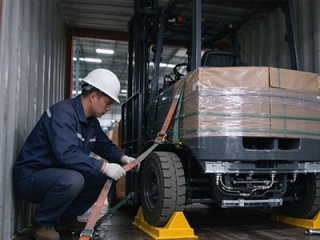 Full Container Supply For Export Forklifts, Forklift ManufacturerBulk forklift orders for overseas can ship by FCL or LCL. Newnewton FCL offers stable freight, safer packing and mixed models for large purchases.
Do you like ?0
Read more -
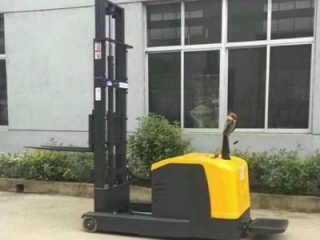 Stand-on Reach Stacker For Narrow Aisle Stacking, Mast Reach StructureStand-on reach stackers feature sliding masts that stay outside racks. They boost storage density in narrow aisles and require flat floors and standard pallets.
Do you like ?0
Read more -
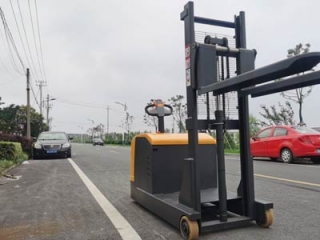 Stand-on Counterbalance Stacker For Various Pallets, Why No Leg RestrictionCounterbalance stackers have no front outriggers, using rear counterweight to avoid pallet interference. They fit various odd pallets yet need wider warehouse aisles.
Do you like ?0
Read more -
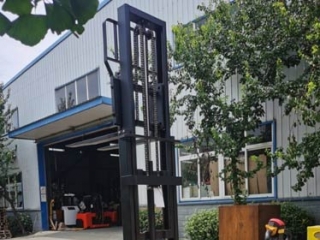 Custom Walk-Behind Counterbalance Stacker | Non-Standard ModificationsStandard walk-behind counterbalance stackers struggle with non-standard pallets and tight aisles. Customize load, lift, forks and structure, share working conditions for safe design.
Do you like ?0
Read more