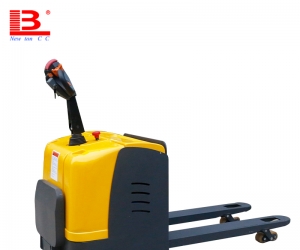
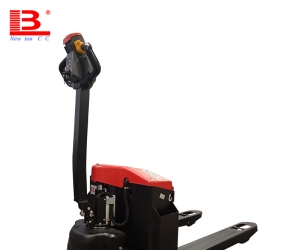
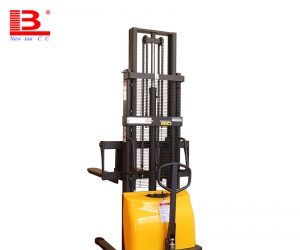
Many businesses handle goods at various locations. Working with a loading dock is convenient, but without one, you often have to rely on manual labor. If you want to greatly improve work efficiency, you should take a closer look at the dockless loading and unloading solutions we provide.
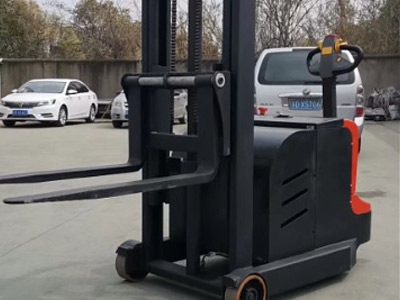
Many teams face unstable loading and unloading environments. A loading dock makes logistics easier, but without it, manual handling is slow and inefficient. In this situation, improving efficiency means choosing the right equipment—and the ground-level loading stacker is built to solve this exact problem. This forklift does not require outriggers, allowing direct loading and unloading at ground level without being limited by height differences.
To help you better understand this equipment, we will explain its key advantages in detail.
No outriggers, free from pallet and dock limitsAs a professional counterbalance forklift, this machine uses a heavy cast-iron counterweight at the rear. There is no need for extra support legs, so you can use pallets of different sizes. This gives you much better flexibility in daily handling operations.
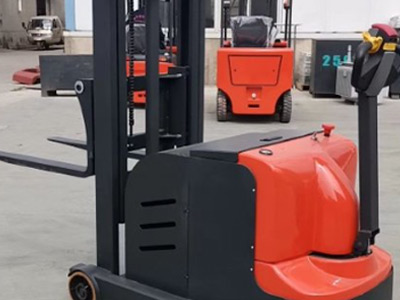
Compact size and excellent maneuverabilityThis forklift features a compact structure. Its turning radius and required aisle width are similar to standard stackers, but it has fewer terrain restrictions. You won’t have to worry about poor maneuverability even with the counterweight design.
Low cost and high cost-performanceNo construction work, no dedicated dock, and no fixed ramps are needed. Just one machine solves all loading and unloading difficulties without extra external conditions. When you calculate the total cost, you will clearly see the long-term benefits.
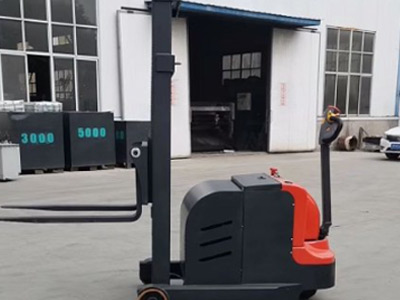
Creating a reliable loading and unloading system does not have to be complicated. The walkie counterbalance stacker is the core of a high-efficiency workflow. This forklift is built with premium quality, using advanced cast-iron technology for a strong and durable structure that can handle tasks in many different work sites.
In particular, the walkie counterbalance stacker offers better maneuverability than ride-on or seated standard models, perfectly meeting the needs of small and medium-sized businesses while effectively lowering overall operating costs.
-
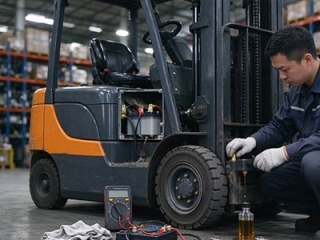 Reliability Of Newnewton Warehouse Forklifts For Heavy-Duty ShiftsWarehouse forklift reliability relies on industrial parts, reinforced frames and factory durability tests. Proper operation and maintenance reduce unexpected downtime.
Do you like ?0
Read more -
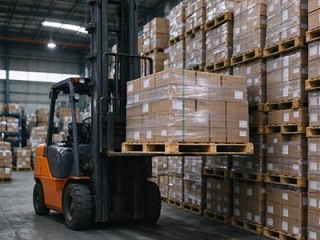 Forklift Configuration Strategy For Dense Warehousing, Warehouse ForkliftDense warehousing needs matched forklifts besides racks. Reach and trilateral stackers fit different layouts, coordinate aisle, load curve and floor for smooth handling.
Do you like ?0
Read more -
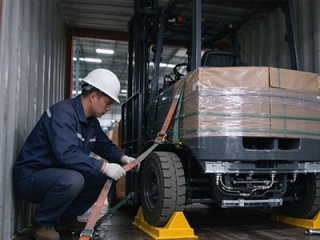 Full Container Supply For Export Forklifts, Forklift ManufacturerBulk forklift orders for overseas can ship by FCL or LCL. Newnewton FCL offers stable freight, safer packing and mixed models for large purchases.
Do you like ?0
Read more -
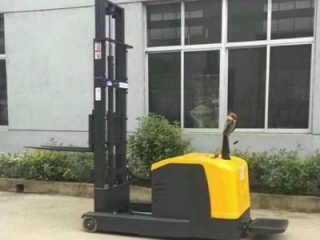 Stand-on Reach Stacker For Narrow Aisle Stacking, Mast Reach StructureStand-on reach stackers feature sliding masts that stay outside racks. They boost storage density in narrow aisles and require flat floors and standard pallets.
Do you like ?0
Read more -
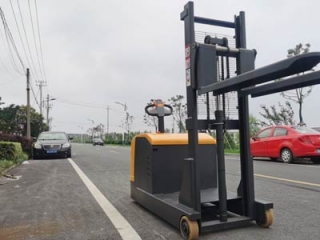 Stand-on Counterbalance Stacker For Various Pallets, Why No Leg RestrictionCounterbalance stackers have no front outriggers, using rear counterweight to avoid pallet interference. They fit various odd pallets yet need wider warehouse aisles.
Do you like ?0
Read more -
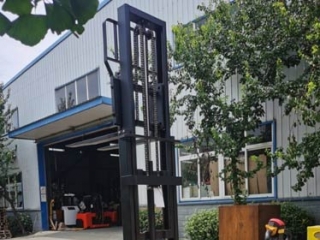 Custom Walk-Behind Counterbalance Stacker | Non-Standard ModificationsStandard walk-behind counterbalance stackers struggle with non-standard pallets and tight aisles. Customize load, lift, forks and structure, share working conditions for safe design.
Do you like ?0
Read more