
How to Choose a Low-Cost Semi-Electric Stacker in 2026? | Guide
Many friends in small and medium-sized warehouses rely on manual labor, which is inefficient. In the new year 2026, they plan to buy stackers directly to improve efficiency. But how to choose a low-cost semi-electric stacker appropriately? This has become a puzzle for many small and medium-sized enterprises. After all, everyone has a limited budget and little room for error, so it is necessary to choose products that better match their own needs when purchasing.
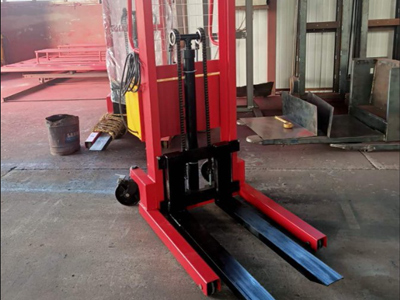
To achieve low cost while meeting needs, I suggest you focus directly on these points:
1. Core components. Low cost does not mean low quality. You should confirm the quality of core components first, and then compare prices while meeting your own operation needs. This way, you will not lose more for less, and you will not encounter the problem that the stacker is not practical enough after purchase. Core components mainly include oil cylinders, hydraulics, forks, and steel selection—you need to pay attention to all these aspects.
2. Different types of stackers. This mainly refers to different operation methods, including walk-behind, pedal-type, foldable and other types. You can choose a product with both efficiency and comfort according to your budget and actual operation intensity. Comfort seems not to affect your operation efficiency, but from a long-term perspective, comfortable operation will make operators more accurate and work longer hours.
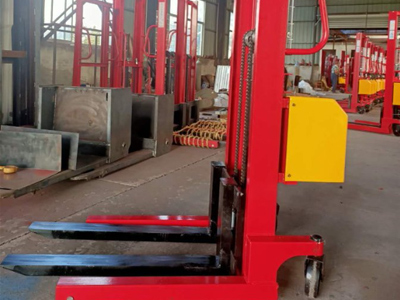
If you have no special needs, the walk-behind semi-electric stacker can meet the needs of various scenarios. Moreover, its load capacity and lifting height cover 1-3 tons and 2-5 meters, directly helping you stack and unload flexibly in small spaces and narrow aisles, with stable lifting and sufficient thrust when lifting and handling goods.
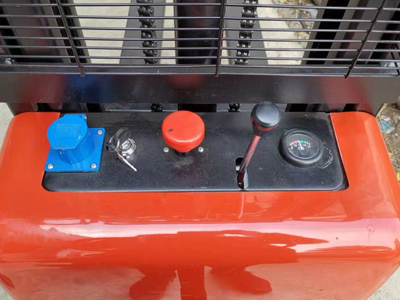
Friends with limited budget and small sites can choose this low-cost semi-electric stacker. The maintenance-free battery design helps you reduce maintenance costs, and only simple daily maintenance is needed. In addition, the stacker is easy to operate, and has become a good helper for many people to reduce costs and improve efficiency in 2026.
-
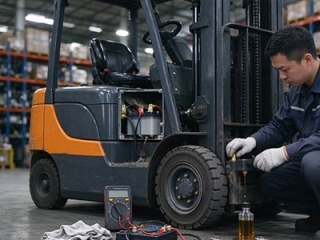 Reliability Of Newnewton Warehouse Forklifts For Heavy-Duty ShiftsWarehouse forklift reliability relies on industrial parts, reinforced frames and factory durability tests. Proper operation and maintenance reduce unexpected downtime.
Do you like ?0
Read more -
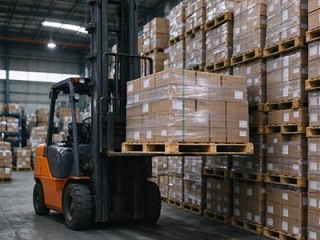 Forklift Configuration Strategy For Dense Warehousing, Warehouse ForkliftDense warehousing needs matched forklifts besides racks. Reach and trilateral stackers fit different layouts, coordinate aisle, load curve and floor for smooth handling.
Do you like ?0
Read more -
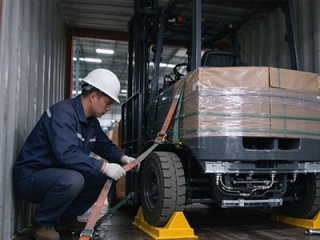 Full Container Supply For Export Forklifts, Forklift ManufacturerBulk forklift orders for overseas can ship by FCL or LCL. Newnewton FCL offers stable freight, safer packing and mixed models for large purchases.
Do you like ?0
Read more -
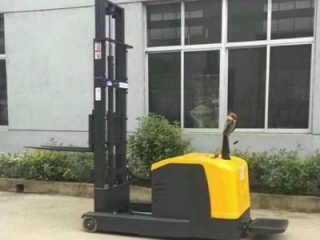 Stand-on Reach Stacker For Narrow Aisle Stacking, Mast Reach StructureStand-on reach stackers feature sliding masts that stay outside racks. They boost storage density in narrow aisles and require flat floors and standard pallets.
Do you like ?0
Read more -
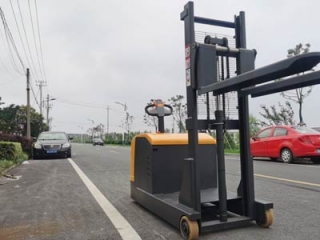 Stand-on Counterbalance Stacker For Various Pallets, Why No Leg RestrictionCounterbalance stackers have no front outriggers, using rear counterweight to avoid pallet interference. They fit various odd pallets yet need wider warehouse aisles.
Do you like ?0
Read more -
 Custom Walk-Behind Counterbalance Stacker | Non-Standard ModificationsStandard walk-behind counterbalance stackers struggle with non-standard pallets and tight aisles. Customize load, lift, forks and structure, share working conditions for safe design.
Do you like ?0
Read more








