Small Warehouse & Limited Budget? This Semi-electric Stacker Is Perfect for You
Many small business owners and small warehouse managers share the same problem: they want to improve efficiency but worry that equipment is too expensive, too bulky or too difficult to operate. There’s no need to hesitate — the walk-behind semi-electric stacker is designed exactly for these scenarios. With clear advantages, it perfectly matches low-frequency, short-distance and low-budget needs.
We are often asked: What size warehouse is a semi-electric stacker suitable for?
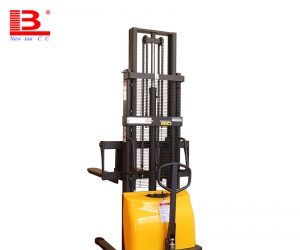
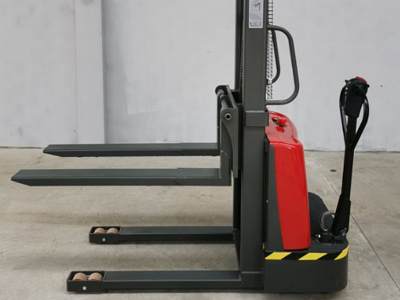
Our advice: it works extremely well for most small and medium-sized warehouses, except large-scale logistics centers. The small 1-ton semi-electric stacker, in particular, is lightweight, flexible and easy to control. It is highly friendly to narrow and compact spaces with excellent passability, while maintaining high working efficiency.
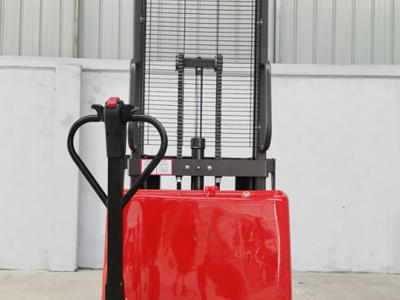
This machine requires no complicated operation — the operator simply walks behind it. Lifting is powered by electric assistance, so handling goods no longer strains your back or requires heavy physical effort. It is stable and safe for routine stacking, racking and short-distance transfer, and much more convenient than manual stackers! Although it still needs basic human operation, the overall workload is greatly reduced.
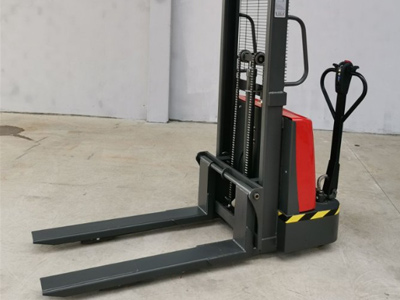
With obvious advantages, this equipment significantly improves workshop efficiency and adapts to various working scenarios. Equipped with reliable brand batteries and motors, it delivers stronger performance in working duration, efficiency and stability, maximizing value while avoiding unnecessary cost and time waste.
Small warehouses should avoid over-equipment. Large, expensive and complex machines only increase costs and trouble. Choosing a suitable semi-electric stacker that is capable, user-friendly and durable is the most practical choice. If you have a small warehouse and need cost-effective, easy-to-operate handling equipment, you should definitely learn more about the small 1-ton semi-electric stacker!
-
 Reliability Of Newnewton Warehouse Forklifts For Heavy-Duty ShiftsWarehouse forklift reliability relies on industrial parts, reinforced frames and factory durability tests. Proper operation and maintenance reduce unexpected downtime.
Do you like ?0
Read more -
 Forklift Configuration Strategy For Dense Warehousing, Warehouse ForkliftDense warehousing needs matched forklifts besides racks. Reach and trilateral stackers fit different layouts, coordinate aisle, load curve and floor for smooth handling.
Do you like ?0
Read more -
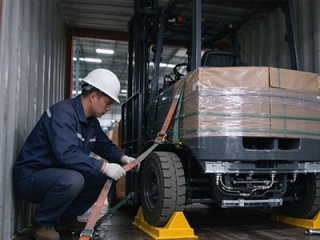 Full Container Supply For Export Forklifts, Forklift ManufacturerBulk forklift orders for overseas can ship by FCL or LCL. Newnewton FCL offers stable freight, safer packing and mixed models for large purchases.
Do you like ?0
Read more -
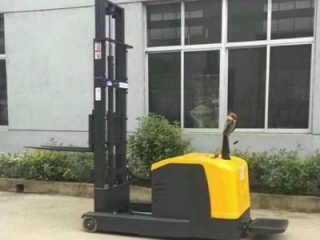 Stand-on Reach Stacker For Narrow Aisle Stacking, Mast Reach StructureStand-on reach stackers feature sliding masts that stay outside racks. They boost storage density in narrow aisles and require flat floors and standard pallets.
Do you like ?0
Read more -
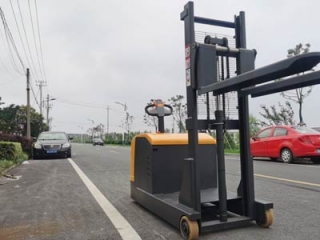 Stand-on Counterbalance Stacker For Various Pallets, Why No Leg RestrictionCounterbalance stackers have no front outriggers, using rear counterweight to avoid pallet interference. They fit various odd pallets yet need wider warehouse aisles.
Do you like ?0
Read more -
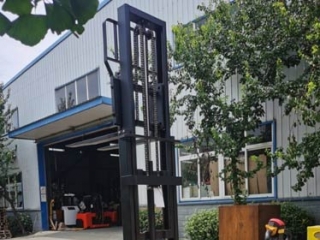 Custom Walk-Behind Counterbalance Stacker | Non-Standard ModificationsStandard walk-behind counterbalance stackers struggle with non-standard pallets and tight aisles. Customize load, lift, forks and structure, share working conditions for safe design.
Do you like ?0
Read more