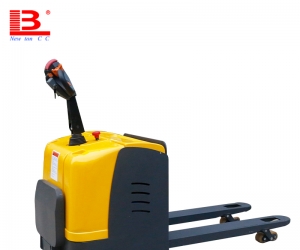
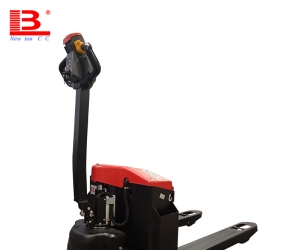
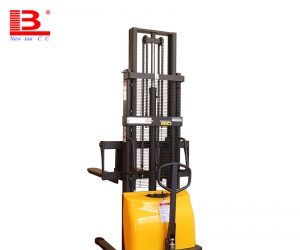
With more than a decade of experience in forklift manufacturing and warehouse handling, we have a deep understanding of the evolving demands of modern warehouses. From fully manual handling in the early days to the widespread use of 1-ton walk-behind full electric pallet trucks today, we know that higher warehouse efficiency is closely linked to the right equipment.
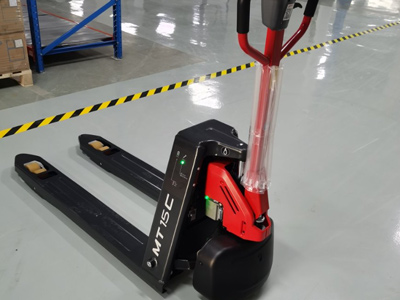
How to improve low warehouse handling efficiency? Manual handling relies heavily on human labor and has limited daily capacity. Electric equipment, by contrast, requires no physical effort — just a full charge. This is why electrified equipment is the real key to significantly improving work efficiency.
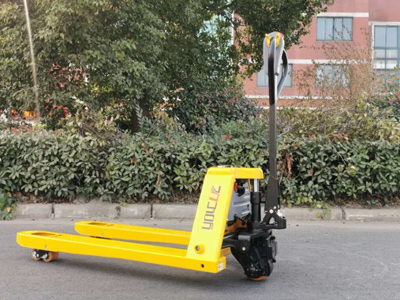
If you are interested in this truck, you should first clarify key parameters: aisle width, turning radius, fork width, and overall dimensions. These factors are especially critical in narrow warehouse spaces, and a high-quality pallet truck must be designed with compact dimensions for flexible operation.
For small and micro-enterprise warehouse electric pallet trucks, a 1-ton load capacity is particularly suitable. It reduces round trips while avoiding low equipment utilization that comes with overly large loads. With a lower load capacity, the cost is also more affordable, allowing you to achieve higher efficiency without renovating the warehouse or hiring extra staff.
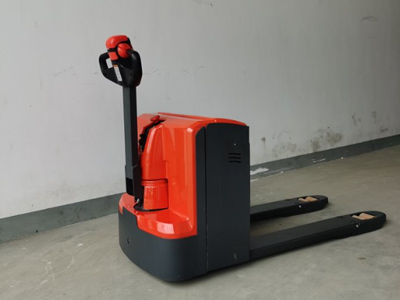
With the same cargo volume, what once took half a day of tiring, slow manual work can now be finished in just a few hours with the help of the 1-ton walk-behind full electric pallet truck. Inbound and outbound operations become smoother, and employees save energy during handling. Less physical exhaustion means better focus on other tasks, making your warehouse more efficient, intelligent, and productive.
-
 Reliability Of Newnewton Warehouse Forklifts For Heavy-Duty ShiftsWarehouse forklift reliability relies on industrial parts, reinforced frames and factory durability tests. Proper operation and maintenance reduce unexpected downtime.
Do you like ?0
Read more -
 Forklift Configuration Strategy For Dense Warehousing, Warehouse ForkliftDense warehousing needs matched forklifts besides racks. Reach and trilateral stackers fit different layouts, coordinate aisle, load curve and floor for smooth handling.
Do you like ?0
Read more -
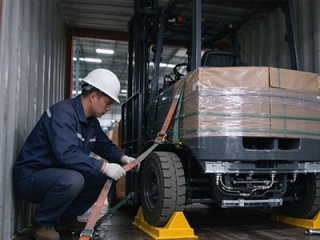 Full Container Supply For Export Forklifts, Forklift ManufacturerBulk forklift orders for overseas can ship by FCL or LCL. Newnewton FCL offers stable freight, safer packing and mixed models for large purchases.
Do you like ?0
Read more -
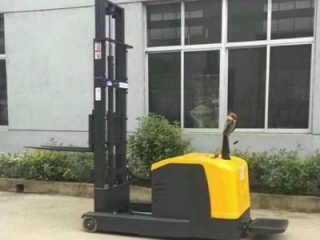 Stand-on Reach Stacker For Narrow Aisle Stacking, Mast Reach StructureStand-on reach stackers feature sliding masts that stay outside racks. They boost storage density in narrow aisles and require flat floors and standard pallets.
Do you like ?0
Read more -
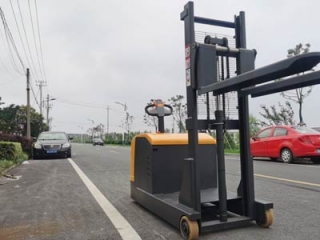 Stand-on Counterbalance Stacker For Various Pallets, Why No Leg RestrictionCounterbalance stackers have no front outriggers, using rear counterweight to avoid pallet interference. They fit various odd pallets yet need wider warehouse aisles.
Do you like ?0
Read more -
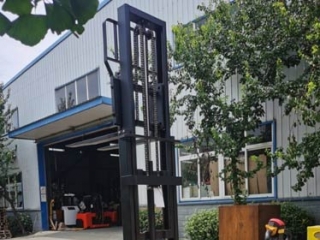 Custom Walk-Behind Counterbalance Stacker | Non-Standard ModificationsStandard walk-behind counterbalance stackers struggle with non-standard pallets and tight aisles. Customize load, lift, forks and structure, share working conditions for safe design.
Do you like ?0
Read more