
Warehouse forklift: innovative design to improve logistics handling efficiency
In the field of modern logistics, forklifts, as a key logistics handling equipment, have become an indispensable handling tool for many enterprises. However, traditional forklifts have some problems, including their large size, limited application scenarios, and high maintenance difficulties.

By adopting a streamlined design and modular concept, Ku forklift solves these problems, realizes a more compact, lightweight and flexible vehicle, and at the same time the after-sales service is more convenient and efficient.

01 Minimalist design – lightweight and portable
The forklift adopts a minimalist design style, which minimizes complex and cumbersome components. The whole body structure is compact, which is convenient for users to operate and turn in a small space. At the same time, on the premise of ensuring a firm structure, the weight of the whole vehicle is reduced by selecting lightweight materials and optimizing the layout of parts.

Due to its simple and crisp appearance and small overall size, the warehouse forklift is ideal for use in storage sites. It provides easy access to the narrow aisles between the shelves and is capable of handling a wide range of cargo handling tasks. Whether inside the warehouse or on a compact production line, warehouse forklifts are flexible and work efficient.

The forklift adopts an advanced modular design concept, which makes each functional module independent of each other, which is convenient for troubleshooting and maintenance. When a failure occurs, it is easier for the user to find and determine what the problem is. In addition, it is also very convenient when it needs to be upgraded or modified during daily use. Users only need to select the corresponding functional modules according to their needs, and they can easily complete the customized configuration.
The modular design not only improves the convenience of maintenance and upgrades, but also makes the forklift truck more scalable. With the continuous change of logistics needs, users can flexibly adjust the functional configuration of forklifts according to the actual situation to meet the needs of different operation scenarios
-
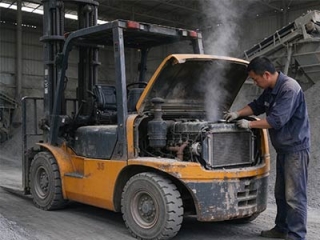 Heavy-Duty Diesel Forklift High Temperature Troubleshooting Guide3.5t diesel forklifts often overheat when handling sand and stone. Inspect cooling system step by step: radiator, belt, shroud, thermostat and water pump.
Do you like ?0
Read more -
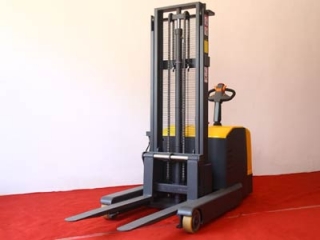 How to Choose Stackers for High-Level Access in Raw Material WarehouseRide-on reach stackers save aisle space for high racks. Good visibility for bulk raw materials. Select based on load curve and residual high-lift capacity.
Do you like ?0
Read more -
 Rain Operation Rules for Legless Walk-Behind Counterbalance StackerLegless walkie counterbalance stackers are not waterproof. Only short-time use in light rain. Stop operation in heavy rain and follow safety rules on wet floors.
Do you like ?0
Read more -
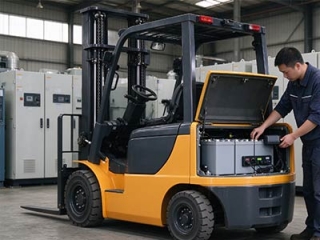 Avoid Hidden Costs When Buying Four-Wheel Electric Counterbalance ForkliftDo not compare only prices for four-wheel electric forklifts. Confirm load, lift, battery and warranty in quotes to avoid downgraded parts and extra charges.
Do you like ?0
Read more -
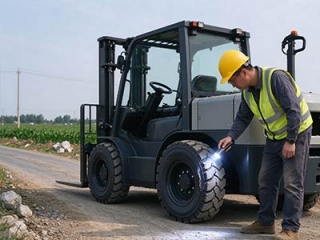 Tire Wear Inspection Methods for Rough-Terrain Walk Pallet TruckOff-road walkie pallet trucks face frequent tyre wear. Check tread pattern, sidewall damage and uneven wear to prevent skidding and blowouts.
Do you like ?0
Read more -
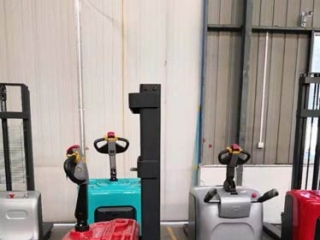 Full Electric Stacker With Foot Platform | Aisle Selection GuideWarehouse planning often overlooks turning radius. Stand-on stackers need extra aisle space. Insufficient clearance causes poor turning and reduces storage efficiency.
Do you like ?0
Read more








