Which is more suitable for manual hydraulic forklift or semi electric stacker?
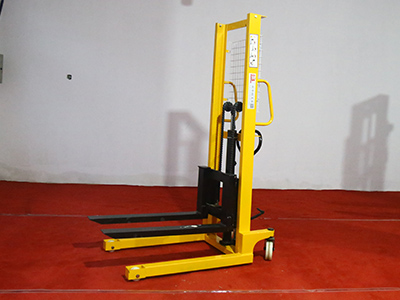
Although manual hydraulic forklifts and semi electric stackers belong to the same type of forklift, their functions are quite different:
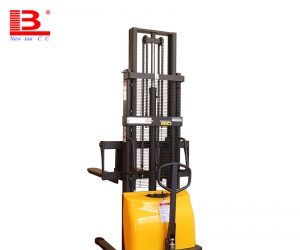
1. From the perspective of vehicle configuration: manual hydraulic forklifts use human hydraulic devices, while semi electric stackers have multiple configurations. The semi electric stacker configuration mainly includes: batteries, motors, hydraulic stations, counterweights, controllers, circuit boards, sensors and other devices.
2. Battery capacity problem: At present, the continuous working time of an ordinary semi electric stacker is about 3-6 hours, depending on the semi electric stacker of different specifications and models! Generally speaking, the larger the battery capacity, the longer the battery life.
3. Device problem: The semi electric stacker has no drive device, only a few basic load-bearing wheels and steering wheel.
4. Scope of application: The main function of the semi electric stacker is the lifting function, which is mostly used for operations that only need to move in a small range, such as loading and unloading, warehouse stacking, high-altitude reclaiming, etc. The manual hydraulic forklift is mainly used for the transportation and stacking of light goods in a small area. The budget is limited and the work intensity is small.

Comparison of advantages and disadvantages of manual hydraulic forklift and semi electric stacker:
semi electric stacker truck: simple operation, low price, wide application range, convenient maintenance, low requirement on channel width, low turning radius, and more flexible turning.
The manual hydraulic forklift is operated manually, so there are not too many restrictions on the continuous working time. The biggest limitation is the manpower problem. Therefore, the manual hydraulic forklift is not suitable for places with heavy workload; at the same time, it is not suitable for places with high strength requirements. The working efficiency of the semi electric stacker is more than 5 times that of the manual hydraulic forklift, the operation is simple, and the operator's labor intensity is low.
-
 Reliability Of Newnewton Warehouse Forklifts For Heavy-Duty ShiftsWarehouse forklift reliability relies on industrial parts, reinforced frames and factory durability tests. Proper operation and maintenance reduce unexpected downtime.
Do you like ?0
Read more -
 Forklift Configuration Strategy For Dense Warehousing, Warehouse ForkliftDense warehousing needs matched forklifts besides racks. Reach and trilateral stackers fit different layouts, coordinate aisle, load curve and floor for smooth handling.
Do you like ?0
Read more -
 Full Container Supply For Export Forklifts, Forklift ManufacturerBulk forklift orders for overseas can ship by FCL or LCL. Newnewton FCL offers stable freight, safer packing and mixed models for large purchases.
Do you like ?0
Read more -
 Stand-on Reach Stacker For Narrow Aisle Stacking, Mast Reach StructureStand-on reach stackers feature sliding masts that stay outside racks. They boost storage density in narrow aisles and require flat floors and standard pallets.
Do you like ?0
Read more -
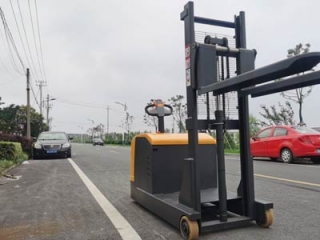 Stand-on Counterbalance Stacker For Various Pallets, Why No Leg RestrictionCounterbalance stackers have no front outriggers, using rear counterweight to avoid pallet interference. They fit various odd pallets yet need wider warehouse aisles.
Do you like ?0
Read more -
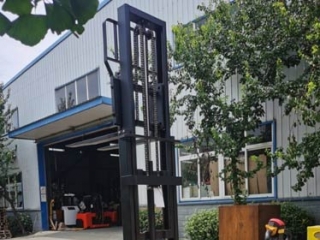 Custom Walk-Behind Counterbalance Stacker | Non-Standard ModificationsStandard walk-behind counterbalance stackers struggle with non-standard pallets and tight aisles. Customize load, lift, forks and structure, share working conditions for safe design.
Do you like ?0
Read more