
How About Product Quality Of Newnewton Forklift Manufacturer
Source‑manufacturer products are not necessarily inferior to big‑brand forklifts; your procurement priorities make all the difference. If you focus on budget and only require basic forklift functions for warehouse operation, let’s take an in‑depth look at Newnewton forklift product quality. As a genuine source factory, Newnewton can well satisfy demands from small‑and‑medium‑sized warehouses.
Below are five core dimensions for you to assess factory strength.
Check factory production and R&D capacity Distinguish self‑owned production workshop from trading‑OEM mode. Qualified in‑house factory owns complete production lines including machining, welding, spraying and final assembly, and independently manufactures frames and masts instead of merely assembling outsourced kits.
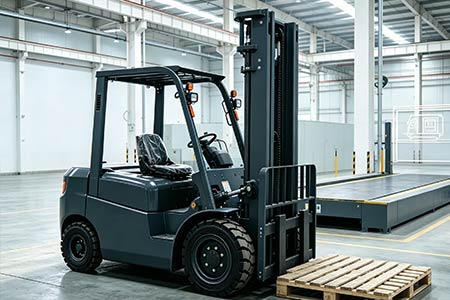
Review its product portfolio, whether it covers pallet trucks, stackers, reach trucks and partial non‑standard customized models, together with abundant real‑world project cases. Factories with independent R&D capability can deliver tailored technical solutions according to aisle width, load capacity and cold‑storage requirements, rather than only supplying standard off‑the‑shelf units.
Verify internal quality‑control and pre‑delivery inspection procedures Stable product quality relies on complete quality‑control workflow. Reliable factories carry out incoming raw‑material inspection, in‑process patrol inspection for semi‑finished goods and full‑machine pre‑delivery tests. Every unit shall pass full‑load lifting, travelling, braking and overload‑protection tests with complete test records kept on file.
Forklifts belong to industrial vehicles and shall comply with relevant industry standards. Keep away from suppliers who only perform simple manual debugging before shipment without formal inspection. Consistent components and steel material across batch production minimize quality fluctuation among individual units.
Compare overall configuration and key component specifications Long‑term failure rate largely depends on core part selection. Steel thickness of frame and mast, drive motor, controller, hydraulic assemblies and battery directly influence long‑term operation experience.
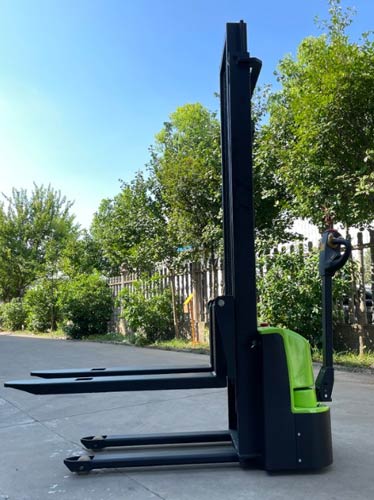
Do not simply chase low price during procurement. Confirm motor brand, battery cell grade and cylinder specification. Steel for mast channel and forks shall not be downgraded for heavy‑duty applications. Some suppliers adopt inferior components to cut quotations. Hidden risks including oil leakage, structural deformation and rapid capacity fading will show up after long‑time heavy‑load operation.
Confirm full qualifications and delivered technical documents Qualified manufacturers provide complete factory certificates for domestic market. For export orders, complete CE technical documents shall match your ordered model instead of re‑using certificates of other products.
Full deliverables include operation manual, maintenance instruction, load‑curve chart and wearing‑parts list. Be cautious if the factory cannot offer corresponding load curves and inspection reports, since missing documents will cause troubles for annual inspection and customs clearance.
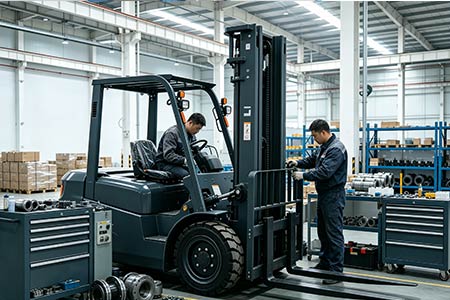
Evaluate after‑sales service, spare‑part supply and warranty scope For industrial forklifts, after‑sales support and spare‑part availability serve as extension of product quality. Clarify overall warranty period and clarify scope difference between main‑unit warranty and wearing‑parts.
Confirm stable supply of original spare parts and lead‑time for consumables such as seals, wheels, sensors and batteries. Check whether technical guidance is available and whether on‑site commissioning is supported for large non‑standard equipment, to avoid production shutdown caused by spare‑part shortage after breakdown.
Besides Newnewton forklift manufacturer, you may also select other qualified factories with shorter transportation distance. If you are interested in Newnewton brand forklifts, feel free to contact us. We have mature domestic and overseas logistics chains.
-
 3-step Troubleshooting for Reduced Load Capacity of Manual Hydraulic TruckManual hydraulic pallet trucks often fail to lift or sink due to oil shortage, pressure leakage and air intake. Three-step inspection can quickly restore the equipment’s load-bearing performance.
Do you like ?0
Read more -
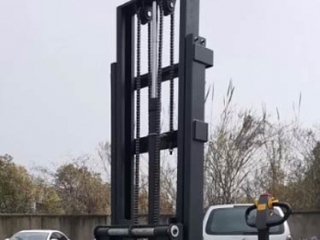 What is Pedestrian Counterbalance Stacker & Basic Operating StepsPedestrian counterbalance stackers with rear weights fit narrow aisles with high cost performance. Standard operating procedures improve warehouse efficiency and ensure operational safety.
Do you like ?0
Read more -
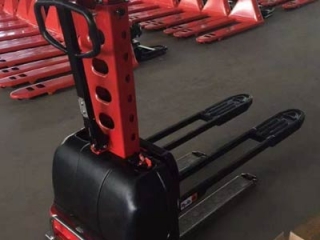 Battery Maintenance Guide for Onboard Electric Self-elevating TrucksFrequent power loss on self-loading stackers is mainly caused by improper battery maintenance. Standardize daily charging, inspection and storage to extend battery service life.
Do you like ?0
Read more -
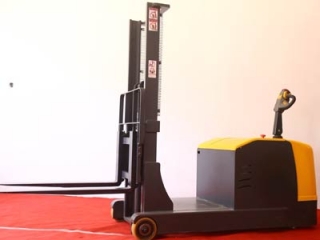 4 Dimensions Comparison: Reach Stacker and Counterbalance Stacker for WarehouseReach stackers and counterbalance stackers differ greatly in structure and application. Compare aisle width, load capacity, scenarios and maintenance costs for accurate warehouse selection.
Do you like ?0
Read more -
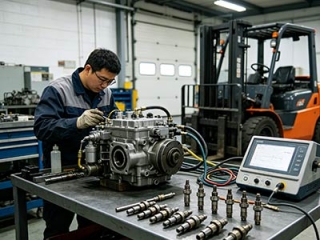 Causes of Black Smoke Failure of Outdoor Diesel Forklift & TroubleshootingBlack smoke from diesel forklift exhaust outdoors is mainly caused by insufficient fuel combustion. Distinguish temporary working conditions from persistent faults to reduce engine damage.
Do you like ?0
Read more -
 License Requirement for Warehouse Stand-on Counterbalance StackerWhether ride-on counterbalance stackers require operation certificates depends on equipment type. Operators need N1 forklift licenses for specified models to avoid regulatory risks.
Do you like ?0
Read more








