Site Parameters & Applicable Warehouse Area For 1.5t Semi-electric Stacker
Small warehouses usually rely on 1-ton stackers to finish daily cargo handling and stacking. Many buyers are confused about what size warehouse fits a 1.5 Ton Semi-electric Stacker. Blind purchase without clarifying matching conditions often leads to wrong model selection, delayed schedules and wasted capital & labor.
Basic Site Passing Parameters of 1.5 Ton Semi-electric Stacker
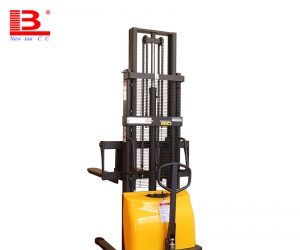
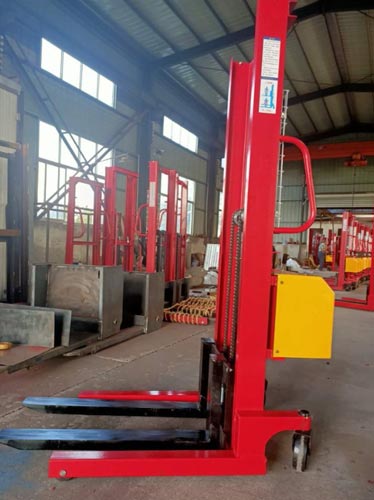
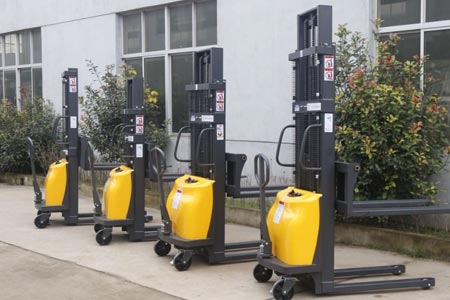
The standard overall width of the 1.5 Ton Semi-electric Stacker ranges from 800mm to 850mm, requiring a minimum safe aisle width of 1.6 meters and a turning radius of about 1.4 meters, so extra wide rack aisles are unnecessary. Its standard lifting height covers 1.6m to 3.5m, compatible with 2 to 3 layers of standard storage racks. The 1.5-ton load capacity suits full pallets of cartons, hardware parts, packaging materials, food raw materials and other medium & light cargo.
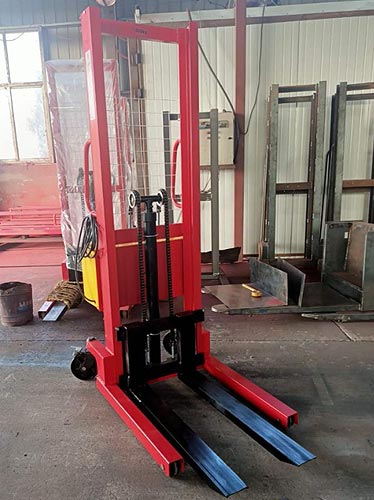
This machine is equipped with lithium battery powered electric lifting. Operators do not need to manually pump oil for lifting; manual pushing & pulling is only required for horizontal movement. It drastically cuts physical fatigue compared with fully manual stackers, while cutting procurement cost by around 40% versus stand-on full electric stackers.
Warehouses Recommended for 1.5 Ton Semi-electric Stacker (50㎡ - 800㎡)
Small Retail Back Storage & Family Workshop Warehouse (50-150㎡)
Daily handling volume under 10 pallets, light goods stacked on 2-layer racks, aisle width 1.6-2 meters, sufficient manpower and limited budget. The 1.5 Ton Semi-electric Stacker perfectly replaces labor-intensive manual stackers.
Medium Factory Raw Material Warehouse & Small E-commerce Sorting Warehouse (150-800㎡)
Daily inbound & outbound volume of 10-40 pallets, densely arranged narrow racks, single pallet load no more than 1.5 tons, insufficient budget for full electric forklifts. Electric lifting reduces labor intensity, and the compact body navigates narrow aisles freely to satisfy daily storage turnover demands.
Warehouses Over 800㎡: Full Electric Models Are Preferred Instead of Semi-electric Stackers
For warehouses larger than 800 square meters with daily throughput over 40 pallets and long-distance frequent cargo shuttle, constant manual pushing and pulling will greatly increase labor workload and lower transfer efficiency. For large warehouses with long transit routes, stand-on or walk-behind full electric stackers are recommended. Powered travel eliminates manual dragging, speeds up shipping and relieves operator fatigue.
Tiny Warehouses Under 50㎡: Not Suitable for This Model
Warehouses smaller than 50㎡ only store scattered light goods under 1 ton per lift, with aisles narrower than 1.5 meters that cannot accommodate the stacker’s turning space. A 1-ton manual hydraulic stacker delivers better flexibility at a lower purchase cost.
Additional Working Conditions Matching the 1.5 Ton Semi-electric Stacker Besides Warehouse Area
Aisle width ≥ 1.6m: Sufficient rack spacing ensures smooth turning and rack alignment; opt for slim mini stacking equipment if aisles are narrower.
Single pallet cargo weight ≤ 1.5 tons, no heavy steel or oversize heavy loads.
Medium daily stacking frequency, no long-distance cross-area cargo transport.
Flat concrete or epoxy floor without large gravel areas or steep slopes to avoid heavy pushing resistance.
Tight budget, demand for labor-saving lifting at low cost, unwilling to invest heavily in full electric handling equipment.
To sum up, feel free to contact us for full details if you are interested in the 1.5 Ton Semi-electric Stacker. Reach out for professional purchasing advice or refer to our previous articles if you still have selection doubts!
-
 Reliability Of Newnewton Warehouse Forklifts For Heavy-Duty ShiftsWarehouse forklift reliability relies on industrial parts, reinforced frames and factory durability tests. Proper operation and maintenance reduce unexpected downtime.
Do you like ?0
Read more -
 Forklift Configuration Strategy For Dense Warehousing, Warehouse ForkliftDense warehousing needs matched forklifts besides racks. Reach and trilateral stackers fit different layouts, coordinate aisle, load curve and floor for smooth handling.
Do you like ?0
Read more -
 Full Container Supply For Export Forklifts, Forklift ManufacturerBulk forklift orders for overseas can ship by FCL or LCL. Newnewton FCL offers stable freight, safer packing and mixed models for large purchases.
Do you like ?0
Read more -
 Stand-on Reach Stacker For Narrow Aisle Stacking, Mast Reach StructureStand-on reach stackers feature sliding masts that stay outside racks. They boost storage density in narrow aisles and require flat floors and standard pallets.
Do you like ?0
Read more -
 Stand-on Counterbalance Stacker For Various Pallets, Why No Leg RestrictionCounterbalance stackers have no front outriggers, using rear counterweight to avoid pallet interference. They fit various odd pallets yet need wider warehouse aisles.
Do you like ?0
Read more -
 Custom Walk-Behind Counterbalance Stacker | Non-Standard ModificationsStandard walk-behind counterbalance stackers struggle with non-standard pallets and tight aisles. Customize load, lift, forks and structure, share working conditions for safe design.
Do you like ?0
Read more