How to Maintain Diesel Forklift | When to Change Forklift Engine Oil
How often should you change the engine oil of a diesel forklift? Engine oil acts as the core lubricant for the engine. Its replacement cycle is not fixed. Many maintenance workers follow a single standard schedule. Under heavy-load or dusty conditions, oil deteriorates ahead of time, accelerating engine wear and shortening service life. Master maintenance methods for internal combustion forklifts and judge the cycle based on working environment and daily working hours.
For clean factories with single-shift operation and low dust, the standard engine oil replacement cycle for diesel forklifts is 200 working hours. For sand yards, construction sites and crushing workshops with heavy dust, frequent heavy loads and long idling time, impurities get into the oil and oxidation speeds up.
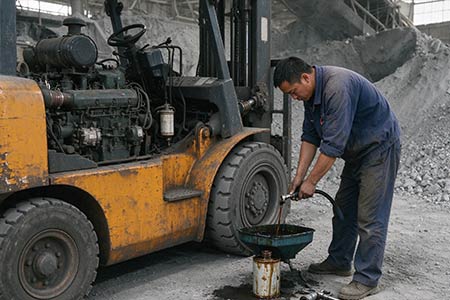
It is recommended to shorten the cycle to 100–150 hours. If the forklift works in cold storage or runs frequent short trips, fuel and water vapor tend to mix into the oil, and the maintenance interval should also be shortened.
Replace the oil filter together with engine oil. Do not change only the oil while keeping the old filter, as residual impurities inside the old filter will contaminate new oil quickly. Fill oil to the level between the upper and lower marks on the dipstick. Insufficient oil causes poor lubrication, while overfilling increases engine resistance and leads to oil leakage. Use the oil grade recommended by the manufacturer and avoid mixing different oil types.
Regular pre-operation inspection is also essential. Pull out the dipstick before startup to check oil level and condition. If the oil turns dark, contains metal debris or looks milky white, replace it immediately even if the working hour target is not reached.
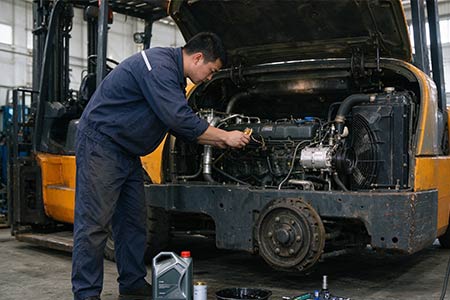
Milky oil usually means coolant leakage into the lubrication system, which is an engine fault. Repair the root cause instead of only changing oil. Stop the machine right away once the oil pressure warning light turns on and do not restart it. Master the engine oil service cycle for diesel forklifts and related notes to properly maintain equipment and extend forklift service life.
FAQ
Q: Can I follow calendar time instead of working hours?
A: Not recommended. Working hours are the most reliable reference. For rarely used forklifts in long-term storage, replace oil once every six months.
Q: Can diesel forklift oil be used for trucks?
A: It works for emergency use if the grade matches. For long-term use, choose dedicated engine oil for construction machinery, which fits continuous low-speed heavy-load conditions.
Q: What happens if I overfill engine oil?
A: It may lead to power loss, higher fuel consumption and oil seal leakage. Severe cases can damage the crankshaft oil seal.
-
 Counterbalance Warehouse Stacker, Custom Stand-on Counterbalance StackerModifying mast, counterweight or hydraulics of stand-on counterbalance stackers breaks balance and violates TSG 81. Distinguish allowed options and restricted core structures.
Do you like ?0
Read more -
 Stand-on Fully Electric Pallet Truck Price Factors & Sourcing Guide2-ton stand-on pallet trucks vary greatly in price. Differences lie in battery, controller, frame and warranty. Comparing only tonnage risks downgraded units.
Do you like ?0
Read more -
 Why Does Electric Pallet Truck Motor Overheat & Daily Maintenance TipsSlight warming of walkie pallet truck motors is normal. Hot casing or odors mean overheating, often from overload, stuck wheels, dust or worn brushes.
Do you like ?0
Read more -
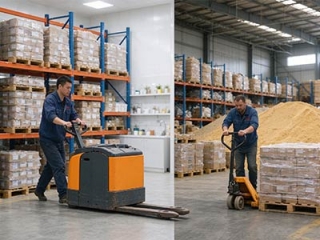 Differences Between Mechanical Pallet Jack and Hydraulic Pallet JackMechanical pallet trucks differ from hydraulic ones in lifting drive. Mechanical types have no oil leakage for clean light loads, while hydraulic versions offer stronger load capacity.
Do you like ?0
Read more -
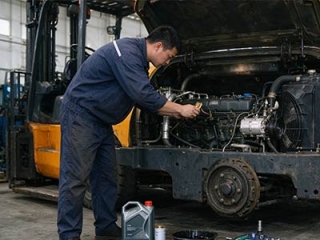 How to Maintain Diesel Forklift | When to Change Forklift Engine OilDiesel forklift oil change intervals vary. 200 hours for clean single-shift use. Shorten cycles for dusty, heavy or cold conditions and replace filters together.
Do you like ?0
Read more -
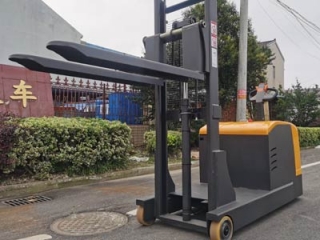 Legless Counterbalance Stacker: Solve Pallet Jamming ProblemsLegged stackers often jam thick pallets. Legless stand-on counterbalance stackers with rear weights handle irregular loads for workshops with mixed pallets and tool bins.
Do you like ?0
Read more