3 Key Loading Rules to Prevent Tipping for Stand-on Dual Pallet Stacker
Many warehouse operators adopt dual-pallet handling solutions to boost daily outbound efficiency, but many people are confused about how to prevent side tipping when carrying double pallets. Double pallet operation easily leads to unstable center of gravity and rollover risks due to dual cargo loading. Below are 3 practical loading and operating tips to help your dual pallet stacker achieve stable stacking and avoid tipping accidents.
1. Balanced Cargo Weight & Consistent Height on Both Pallets
Unbalanced left and right load is the primary cause of tipping accidents and the core rule for safe operation of the Double Pallet Jack.
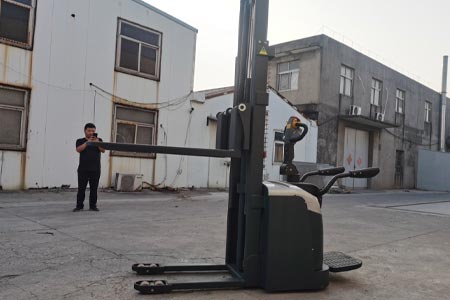
The weight difference between the left and right pallets shall not exceed 10% of the rated load. Never load heavy cargo on one pallet while leaving the other empty or lightly loaded.
Keep uniform stacking height for goods on both sides with aligned top surfaces. Excessive height on a single side raises the unilateral center of gravity, leading to easy tipping during turning.
Place all cargo in the center of pallets. Avoid over-width or outward-extending goods on a single side, which will shift the center of gravity beyond the vehicle’s support range.
Fix irregular bulk goods and uneven cartons with stretch film to prevent cargo sliding and gravity offset during traveling.
2. Control Lifting Height & Slow Down for High-level Stacking
The higher the lifting height, the lower the vehicle stability. The tipping risk doubles under dual-load working conditions of the Stand-on Warehouse Dual Pallet Stacker.
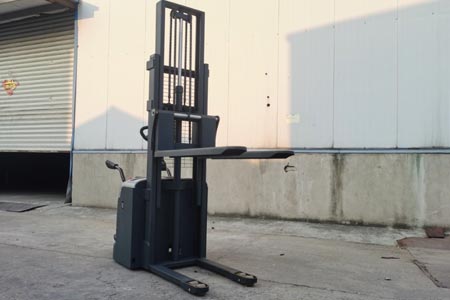
Short-distance ground transfer: Keep forks 5–10 cm above the ground. A lower center of gravity ensures maximum stability without unnecessary high lifting.
Medium-level shelf access: Maintain a moderate lifting height and keep a low traveling speed. Avoid rapid acceleration and sharp turns during operation.
High-level stacking above 4 meters: Forbid fast steering and emergency braking. Align the whole vehicle completely before extending or retracting forks for loading and unloading.
Avoid long-distance traveling with high-lift cargo. Only perform on-site fine alignment to reduce vehicle shaking and tipping probability.
3. Standardize Driving Operations to Avoid Sharp Turns & Slope Risks
Even with a stable center of gravity, improper driving actions can still cause side tipping. Strictly follow standardized operating specifications for the Double Pallet Jack.
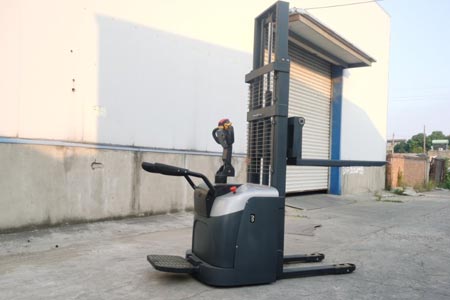
Drive at a low speed throughout the operation. Limit speed in narrow aisles and shelf areas, and decelerate in advance before turning without sharp high-speed turns.
When driving up and down slopes, place cargo on the uphill side. Do not cross slopes horizontally, and avoid turning or lifting forks on slopes.
Slow down on bumpy, gapped or sloped ground to prevent single-wheel emptying and unbalanced stress.
Brake gently to avoid obstacles and pedestrians. Sudden braking causes cargo inertia offset and further leads to side tipping.
Warehouse managers can share this guide with all operators. Standard operation of the Stand-on Warehouse Dual Pallet Stacker greatly improves workplace safety, avoids equipment damage and cargo loss caused by tipping, and ensures efficient and stable daily warehouse stacking operations.
-
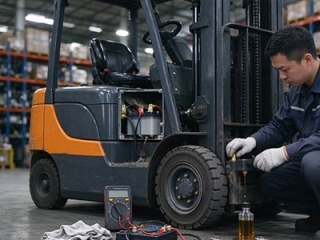 Reliability Of Newnewton Warehouse Forklifts For Heavy-Duty ShiftsWarehouse forklift reliability relies on industrial parts, reinforced frames and factory durability tests. Proper operation and maintenance reduce unexpected downtime.
Do you like ?0
Read more -
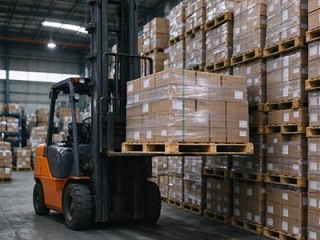 Forklift Configuration Strategy For Dense Warehousing, Warehouse ForkliftDense warehousing needs matched forklifts besides racks. Reach and trilateral stackers fit different layouts, coordinate aisle, load curve and floor for smooth handling.
Do you like ?0
Read more -
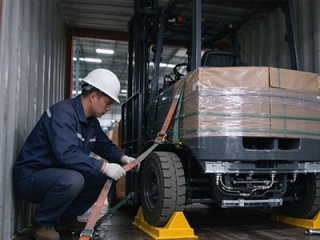 Full Container Supply For Export Forklifts, Forklift ManufacturerBulk forklift orders for overseas can ship by FCL or LCL. Newnewton FCL offers stable freight, safer packing and mixed models for large purchases.
Do you like ?0
Read more -
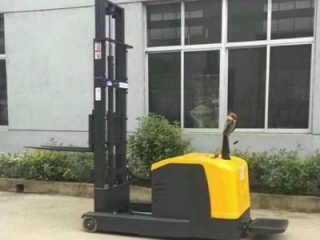 Stand-on Reach Stacker For Narrow Aisle Stacking, Mast Reach StructureStand-on reach stackers feature sliding masts that stay outside racks. They boost storage density in narrow aisles and require flat floors and standard pallets.
Do you like ?0
Read more -
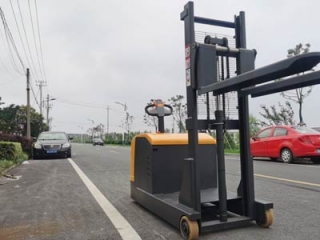 Stand-on Counterbalance Stacker For Various Pallets, Why No Leg RestrictionCounterbalance stackers have no front outriggers, using rear counterweight to avoid pallet interference. They fit various odd pallets yet need wider warehouse aisles.
Do you like ?0
Read more -
 Custom Walk-Behind Counterbalance Stacker | Non-Standard ModificationsStandard walk-behind counterbalance stackers struggle with non-standard pallets and tight aisles. Customize load, lift, forks and structure, share working conditions for safe design.
Do you like ?0
Read more