Proper Battery Care Extend Forklift Service Life by 2 More Years
To prolong forklift service life, master the Correct Charging Method for Electric Forklift Battery and routine care skills. The following standardized charging rules and Daily Maintenance of Forklift Battery help extend battery service life by more than two years.
Standard Battery Charging Specifications
Discharge control: Recharge the battery promptly when remaining capacity drops to 20%~30%. Never drain power completely, since deep discharge causes plate sulfation and permanent capacity reduction; avoid frequent shallow charge and discharge cycles.
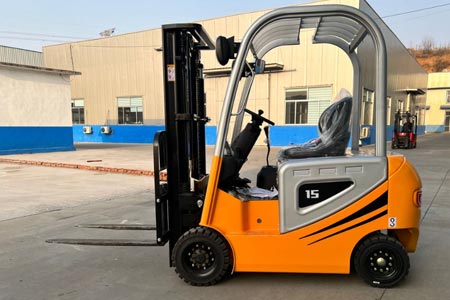
Charging environment: Charge in ventilated, room-temperature areas, far from blazing sun, cold storage and enclosed compact warehouses. High temperature speeds up electrolyte evaporation while low temperature leads to incomplete charging and cell damage. Inspect intact plugs and tight wiring before charging to avoid spark burnout; always keep the battery surface, connecting cables and bolts clean and dry.
Charging duration: Lead-acid batteries require 8–10 hours regular charging plus 1–2 hours floating charge after full-charge indicator lights up; prohibit excessive overnight overcharging. Use factory-original matched chargers for lithium batteries, never generic low-quality fast chargers.
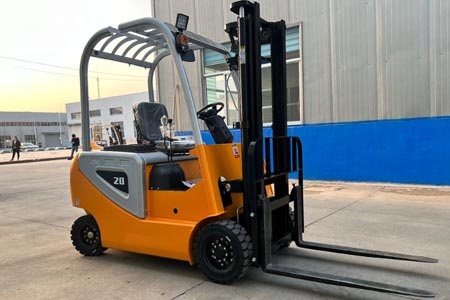
Power-off unplug sequence: First cut off the charger’s AC mains supply; wait until all charger indicators turn off; then disconnect the plug between forklift and charger; finally restore the original battery connector on the truck to finish charging.
Safety precautions: Pulling live battery terminals directly generates electric arcs; always power off the charger first before unplugging. Lead-acid batteries release flammable hydrogen during charging; no open fire within 30 minutes after charging, and open battery covers for ventilation during maintenance. Do not place any conductive objects on battery lids to prevent short circuits.
Three Core Daily Maintenance Items
Electrolyte level check (Lead-acid only): Check liquid level monthly; add distilled water if below electrode plates (never tap water or concentrated electrolyte). Overfilled liquid overflows during charging and corrodes terminals; wipe spilled acid solution in a timely manner.
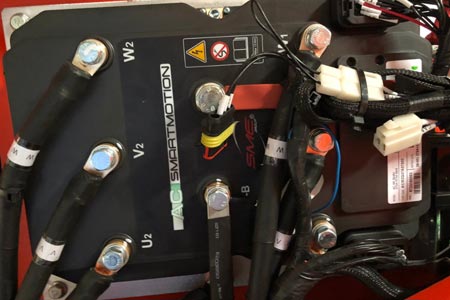
Terminal maintenance: Tighten connecting bolts regularly and coat terminals with anti-rust grease to prevent loose contact, abnormal heating and early single-cell failure.
Long-term idle storage: Fully charge batteries before long parking, and recharge once every 30 days to avoid scrapping from self-discharge.
In-use Operation Tips
Accelerate gently on startup; avoid frequent abrupt start-stop and heavy-load steep climbing, as large instantaneous discharge accelerates battery aging. Pause intermittently for heat dissipation after continuous heavy-duty operation in high-temperature environments.
Strictly follow the Correct Charging Method for Electric Forklift Battery and Daily Maintenance of Forklift Battery to extend battery lifespan and lower later maintenance expenses.
-
 Reliability Of Newnewton Warehouse Forklifts For Heavy-Duty ShiftsWarehouse forklift reliability relies on industrial parts, reinforced frames and factory durability tests. Proper operation and maintenance reduce unexpected downtime.
Do you like ?0
Read more -
 Forklift Configuration Strategy For Dense Warehousing, Warehouse ForkliftDense warehousing needs matched forklifts besides racks. Reach and trilateral stackers fit different layouts, coordinate aisle, load curve and floor for smooth handling.
Do you like ?0
Read more -
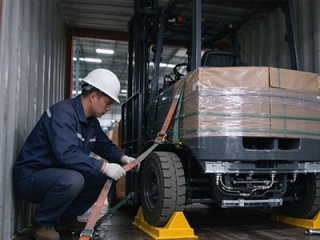 Full Container Supply For Export Forklifts, Forklift ManufacturerBulk forklift orders for overseas can ship by FCL or LCL. Newnewton FCL offers stable freight, safer packing and mixed models for large purchases.
Do you like ?0
Read more -
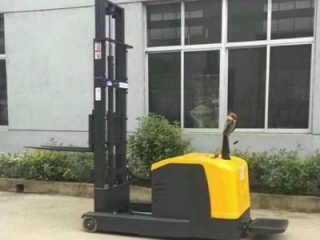 Stand-on Reach Stacker For Narrow Aisle Stacking, Mast Reach StructureStand-on reach stackers feature sliding masts that stay outside racks. They boost storage density in narrow aisles and require flat floors and standard pallets.
Do you like ?0
Read more -
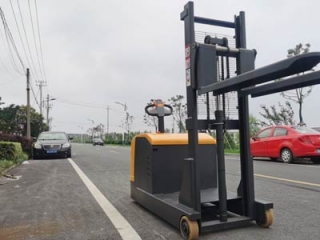 Stand-on Counterbalance Stacker For Various Pallets, Why No Leg RestrictionCounterbalance stackers have no front outriggers, using rear counterweight to avoid pallet interference. They fit various odd pallets yet need wider warehouse aisles.
Do you like ?0
Read more -
 Custom Walk-Behind Counterbalance Stacker | Non-Standard ModificationsStandard walk-behind counterbalance stackers struggle with non-standard pallets and tight aisles. Customize load, lift, forks and structure, share working conditions for safe design.
Do you like ?0
Read more