
Reach Stacker Vs Counterbalance Forklift | Stand-on Reach Truck Guide
Many warehouse owners order forklifts by experience, which easily leads to mismatched truck size, costly warehouse renovation or repeated repurchase. Reach Stacker Vs Counterbalance Forklift comparison helps buyers pick proper equipment and cut unnecessary expense, especially for compact mid & small warehouses.
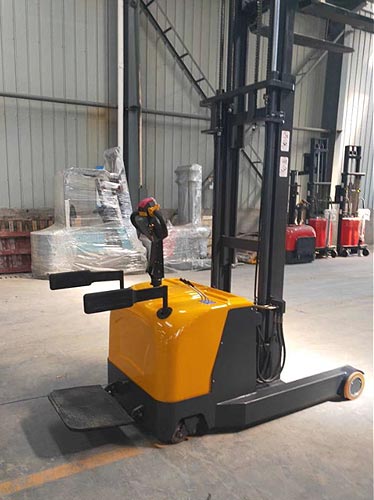
1. Required Working Aisle
Counterbalance forklift relies on rear counterweight for stability with bulky body, needing 3.2~3.6m wide aisle. Old warehouses with fixed racks have to restructure racking with high renovation cost.
Stand-on Electric Reach Stacker moves forks forward for load without rear counterweight, minimum aisle only 1.8~2.2m. No rack modification required, adding 2~3 extra rack sets and lifting storage capacity over 30% under same warehouse area.
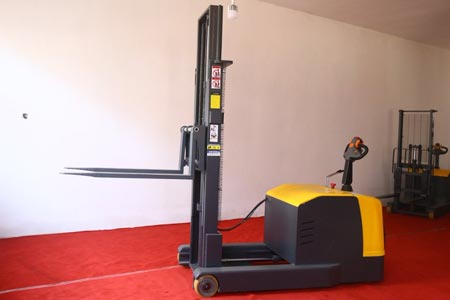
2. Operating & Procurement Cost
Same rated load of 1.5t: Counterbalance trucks have heavy dead weight and higher power consumption for frequent shifts. Lightweight reach design reduces motor load to save long-term electricity cost.
Counterbalance is cost-effective for spacious ground-level handling. Though reach stacker has slightly higher initial price, saved reconstruction & expansion cost covers price gap within 2~3 months for narrow high-rack warehouses.
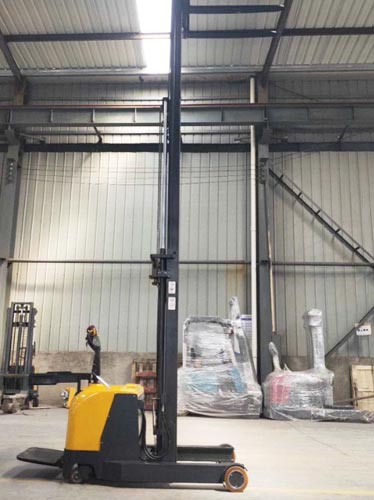
3. Application Scenario Difference
Most small counterbalance forklifts max lift below 3m, ideal for open workshop and ground-level cargo transfer.
Customizable mast of reach stacker reaches 3~6m regularly, matching 4+ layers high racks, perfect for automated storage and high-storage e-commerce warehouses.
Conclusion: Choose counterbalance forklift for spacious site & low stacking; pick Stand-on Electric Reach Stacker for narrow aisle & high rack storage. Contact us for detailed specs.
-
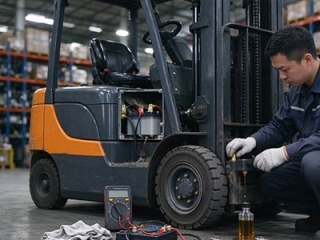 Reliability Of Newnewton Warehouse Forklifts For Heavy-Duty ShiftsWarehouse forklift reliability relies on industrial parts, reinforced frames and factory durability tests. Proper operation and maintenance reduce unexpected downtime.
Do you like ?0
Read more -
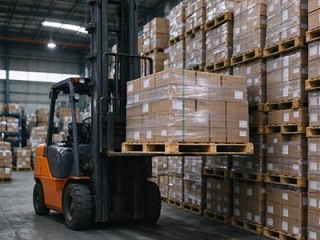 Forklift Configuration Strategy For Dense Warehousing, Warehouse ForkliftDense warehousing needs matched forklifts besides racks. Reach and trilateral stackers fit different layouts, coordinate aisle, load curve and floor for smooth handling.
Do you like ?0
Read more -
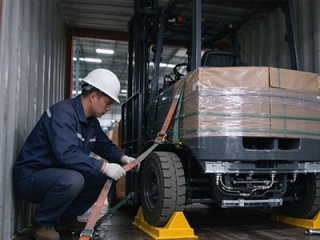 Full Container Supply For Export Forklifts, Forklift ManufacturerBulk forklift orders for overseas can ship by FCL or LCL. Newnewton FCL offers stable freight, safer packing and mixed models for large purchases.
Do you like ?0
Read more -
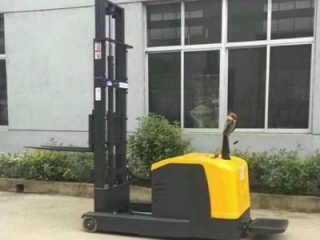 Stand-on Reach Stacker For Narrow Aisle Stacking, Mast Reach StructureStand-on reach stackers feature sliding masts that stay outside racks. They boost storage density in narrow aisles and require flat floors and standard pallets.
Do you like ?0
Read more -
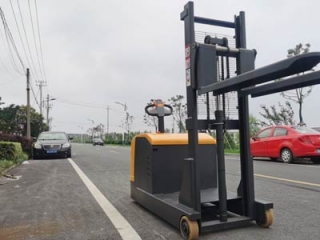 Stand-on Counterbalance Stacker For Various Pallets, Why No Leg RestrictionCounterbalance stackers have no front outriggers, using rear counterweight to avoid pallet interference. They fit various odd pallets yet need wider warehouse aisles.
Do you like ?0
Read more -
 Custom Walk-Behind Counterbalance Stacker | Non-Standard ModificationsStandard walk-behind counterbalance stackers struggle with non-standard pallets and tight aisles. Customize load, lift, forks and structure, share working conditions for safe design.
Do you like ?0
Read more








