
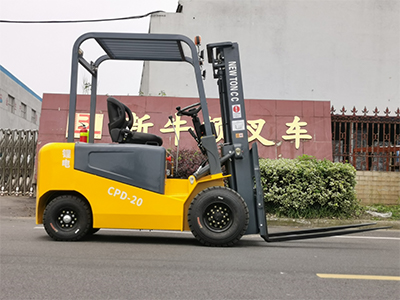
(1) Maintenance of Electric Forklifts and Tractors during the Initial Running in Period
The running in of new vehicles and vehicles after major repairs within the specified operating time is called vehicle running in. The characteristics of vehicle running-in period work are: the machined surface of the parts is relatively rough, the surface friction of each mating part is severe, there are more worn metal pins, the fit gap changes quickly, coupled with poor lubrication efficiency, and fasteners are easy to loosen. If adjustment is not made in a timely manner and running in measures are taken, it will seriously affect the service life and working performance. Therefore, it is necessary to use and maintain forklifts and tractors in accordance with the regulations for their initial operation.
Regulations on the running-in period of vehicles: If the mechanical manufacturing factory has regulations on the running-in period (initial driving), the original factory regulations should be followed. If there are no regulations, the running-in period is generally set at 50 hours. The specific maintenance content during the initial driving (break-in period):
1. Clean the entire vehicle;
2. Check and tighten the bolts, nuts, pipeline joints, clamps, and safety locking devices on the exterior of all vehicle assemblies;
3. Check the tire pressure, wheel bearing tightness, and lubrication;
4. Electric forklifts and tractors. Clean the gearbox, drive axle, steering system, and hydraulic system of the working device, replace lubricating oil and hydraulic oil, and clean the filter screens of each oil tank;
5. Check the effectiveness of the steering system and the connection of various components;
6. Check and adjust the free stroke of the brake pedal and the stroke of the manual control lever, and check the braking efficiency;
7. Check the working efficiency of the working device;
8. Check the sealing and leakage of the lifting cylinder, tilt cylinder, steering cylinder, multi way directional valve, and oil pump;
9. Check the height, specific gravity, and load voltage of the battery electrolyte level; 10. Check the working performance of the control device and lubricate all lubrication points on the vehicle.
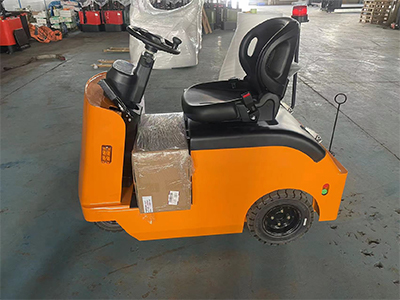
(2) Sealing of Electric Forklifts and Tractors
1. Basic principles of sealing: The sealing of logistics handling machinery is carried out on the premise of meeting the requirements for use. The following principles should be followed: D adjust first, then seal, and use old to seal new, in order to facilitate urgent needs@ The sealed machinery should have been out of factory for less than five years and have not been used for two consecutive years.
2. Requirements for Sealing D: Sealing machinery shall be stored in a centralized and decentralized manner, with management units and personnel implemented and registered for account establishment@ Battery forklifts and tractors should remove the battery for storage. The removed battery should be charged and discharged according to regulations and adjusted for use as much as possible;
3. During mechanical sealing, maintenance should be carried out according to the specified maintenance cycle to ensure good technical performance;
4. Sealed machinery should be stored in the machinery warehouse, securely supported, neatly placed, 2cm above the ground, and covered with plastic sheeting;
5. The sealed machinery shall be powered on and started once a year, with each time no less than 1 hour;
6. The machinery sealed between electric forklifts and tractors can be appropriately extended for repair and maintenance intervals based on the quality changes detected.
-
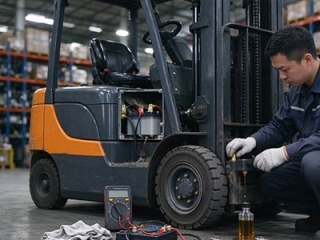 Reliability Of Newnewton Warehouse Forklifts For Heavy-Duty ShiftsWarehouse forklift reliability relies on industrial parts, reinforced frames and factory durability tests. Proper operation and maintenance reduce unexpected downtime.
Do you like ?0
Read more -
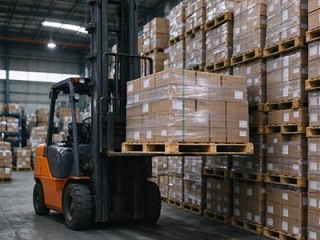 Forklift Configuration Strategy For Dense Warehousing, Warehouse ForkliftDense warehousing needs matched forklifts besides racks. Reach and trilateral stackers fit different layouts, coordinate aisle, load curve and floor for smooth handling.
Do you like ?0
Read more -
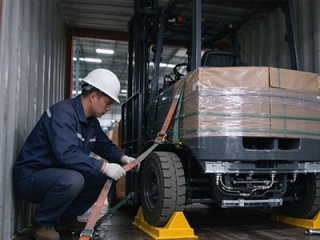 Full Container Supply For Export Forklifts, Forklift ManufacturerBulk forklift orders for overseas can ship by FCL or LCL. Newnewton FCL offers stable freight, safer packing and mixed models for large purchases.
Do you like ?0
Read more -
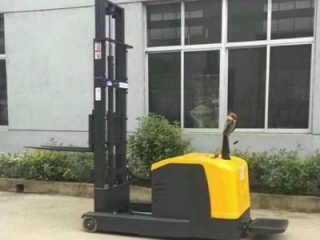 Stand-on Reach Stacker For Narrow Aisle Stacking, Mast Reach StructureStand-on reach stackers feature sliding masts that stay outside racks. They boost storage density in narrow aisles and require flat floors and standard pallets.
Do you like ?0
Read more -
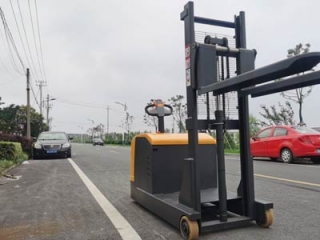 Stand-on Counterbalance Stacker For Various Pallets, Why No Leg RestrictionCounterbalance stackers have no front outriggers, using rear counterweight to avoid pallet interference. They fit various odd pallets yet need wider warehouse aisles.
Do you like ?0
Read more -
 Custom Walk-Behind Counterbalance Stacker | Non-Standard ModificationsStandard walk-behind counterbalance stackers struggle with non-standard pallets and tight aisles. Customize load, lift, forks and structure, share working conditions for safe design.
Do you like ?0
Read more








