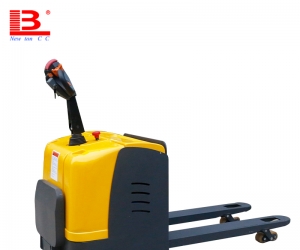
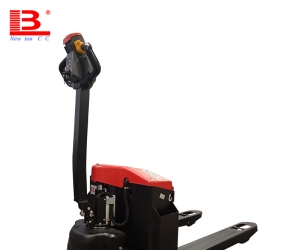
How To Adjust Locked Brake On Electric Walk Pallet Jack In 3 Simple Steps
When the wheel of your electric pallet jack is locked by stuck brakes, do not drag the vehicle forcefully, otherwise tires and driving motor will be seriously damaged. If you are wondering How To Adjust Locked Brake On Electric Walk Pallet Jack, follow these three steps. You can also carry out routine maintenance to avoid this fault: regularly inspect brake clearance, do not keep the brake tightened for long-term parking in damp warehouses, and operate the brake handle every several days to prevent brake pads from rusting and sticking, so as not to delay production and damage the truck.
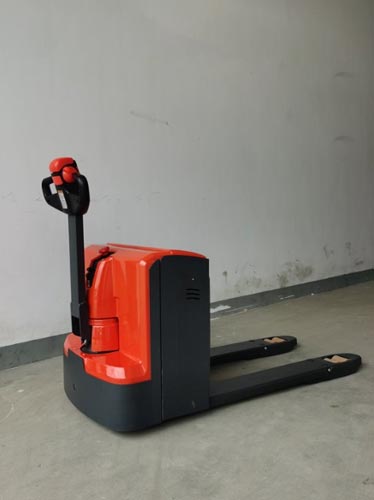
Step 1: Cut off power and jack up wheels to release locking resistance Disconnect the main power supply to prevent accidental motor startup during maintenance. Use supporting blocks to lift the locked wheel off the ground and remove the pressure of vehicle weight. Tap the brake housing lightly to separate bonded brake pads. Begin adjustment only when the wheel spins freely manually.
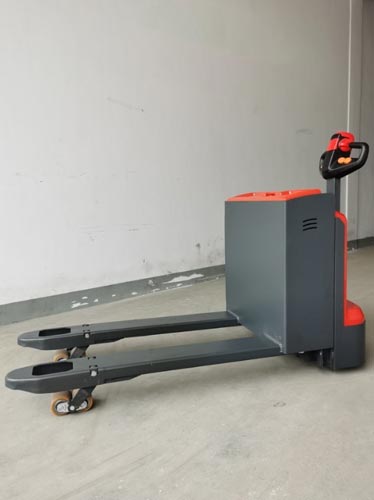
Step 2: Fine-tune the screw to expand the brake gap Find the brake assembly at the motor tail with a flathead adjusting screw on the outside. Clockwise tightening makes the brake tighter; turn counterclockwise half a circle to one circle to enlarge the gap between brake pads. Rotate the wheel manually while adjusting until it runs smoothly without friction resistance. Important: Excessive clearance will lead to poor parking braking for your Walk-behind Full Electric Pallet Truck.
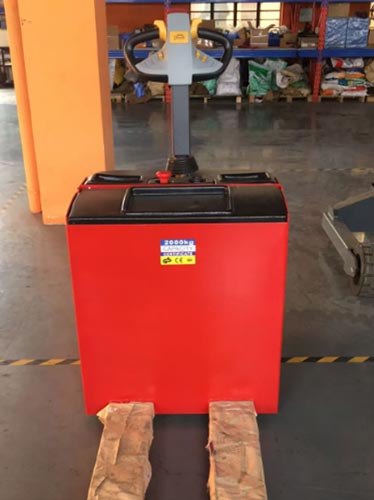
Step 3: Test repeatedly and calibrate brake tightness Turn on the power and drive short distances without load to check running status. Squeeze the power-off brake handle repeatedly to test braking effect. The wheel rotates freely after releasing the handle and parks stably immediately after braking. If locking happens again, loosen the screw slightly; if the brake fails to hold, tighten the screw a little bit.
If the problem persists after adjustment, contact me for free one-on-one technical guidance for your Walk-behind Full Electric Pallet Truck.
-
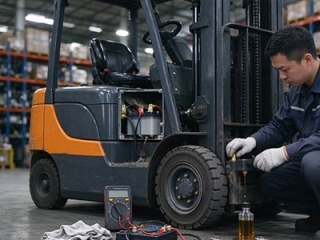 Reliability Of Newnewton Warehouse Forklifts For Heavy-Duty ShiftsWarehouse forklift reliability relies on industrial parts, reinforced frames and factory durability tests. Proper operation and maintenance reduce unexpected downtime.
Do you like ?0
Read more -
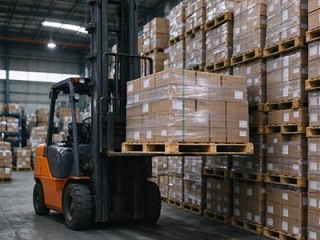 Forklift Configuration Strategy For Dense Warehousing, Warehouse ForkliftDense warehousing needs matched forklifts besides racks. Reach and trilateral stackers fit different layouts, coordinate aisle, load curve and floor for smooth handling.
Do you like ?0
Read more -
 Full Container Supply For Export Forklifts, Forklift ManufacturerBulk forklift orders for overseas can ship by FCL or LCL. Newnewton FCL offers stable freight, safer packing and mixed models for large purchases.
Do you like ?0
Read more -
 Stand-on Reach Stacker For Narrow Aisle Stacking, Mast Reach StructureStand-on reach stackers feature sliding masts that stay outside racks. They boost storage density in narrow aisles and require flat floors and standard pallets.
Do you like ?0
Read more -
 Stand-on Counterbalance Stacker For Various Pallets, Why No Leg RestrictionCounterbalance stackers have no front outriggers, using rear counterweight to avoid pallet interference. They fit various odd pallets yet need wider warehouse aisles.
Do you like ?0
Read more -
 Custom Walk-Behind Counterbalance Stacker | Non-Standard ModificationsStandard walk-behind counterbalance stackers struggle with non-standard pallets and tight aisles. Customize load, lift, forks and structure, share working conditions for safe design.
Do you like ?0
Read more