5 Main Reasons For Hydraulic Oil Leakage On Mobile Scissor Lift Platform
Does your lifting platform seemingly run fine yet leak hydraulic oil from time to time? Oil waste raises maintenance costs, and leaks also lead to weak lifting power, unstable operation and interrupted aerial work. To resolve this issue completely, we first analyze Causes of Oil Leakage on Electric Lifting Platform, paired with targeted repair solutions for smooth equipment operation.
1. Worn & Aging Cylinder Oil Seals
Inner and outer rubber oil seals block hydraulic oil inside cylinders. Long-term frequent extension, grease corrosion and outdoor sun exposure harden, crack the seals and destroy elasticity. Rust spots or scratches on piston rods continuously scrape seals during reciprocating movement, causing oil dripping down rods. If the platform sits idle for a long time, seals shrink and deform, leading to instant leakage after restart.
Solution
Disassemble cylinders and install original oil-resistant nitrile seals. Polish scratches and rust off piston rods, fit dust-proof sleeves, and apply anti-rust grease regularly to extend seal service life.
2. Cracked Hydraulic Hoses & Failed Fitting Seals
Hoses bend repeatedly with scissor arms during lifting, creating tiny cracks and pinholes from rubber fatigue. Built-in O-rings at hose ends age under constant vibration; loose bolts leave gaps for oil seepage. UV rays and rain accelerate hose degradation for outdoor units, triggering leaks much faster.
Solution
Replace damaged hoses with high-pressure flexible hydraulic pipes, swap all fitting O-rings, and fasten threads to standard torque to avoid thread slipping or insufficient sealing.
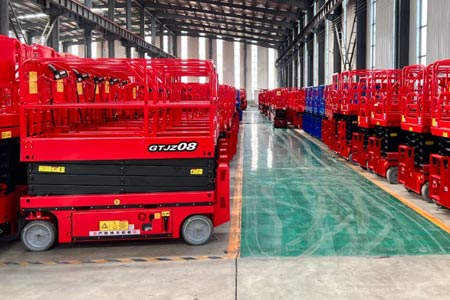
3. Degraded Gaskets on Oil Tanks & Pumps Cause Pressure Leakage
High temperature and grease erode gaskets on tank covers and pump flanges, resulting in hardening, deformation and gaps. Clogged tank breather valves build abnormal internal pressure and push oil out through sealing gaps. Overfilling hydraulic oil causes expansion overflow after lifting, which is often misdiagnosed as cylinder leakage.
Solution
Fit thickened oil-resistant gaskets, unclog breather valves, fill hydraulic oil to marked standard level, and regularly tighten tank cover bolts.
4. Improper Hydraulic Oil & Excessively High Oil Temperature Worsen Leaks
Cheap thin inferior hydraulic oil has poor sealing performance and easily penetrates seal gaps. Long-time full-load suspension at height or repeated continuous lifting sharply raises oil temperature and reduces viscosity, aggravating leakage. High heat also accelerates aging of rubber seals and hoses, creating a vicious cycle of constant oil leaks.
Solution
Switch to original anti-wear hydraulic oil. Avoid prolonged full-load lifting suspension; pause operation intermittently under high-temperature working conditions to reduce wear on rubber sealing components.
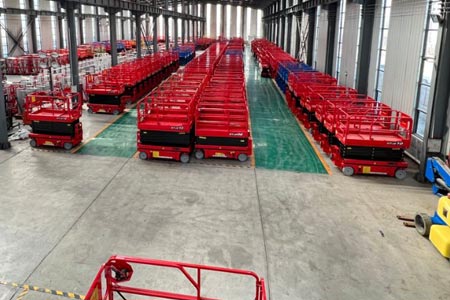
5. Structural Leaks From Collision Damage & Misaligned Assembly
Impacts during transport and movement slightly deform cylinders, valves and pipelines. Misaligned fitting during cylinder or hose maintenance crushes and warps sealing parts to form gaps. Bent scissor frames pull pipelines and tear hoses via repeated bending stress.
Solution
Straighten deformed scissor arms, add protective covers during equipment transport, and align hydraulic components accurately during maintenance to prevent crushed seals.
The Mobile Scissor Aerial Work Platform serves as reliable daily handling equipment. Follow this troubleshooting guide to eliminate oil leakage, extend equipment service life and cut long-term repair expenses. Feel free to reach out with any further questions!
-
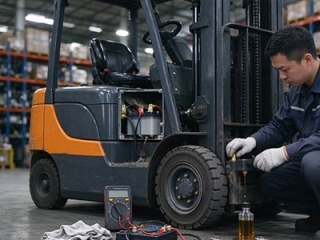 Reliability Of Newnewton Warehouse Forklifts For Heavy-Duty ShiftsWarehouse forklift reliability relies on industrial parts, reinforced frames and factory durability tests. Proper operation and maintenance reduce unexpected downtime.
Do you like ?0
Read more -
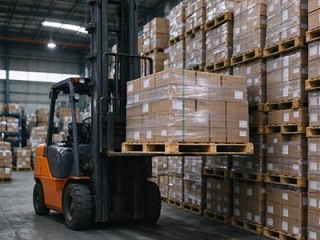 Forklift Configuration Strategy For Dense Warehousing, Warehouse ForkliftDense warehousing needs matched forklifts besides racks. Reach and trilateral stackers fit different layouts, coordinate aisle, load curve and floor for smooth handling.
Do you like ?0
Read more -
 Full Container Supply For Export Forklifts, Forklift ManufacturerBulk forklift orders for overseas can ship by FCL or LCL. Newnewton FCL offers stable freight, safer packing and mixed models for large purchases.
Do you like ?0
Read more -
 Stand-on Reach Stacker For Narrow Aisle Stacking, Mast Reach StructureStand-on reach stackers feature sliding masts that stay outside racks. They boost storage density in narrow aisles and require flat floors and standard pallets.
Do you like ?0
Read more -
 Stand-on Counterbalance Stacker For Various Pallets, Why No Leg RestrictionCounterbalance stackers have no front outriggers, using rear counterweight to avoid pallet interference. They fit various odd pallets yet need wider warehouse aisles.
Do you like ?0
Read more -
 Custom Walk-Behind Counterbalance Stacker | Non-Standard ModificationsStandard walk-behind counterbalance stackers struggle with non-standard pallets and tight aisles. Customize load, lift, forks and structure, share working conditions for safe design.
Do you like ?0
Read more