Difference Between Electric Stacker and Pallet Truck for Warehouse Use
For business owners planning to purchase warehouse handling equipment, it is essential to tell different models apart clearly. Many buyers struggle to know the subtle Difference Between Electric Stacker and Pallet Truck, and mixing them up may lead to wrong procurement and wasted budget.
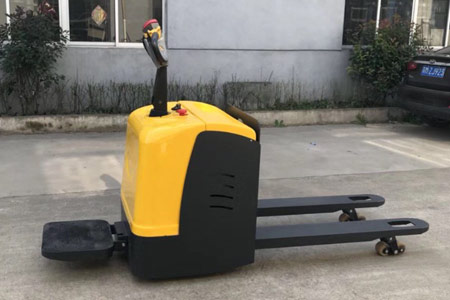
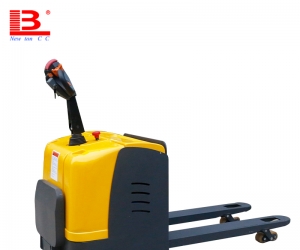
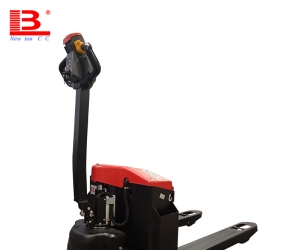
An electric pallet truck focuses purely on horizontal cargo transportation. It only moves pallets from one spot to another, ideal for short-distance workshop turnover and flat-ground loading tasks. It only lifts goods slightly off the ground for traveling purpose, without the capability of high-level stacking on warehouse racks.
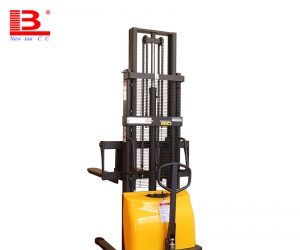
By contrast, an electric stacker is fitted with a tall lifting mast. It performs both short-distance transportation and high-rise stacking, easily placing goods onto second or third-tier shelves. It serves as a multi-functional machine combining regular handling and vertical stacking.
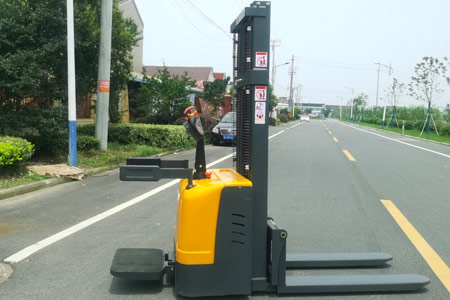
There are also clear differences in structural design. A regular electric pallet truck has a low-profile body without a mast, compact size, small wheels and low chassis. It works perfectly on epoxy floors and cement ground, moving flexibly even in extremely narrow aisles. Equipped with an upright lifting mast, a warehouse electric stacker has a taller body and heavier weight for better stability. Mast height can be customized from 1.6 meters to over 6 meters, specially built for high rack storage scenarios.
Their application scenarios are also divided distinctly. Electric pallet trucks are widely used in e-commerce sorting, production line transfer and retail warehouse flat transportation, perfect for sites that only need horizontal handling without high stacking. Electric stackers suit warehouses with high shelves, layered storage and three-dimensional space utilization, replacing manual stacking and greatly saving labor while maximizing warehouse capacity.
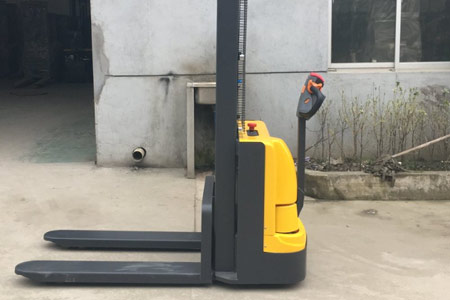
In short, the Warehouse-Exclusive Electric Forklift series includes these two typical models with totally different functions. Once you understand their core differences, you can select the right machine according to your actual warehouse layout, avoiding unnecessary spending and idle equipment while perfectly matching daily storage and handling demands.
-
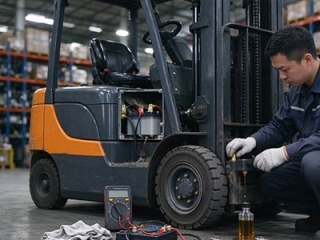 Reliability Of Newnewton Warehouse Forklifts For Heavy-Duty ShiftsWarehouse forklift reliability relies on industrial parts, reinforced frames and factory durability tests. Proper operation and maintenance reduce unexpected downtime.
Do you like ?0
Read more -
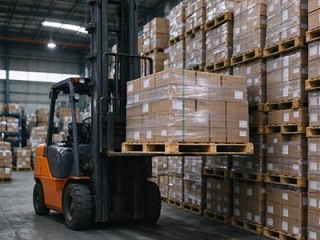 Forklift Configuration Strategy For Dense Warehousing, Warehouse ForkliftDense warehousing needs matched forklifts besides racks. Reach and trilateral stackers fit different layouts, coordinate aisle, load curve and floor for smooth handling.
Do you like ?0
Read more -
 Full Container Supply For Export Forklifts, Forklift ManufacturerBulk forklift orders for overseas can ship by FCL or LCL. Newnewton FCL offers stable freight, safer packing and mixed models for large purchases.
Do you like ?0
Read more -
 Stand-on Reach Stacker For Narrow Aisle Stacking, Mast Reach StructureStand-on reach stackers feature sliding masts that stay outside racks. They boost storage density in narrow aisles and require flat floors and standard pallets.
Do you like ?0
Read more -
 Stand-on Counterbalance Stacker For Various Pallets, Why No Leg RestrictionCounterbalance stackers have no front outriggers, using rear counterweight to avoid pallet interference. They fit various odd pallets yet need wider warehouse aisles.
Do you like ?0
Read more -
 Custom Walk-Behind Counterbalance Stacker | Non-Standard ModificationsStandard walk-behind counterbalance stackers struggle with non-standard pallets and tight aisles. Customize load, lift, forks and structure, share working conditions for safe design.
Do you like ?0
Read more