
When to Use Four-Way Travel Forklift | Application Scope Guide
Many business owners may think the Electric Four-Way Forklift looks similar to ordinary forklifts, yet it comes at a much higher price. Some prefer buying standard models instead. However, this type of forklift has irreplaceable advantages in specific scenarios.

Many users wonder When to Use a Four-Way Travel Forklift. It becomes essential when warehouse aisles are extremely narrow, leaving no room for regular forklifts to turn around. Standard forklifts require a large turning radius and are not suitable for densely arranged racks. They may easily collide with shelves and goods, or even fail to enter narrow lanes at all. This four-way model travels forward, backward, left and right in straight lines, no turning or U-turn required. It moves sideways along narrow aisles smoothly.

It is the ideal choice for handling long profiles such as pipes, steel materials, wood beams and aluminum profiles. The forklift travels sideways while keeping long goods parallel to the aisle. It transports loads straight without sharp turns, ensuring stable carrying and greatly improving safety, avoiding unstable center of gravity and shaking during operation.
It also fits indoor multi-area layouts, narrow gateways, and sites with limited access to elevators and small doorways. Regular forklifts struggle to pass through small entrances and partitioned passages due to large turning space demands. This four-way model switches freely between straight and side travel, moving horizontally through narrow doors and elevator cabins without turning the whole body.

In conclusion, the Application Scope of Full Electric Four-Way Forklift is quite extensive with unique functional strengths. You can judge whether to choose a standard forklift or four-way model according to your actual warehouse layout and working conditions, making a more reasonable procurement decision.
-
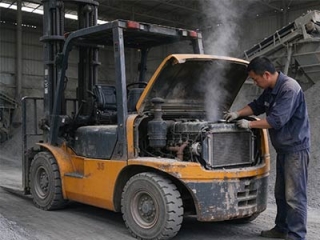 Heavy-Duty Diesel Forklift High Temperature Troubleshooting Guide3.5t diesel forklifts often overheat when handling sand and stone. Inspect cooling system step by step: radiator, belt, shroud, thermostat and water pump.
Do you like ?0
Read more -
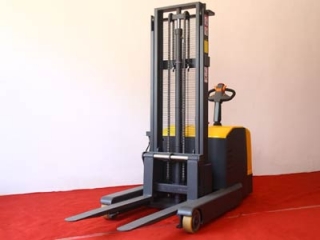 How to Choose Stackers for High-Level Access in Raw Material WarehouseRide-on reach stackers save aisle space for high racks. Good visibility for bulk raw materials. Select based on load curve and residual high-lift capacity.
Do you like ?0
Read more -
 Rain Operation Rules for Legless Walk-Behind Counterbalance StackerLegless walkie counterbalance stackers are not waterproof. Only short-time use in light rain. Stop operation in heavy rain and follow safety rules on wet floors.
Do you like ?0
Read more -
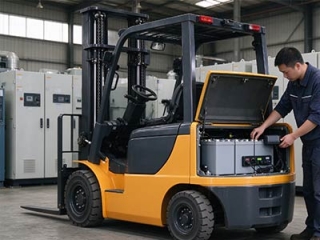 Avoid Hidden Costs When Buying Four-Wheel Electric Counterbalance ForkliftDo not compare only prices for four-wheel electric forklifts. Confirm load, lift, battery and warranty in quotes to avoid downgraded parts and extra charges.
Do you like ?0
Read more -
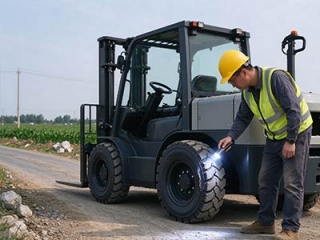 Tire Wear Inspection Methods for Rough-Terrain Walk Pallet TruckOff-road walkie pallet trucks face frequent tyre wear. Check tread pattern, sidewall damage and uneven wear to prevent skidding and blowouts.
Do you like ?0
Read more -
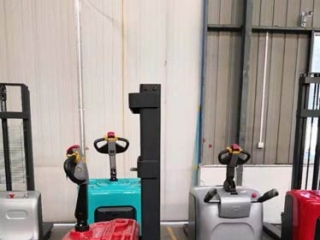 Full Electric Stacker With Foot Platform | Aisle Selection GuideWarehouse planning often overlooks turning radius. Stand-on stackers need extra aisle space. Insufficient clearance causes poor turning and reduces storage efficiency.
Do you like ?0
Read more








