
What are the applicable scope of the hand-push hydraulic stacker?
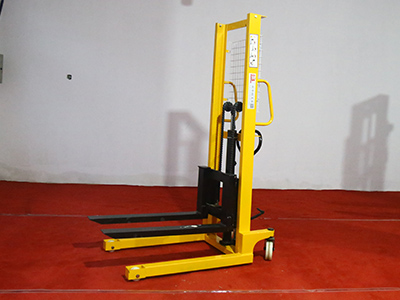
In many cognitions, we have a fixed way of thinking about such mechanical things, and this determines where we use them wherever we see them. Take our hand operated forklift as an example. We generally know for sure that such a car is used in some transportation and warehouses. We see it in too many places and think it is useful. Otherwise, some of our hand-push hydraulic stackers can also be used in other places. Forklift manufacturers will popularize them for us, so that we can also know and choose.
The hand operated forklift is actually an industrial vehicle. The utility model has the advantages of simple structure, flexible control, good fretting and high explosion-proof safety performance. It is suitable for operations in narrow passages and limited spaces, and is an ideal equipment for palletizing in high-bay warehouses and workshops. It can be widely used in petroleum, chemical, pharmaceutical, textile, military, paint, pigment, coal and other industries, as well as places containing explosive mixtures such as ports, railways, freight yards, warehouses, etc., and can enter cabins, carriages and containers for palletized goods Forklift manufacturers tell us that these are all available for this car, which has a wider range of uses than we know, and is an indispensable equipment in every place.
The hand operated forklift adopts advanced spraying technology, which improves the appearance of the product and increases the durability of the manual hydraulic stacker. A pollution-free manual hydraulic stacker has the characteristics of smart transportation, flexible operation and small turning radius. It is suitable for production factories, production workshops, warehouses, stations, docks, airports and other places, especially suitable for sites with fire and explosion-proof requirements, such as printing workshops, various oil depots, chemical warehouses and other places. Combined with pallets, containers, etc., unitized transportation can be realized, which not only reduces collisions, scratches, etc., but also reduces workload and stacking area, greatly improving work efficiency.
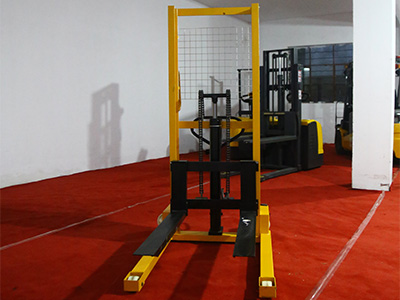
To a certain extent, the manual hydraulic stacker has replaced the electric one, because some of its unloading equipment is still very perfect, and the crowd is also considered from this aspect, so it is not compared by the electric vehicle.
-
 Reliability Of Newnewton Warehouse Forklifts For Heavy-Duty ShiftsWarehouse forklift reliability relies on industrial parts, reinforced frames and factory durability tests. Proper operation and maintenance reduce unexpected downtime.
Do you like ?0
Read more -
 Forklift Configuration Strategy For Dense Warehousing, Warehouse ForkliftDense warehousing needs matched forklifts besides racks. Reach and trilateral stackers fit different layouts, coordinate aisle, load curve and floor for smooth handling.
Do you like ?0
Read more -
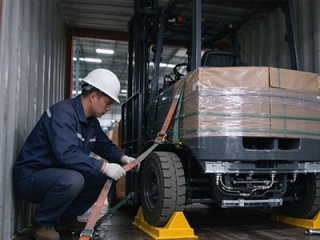 Full Container Supply For Export Forklifts, Forklift ManufacturerBulk forklift orders for overseas can ship by FCL or LCL. Newnewton FCL offers stable freight, safer packing and mixed models for large purchases.
Do you like ?0
Read more -
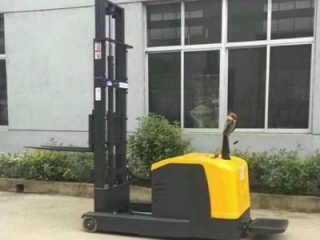 Stand-on Reach Stacker For Narrow Aisle Stacking, Mast Reach StructureStand-on reach stackers feature sliding masts that stay outside racks. They boost storage density in narrow aisles and require flat floors and standard pallets.
Do you like ?0
Read more -
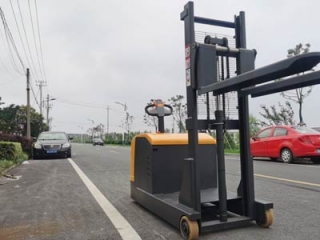 Stand-on Counterbalance Stacker For Various Pallets, Why No Leg RestrictionCounterbalance stackers have no front outriggers, using rear counterweight to avoid pallet interference. They fit various odd pallets yet need wider warehouse aisles.
Do you like ?0
Read more -
 Custom Walk-Behind Counterbalance Stacker | Non-Standard ModificationsStandard walk-behind counterbalance stackers struggle with non-standard pallets and tight aisles. Customize load, lift, forks and structure, share working conditions for safe design.
Do you like ?0
Read more








