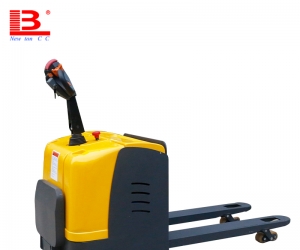
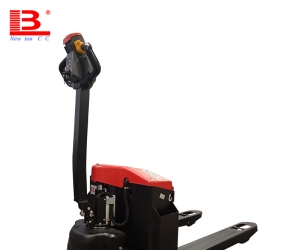
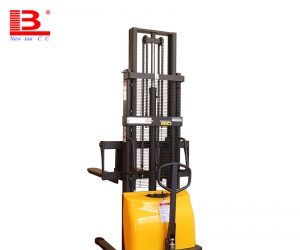
Industrial forklift play a very important role in the logistics system and are the main force in cargo handling equipment. The heavy duty forklift is a wheeled vehicle that uses the fork as the main pick-up device, lifts the cargo by the hydraulic lifting mechanism, and realizes the horizontal conveyance of the cargo by the tire-type driving system.
Heavy duty forklift classification 1——powerplant
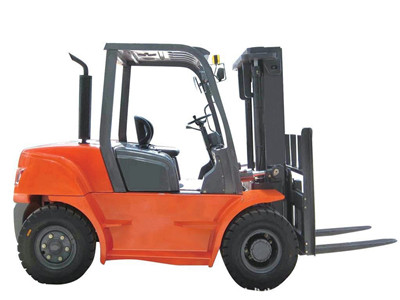
1. Internal combustion industrial forklift
Heavy duty forklift powered by a four-stroke reciprocating piston internal combustion engine. Internal combustion industrial forklifts can be divided into:
(1) gasoline engine heavy duty forklift
(2) diesel heavy duty forklift
(3) liquefied petroleum gas industrial forklift
(4) natural gas industrial forklift
The internal combustion type heavy duty forklift has strong power and fast running speed, and can work continuously for a long time. However, noise, vibration, exhaust gas and other serious pollution, not suitable for operation in the warehouse.
2, electric heavy duty forklift
The electric motor is used as the power source and the battery is the energy source. According to the different power supply methods, it is divided into:
(1) battery industrial forklift
(2) (AC) towed industrial forklifts, towed forklifts due to limited range of activities, so the application is rare. However, its power, reliability, maintainability, and economical use are superior to battery heavy duty forklifts.
The battery industrial forklift has low power and low running speed. It can't be operated continuously for a long time, but it has no exhaust emission, and the noise and vibration are small, which is suitable for the operation in the warehouse.
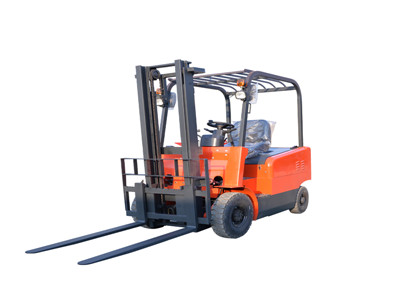
3. Manual industrial forklift
The manual hydraulic industrial forklift mainly relies on the operator to provide power, and the lifting weight is relatively small, but the purchase cost, maintenance cost is low, the operation is flexible, and the maintenance is convenient. In recent years, in some distribution enterprises, the chain enterprise application speed is relatively fast. Our commonly known land cows fall into this category.
Industrial forklift classification 2——Structure
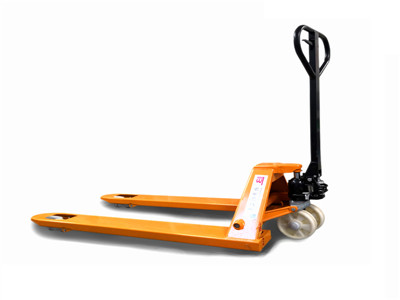
1. Balance heavy duty forklift
The fork is located at the front of the car body. It is used to balance the weight of the cargo and has a balance weight at the rear of the car. It is called a heavy duty forklift. The counterweight heavy duty forklift is the earliest, most mature and most widely used industrial forklift model.
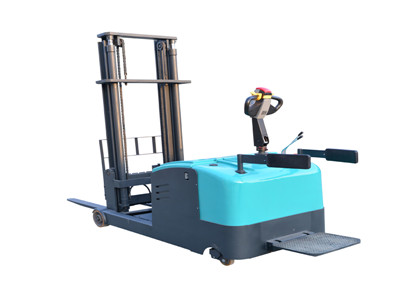
2, legged industrial forklift
The fork with the casters extending in front of the car body keeps the car body stable, the fork is located directly above the leg, and the industrial forklift that can rely on the door frame for lifting movement. These heavy duty forklift trucks have a small leg height and can be inserted into the bottom of the cargo together with the fork, so it is called a legged industrial forklift.
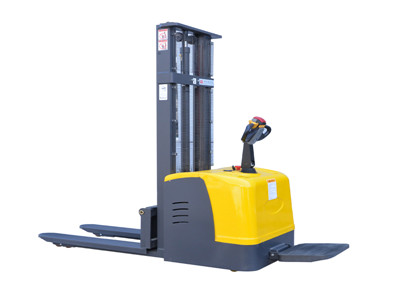
3, forward heavy duty forklift
A forward-moving heavy duty forklift is an industrial forklift that can move the door frame or fork forward and backward. Use the fork of the gantry or the fork to take the goods, and the gantry or the fork moves backwards during operation, so that the center of gravity of the cargo is located between the front and rear wheels, and the operation is stable; the gantry or the fork moves forward and the vehicle's own weight is maintained. The center of gravity of the car body is relatively stable at work, and it does not need to balance the counterweight, so the weight is light. The forward-moving heavy duty forklift truck with the same tonnage is much smaller than the self-important heavy duty forklift truck.
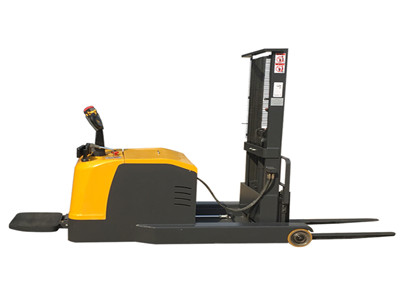
With the strengthening of cost control, the improvement of transfer efficiency and the maturity of technology, intelligent and automated industrial forklifts will gradually become popular.
-
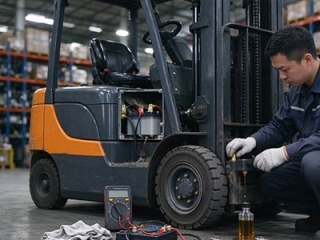 Reliability Of Newnewton Warehouse Forklifts For Heavy-Duty ShiftsWarehouse forklift reliability relies on industrial parts, reinforced frames and factory durability tests. Proper operation and maintenance reduce unexpected downtime.
Do you like ?0
Read more -
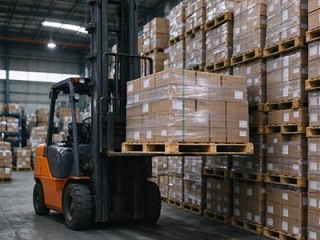 Forklift Configuration Strategy For Dense Warehousing, Warehouse ForkliftDense warehousing needs matched forklifts besides racks. Reach and trilateral stackers fit different layouts, coordinate aisle, load curve and floor for smooth handling.
Do you like ?0
Read more -
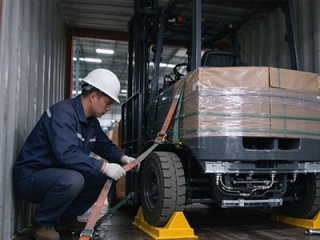 Full Container Supply For Export Forklifts, Forklift ManufacturerBulk forklift orders for overseas can ship by FCL or LCL. Newnewton FCL offers stable freight, safer packing and mixed models for large purchases.
Do you like ?0
Read more -
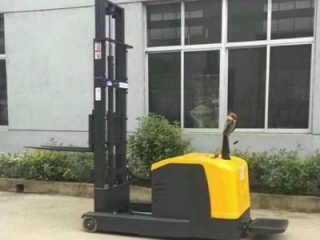 Stand-on Reach Stacker For Narrow Aisle Stacking, Mast Reach StructureStand-on reach stackers feature sliding masts that stay outside racks. They boost storage density in narrow aisles and require flat floors and standard pallets.
Do you like ?0
Read more -
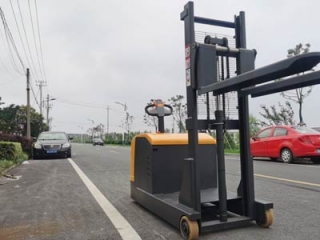 Stand-on Counterbalance Stacker For Various Pallets, Why No Leg RestrictionCounterbalance stackers have no front outriggers, using rear counterweight to avoid pallet interference. They fit various odd pallets yet need wider warehouse aisles.
Do you like ?0
Read more -
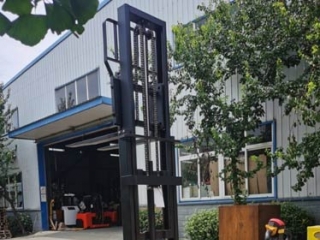 Custom Walk-Behind Counterbalance Stacker | Non-Standard ModificationsStandard walk-behind counterbalance stackers struggle with non-standard pallets and tight aisles. Customize load, lift, forks and structure, share working conditions for safe design.
Do you like ?0
Read more