
Can Stand-On Pallet Trucks Climb Ramps? Key Safety Rules to Remember
When operating a forklift, it is essential to fully understand the working environment, especially the ramp angle. Failure to clarify this can lead to dangerous accidents during transportation, such as cargo collapse or forklift rollback. This is a common concern: Can stand-on pallet trucks climb ramps?
First, the answer is not absolute. Each forklift has different parameters, and the overall performance and components vary, leading to different performance on ramps. Generally, the parameters of stand-on warehouse pallet trucks will clearly indicate the maximum ramp angle the vehicle can handle, so you don’t need to worry too much about the passing requirements.
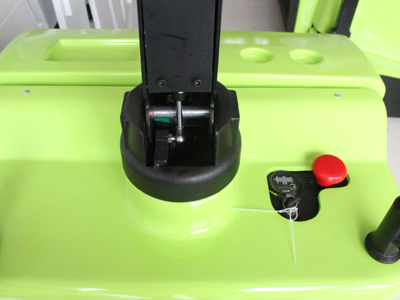
However, there are important operational taboos you must keep in mind to avoid accidents and problems:
When driving uphill with cargo, keep the forks facing uphill and the vehicle facing downhill to prevent the cargo from tilting forward and falling.
When driving on ramps, always maintain the lowest speed. Sudden acceleration or hard braking is strictly prohibited.
Avoid stopping, turning, reversing, or U-turning on ramps as much as possible. Otherwise, the vehicle’s high center of gravity may cause rollover or backward sliding risks.
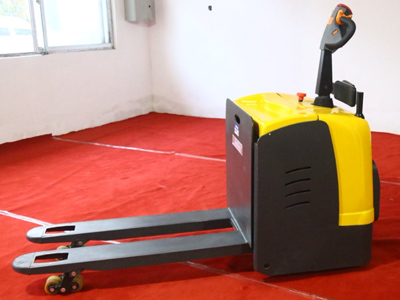
Overloading when going uphill is forbidden. Uphill driving already puts high demands on the forklift’s braking capacity. Overloading will significantly reduce climbing ability and may even lead to rollover risks.
In short, if you need to use stand-on electric pallet trucks on ramps, make sure to prepare in advance. This will allow you to use the trucks safely and efficiently under standardized operations, improving your work efficiency and solving the problems of difficult and unsafe ramp transportation.
-
 Reliability Of Newnewton Warehouse Forklifts For Heavy-Duty ShiftsWarehouse forklift reliability relies on industrial parts, reinforced frames and factory durability tests. Proper operation and maintenance reduce unexpected downtime.
Do you like ?0
Read more -
 Forklift Configuration Strategy For Dense Warehousing, Warehouse ForkliftDense warehousing needs matched forklifts besides racks. Reach and trilateral stackers fit different layouts, coordinate aisle, load curve and floor for smooth handling.
Do you like ?0
Read more -
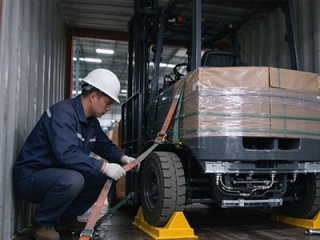 Full Container Supply For Export Forklifts, Forklift ManufacturerBulk forklift orders for overseas can ship by FCL or LCL. Newnewton FCL offers stable freight, safer packing and mixed models for large purchases.
Do you like ?0
Read more -
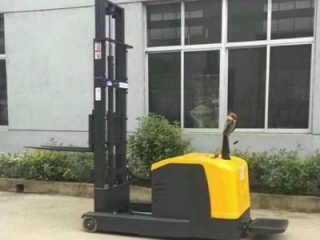 Stand-on Reach Stacker For Narrow Aisle Stacking, Mast Reach StructureStand-on reach stackers feature sliding masts that stay outside racks. They boost storage density in narrow aisles and require flat floors and standard pallets.
Do you like ?0
Read more -
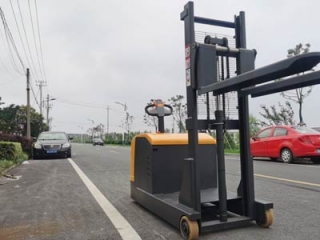 Stand-on Counterbalance Stacker For Various Pallets, Why No Leg RestrictionCounterbalance stackers have no front outriggers, using rear counterweight to avoid pallet interference. They fit various odd pallets yet need wider warehouse aisles.
Do you like ?0
Read more -
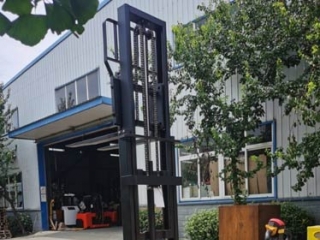 Custom Walk-Behind Counterbalance Stacker | Non-Standard ModificationsStandard walk-behind counterbalance stackers struggle with non-standard pallets and tight aisles. Customize load, lift, forks and structure, share working conditions for safe design.
Do you like ?0
Read more








