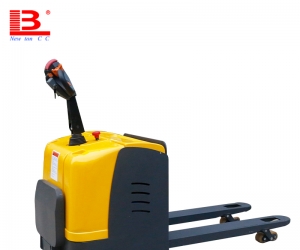
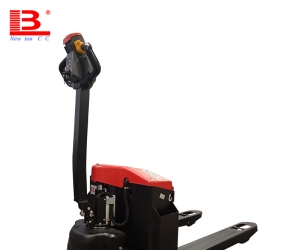
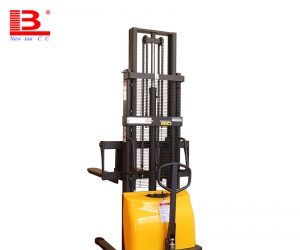
Heavy Duty Electric Stacker | Stacker vs Counterbalance Forklift
Many buyers confuse Heavy Duty Electric Stacker with counterbalance forklifts, as both are designed for heavy load handling. To choose cost-effective equipment that fits your site, it is necessary to clarify the Difference Between Heavy Stacker and Counterbalance Forklift.
In terms of structure, heavy duty stackers adopt front outrigger support for stable loading. It works well in narrow aisles and only needs about 3 meters of passage width to turn, with no need to adjust warehouse layout.
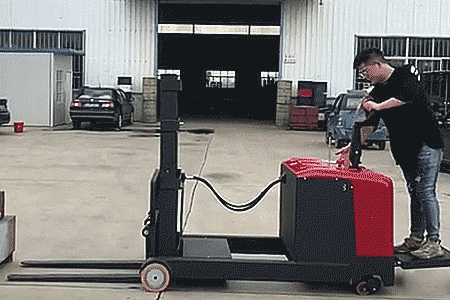
Counterbalance forklifts come with rear counterweight design, offering stronger trafficability. It adapts to trucks and platform operations, yet it has a large turning radius and requires much wider aisles.
In actual usage, heavy duty stackers focus on high-level stacking and indoor warehouse turnover, ideal for standard pallet goods. It is good at vertical stacking, but not suitable for rough roads or non-platform loading.
Counterbalance forklifts are more versatile, capable of truck loading, outdoor construction sites and uneven ground operation. However, its stacking height is limited, more suitable for horizontal handling and loading work.
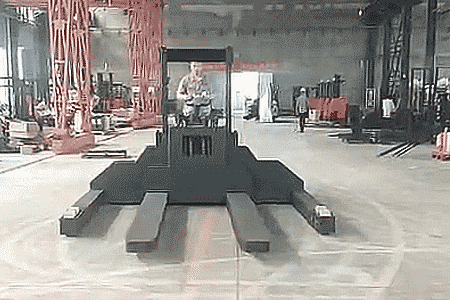
In load and lifting performance, heavy duty electric stackers support higher lifting height for 4–6 meter high racks with moderate load capacity. Counterbalance forklifts feature heavier rated load but lower mast height, excelling in heavy-duty adaptability rather than ultra-high stacking.
Understand the differences clearly, you can select the right model according to your warehouse space, working height and actual handling demands.
-
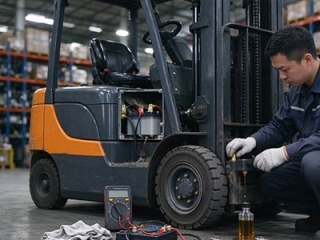 Reliability Of Newnewton Warehouse Forklifts For Heavy-Duty ShiftsWarehouse forklift reliability relies on industrial parts, reinforced frames and factory durability tests. Proper operation and maintenance reduce unexpected downtime.
Do you like ?0
Read more -
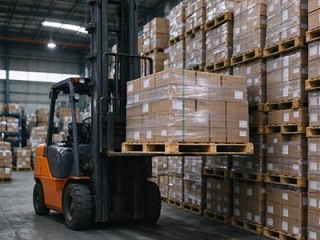 Forklift Configuration Strategy For Dense Warehousing, Warehouse ForkliftDense warehousing needs matched forklifts besides racks. Reach and trilateral stackers fit different layouts, coordinate aisle, load curve and floor for smooth handling.
Do you like ?0
Read more -
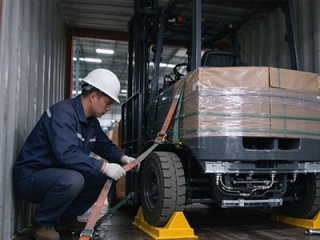 Full Container Supply For Export Forklifts, Forklift ManufacturerBulk forklift orders for overseas can ship by FCL or LCL. Newnewton FCL offers stable freight, safer packing and mixed models for large purchases.
Do you like ?0
Read more -
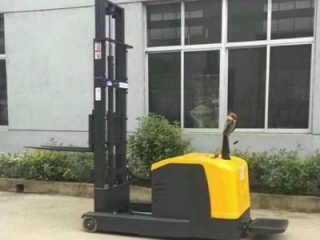 Stand-on Reach Stacker For Narrow Aisle Stacking, Mast Reach StructureStand-on reach stackers feature sliding masts that stay outside racks. They boost storage density in narrow aisles and require flat floors and standard pallets.
Do you like ?0
Read more -
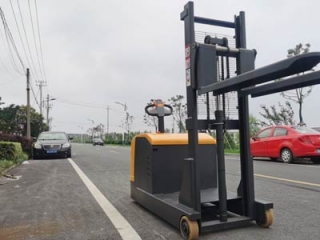 Stand-on Counterbalance Stacker For Various Pallets, Why No Leg RestrictionCounterbalance stackers have no front outriggers, using rear counterweight to avoid pallet interference. They fit various odd pallets yet need wider warehouse aisles.
Do you like ?0
Read more -
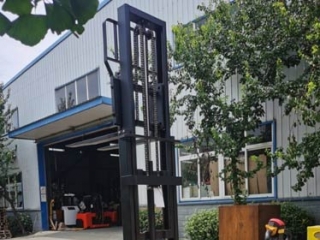 Custom Walk-Behind Counterbalance Stacker | Non-Standard ModificationsStandard walk-behind counterbalance stackers struggle with non-standard pallets and tight aisles. Customize load, lift, forks and structure, share working conditions for safe design.
Do you like ?0
Read more