How to use the observation method to diagnose the hydraulic system failure?
The failure rate of the hydraulic equipment of the electric pallet stacker is generally high due to design, manufacturing, transportation, installation, commissioning, and other reasons at the initial stage. With the extension of operation time and continuous troubleshooting, the failure rate will gradually decrease. In the late stage of equipment use, failures gradually increase due to wear, corrosion, aging, fatigue, etc. during long-term use. The pallet stacker manufacturer told everyone that only in the middle of use, equipment failures tend to be random and stable, which is the effective working life of the equipment.
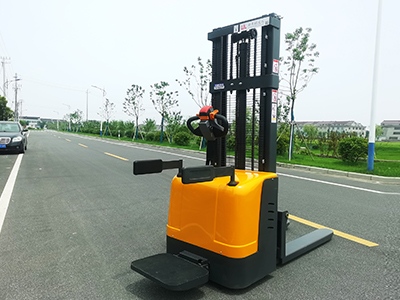
However, if improper use or potential failures are not diagnosed and eliminated in a timely manner, even during the effective life of the electric pallet stacker, sudden and serious failures cannot be ruled out. Therefore, careful study and summary of equipment faults and diagnostic techniques are the prerequisite for correct and timely troubleshooting of various faults. The most basic methods of fault diagnosis commonly used include observation method, logical analysis method, and instrument detection method. Observation method and logical analysis method are qualitative analysis methods. Today, the pallet stacker manufacturer will tell you how to use the observation method to diagnose the hydraulic system failure of the electric pallet stacker.
The pallet stacker manufacturer told everyone that observation and diagnosis is actually an initial intuitive diagnostic method that combines the observation, rattle, auditory, and touch sensations of human eyes, nose, ears, and hands with daily experience to analyze whether there are faults, fault locations, and causes in hydraulic equipment. Generally, any fault will be accompanied by various abnormal symptoms before it evolves into a major fault. Several common symptoms are as follows: First, abnormal vibration and noise occur on electric pallet stacker, especially at hydraulic components such as hydraulic pumps, hydraulic motors, and hydraulic valves. Secondly, there is a decrease in the working speed, pressure reduction, and weakness of hydraulic actuators (hydraulic motors, hydraulic cylinders); Third, there are phenomena such as excessive temperature rise of the working oil and a smell of burnt smoke. Fourth, pipeline damage and looseness occur. Fifth, there are phenomena such as deterioration of pressure oil and decrease of oil tank level in electric pallet stacker.
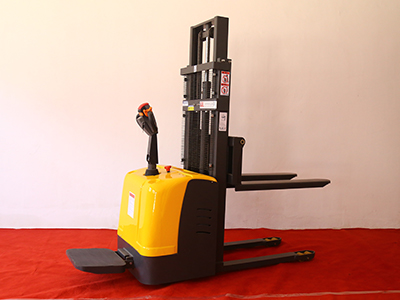
The pallet stacker manufacturer told everyone that as long as these phenomena are frequently inspected and observed, it is not difficult to detect them. Taking these on-site phenomena as first-hand information, based on experience, relevant charts, and data, it is possible to quickly determine whether there is a fault, its nature, location, and specific cause of the fault, and then proceed to take measures to eliminate the fault of the electric pallet stacker or to prevent the occurrence of major faults.
-
 Reliability Of Newnewton Warehouse Forklifts For Heavy-Duty ShiftsWarehouse forklift reliability relies on industrial parts, reinforced frames and factory durability tests. Proper operation and maintenance reduce unexpected downtime.
Do you like ?0
Read more -
 Forklift Configuration Strategy For Dense Warehousing, Warehouse ForkliftDense warehousing needs matched forklifts besides racks. Reach and trilateral stackers fit different layouts, coordinate aisle, load curve and floor for smooth handling.
Do you like ?0
Read more -
 Full Container Supply For Export Forklifts, Forklift ManufacturerBulk forklift orders for overseas can ship by FCL or LCL. Newnewton FCL offers stable freight, safer packing and mixed models for large purchases.
Do you like ?0
Read more -
 Stand-on Reach Stacker For Narrow Aisle Stacking, Mast Reach StructureStand-on reach stackers feature sliding masts that stay outside racks. They boost storage density in narrow aisles and require flat floors and standard pallets.
Do you like ?0
Read more -
 Stand-on Counterbalance Stacker For Various Pallets, Why No Leg RestrictionCounterbalance stackers have no front outriggers, using rear counterweight to avoid pallet interference. They fit various odd pallets yet need wider warehouse aisles.
Do you like ?0
Read more -
 Custom Walk-Behind Counterbalance Stacker | Non-Standard ModificationsStandard walk-behind counterbalance stackers struggle with non-standard pallets and tight aisles. Customize load, lift, forks and structure, share working conditions for safe design.
Do you like ?0
Read more