Lithium vs Lead-acid Forklift: How to Choose the Right Forklift
Purchasing teams often only focus on the upfront price when buying electric forklifts. However, blindly chasing low prices will increase your long-term operating costs. Many buyers struggle to figure out how to choose the right forklift between two mainstream battery types: lead-acid and lithium batteries.
Although a lithium battery forklift costs extra $2950 to $4430 initially, it can save around $147700 over a 5-year lifespan compared with lead-acid models. Understanding the core differences between two battery types helps you reduce hidden expenses effectively.
Initial Purchase Cost
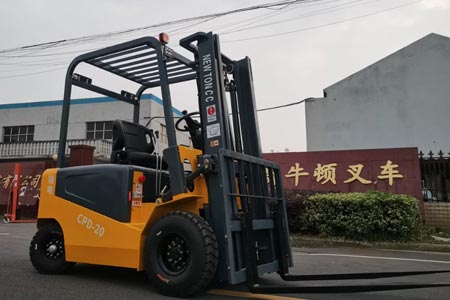
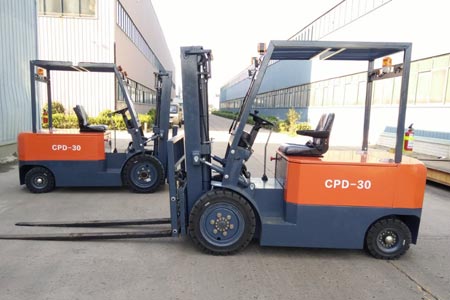
Lead-acid Battery Forklift A 3-ton model costs approximately $7385 to $8862. The battery accounts for $2216 to $2954. It features a lower entry price and attracts most budget-first buyers.
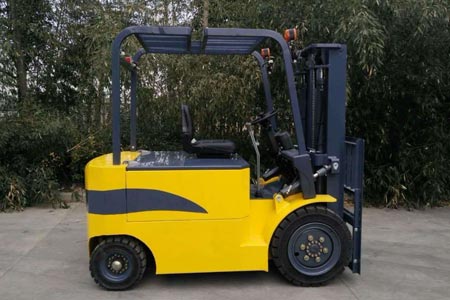
Lithium Battery Forklift A 3-ton model costs about $10339 to $13293. The lithium battery alone costs $5908 to $7385. The initial investment is $2950-$4430 higher than lead-acid versions.
5-Year Full Lifecycle Cost (The Most Critical Part)
Total Cost of 10 Lead-acid Battery Forklifts (5 Years): Around $1181600
Battery Replacement: Needs replacement every 2.5 years, twice within 5 years, costing $22155
Maintenance Labor: Daily water refilling and terminal cleaning, annual cost $4431; $22155 in 5 years
Energy Waste: 70% charging efficiency, causing $8862 extra power fees in five years
Downtime Loss: Long charging time and frequent battery swaps, bringing $14770 working hour loss
Special Charging Room: Requires ventilated dedicated area, renovation and layout cost over $7385
Total Cost of 10 Lithium Battery Forklifts (5 Years): $443100 - $590800
Battery Replacement: 8-10 years service life, zero replacement needed in 5 years, save $22155
Maintenance: No water filling or regular cleaning required, labor cost close to zero, save $22155
Energy Consumption: 95% high charging efficiency, save $8862 electricity fees within 5 years
Operation Downtime: Fast charging and opportunity charging supported, no battery swapping downtime, save $14770
Charging Layout: Dedicated charging room is unnecessary, charge anytime anywhere, save over $7385
Additional Performance Comparison
Except for overall costs, lead-acid battery forklift also falls behind in multiple indicators. Lithium batteries have longer cycle life, faster charging speed, more stable output and safer performance. They adapt to high-frequency intensive warehouse operations perfectly.
In conclusion, never judge electric forklifts only by initial price. Always calculate the full-lifecycle cost. Choosing lithium battery forklifts is the most cost-effective solution for long-term warehouse material handling.
-
 Reliability Of Newnewton Warehouse Forklifts For Heavy-Duty ShiftsWarehouse forklift reliability relies on industrial parts, reinforced frames and factory durability tests. Proper operation and maintenance reduce unexpected downtime.
Do you like ?0
Read more -
 Forklift Configuration Strategy For Dense Warehousing, Warehouse ForkliftDense warehousing needs matched forklifts besides racks. Reach and trilateral stackers fit different layouts, coordinate aisle, load curve and floor for smooth handling.
Do you like ?0
Read more -
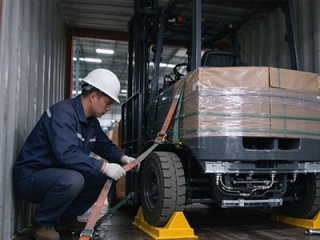 Full Container Supply For Export Forklifts, Forklift ManufacturerBulk forklift orders for overseas can ship by FCL or LCL. Newnewton FCL offers stable freight, safer packing and mixed models for large purchases.
Do you like ?0
Read more -
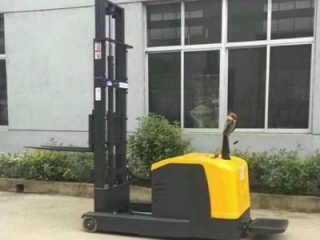 Stand-on Reach Stacker For Narrow Aisle Stacking, Mast Reach StructureStand-on reach stackers feature sliding masts that stay outside racks. They boost storage density in narrow aisles and require flat floors and standard pallets.
Do you like ?0
Read more -
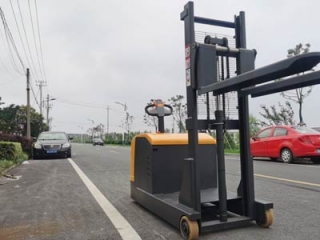 Stand-on Counterbalance Stacker For Various Pallets, Why No Leg RestrictionCounterbalance stackers have no front outriggers, using rear counterweight to avoid pallet interference. They fit various odd pallets yet need wider warehouse aisles.
Do you like ?0
Read more -
 Custom Walk-Behind Counterbalance Stacker | Non-Standard ModificationsStandard walk-behind counterbalance stackers struggle with non-standard pallets and tight aisles. Customize load, lift, forks and structure, share working conditions for safe design.
Do you like ?0
Read more