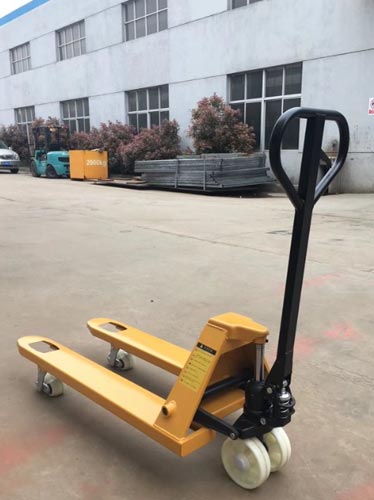
Maintenance Standard & Oil Change Cycle of Manual Hydraulic Pallet Truck
Many warehouse operators make a common mistake when using Manual Hydraulic Pallet Truck: neglecting regular hydraulic oil replacement. This accelerates component wear, shortens service life, and leads to frequent repairs and high replacement costs over time. If you wonder How Often To Change Hydraulic Oil For Manual Pallet Jack, there are two standard service cycles for reference.
Cycle 1: High-frequency Heavy-duty Working Conditions (Daily Intensive Loading, Two-shift Operation, E-commerce & Logistics Warehouses)
Hydraulic oil replacement interval: Every 12 months Applicable scenarios: Handling more than 50 pallets per day, heavy cargo loads, damp outdoor warehouses, dusty processing workshops. Reason: Frequent pumping creates sustained high temperature and pressure inside the hydraulic system. Dust and moisture easily contaminate the oil, turning it dark and viscous, clogging valve spools and causing jerky lifting movement.
Cycle 2: Low-frequency Light-load Working Conditions (Retail Stores, Small Storage Rooms, Minimal Daily Transport)
Hydraulic oil replacement interval: Every 24 months Applicable scenarios: Less than 20 pallets handled daily, dry indoor storage, light small goods, occasional use only. Reason: The hydraulic system bears low working load with slow oil degradation and little foreign contamination, so the oil service cycle can be doubled.
Emergency Oil Replacement Warning Signs
Replace hydraulic oil right away once any of the following issues occur:
Milky cloudy emulsified oil caused by water intrusion (common in humid warehouses);
Dark oil mixed with metallic debris and slight external oil leakage on cylinders;
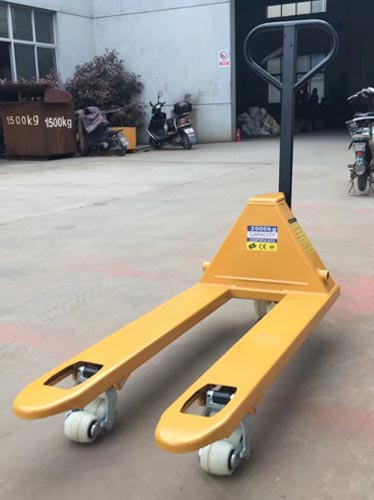
Stiff pumping resistance, drastically slowed lifting speed and weak lifting even with empty load;
Pallet forks drop rapidly after releasing the handle due to failed pressure retention.
Below are practical maintenance tips for the hydraulic system of the Manual Hydraulic Pallet Truck to extend oil service life:
Keep the warehouse dry; avoid leaving pallet jacks outdoors in rain to prevent oil emulsification;
Never overload the truck to reduce long-term high-pressure wear on the hydraulic pump;
Regularly clean the dustproof area of the pump to stop dust from entering and contaminating hydraulic oil.
Feel free to contact us if you have any questions!
-
 Reliability Of Newnewton Warehouse Forklifts For Heavy-Duty ShiftsWarehouse forklift reliability relies on industrial parts, reinforced frames and factory durability tests. Proper operation and maintenance reduce unexpected downtime.
Do you like ?0
Read more -
 Forklift Configuration Strategy For Dense Warehousing, Warehouse ForkliftDense warehousing needs matched forklifts besides racks. Reach and trilateral stackers fit different layouts, coordinate aisle, load curve and floor for smooth handling.
Do you like ?0
Read more -
 Full Container Supply For Export Forklifts, Forklift ManufacturerBulk forklift orders for overseas can ship by FCL or LCL. Newnewton FCL offers stable freight, safer packing and mixed models for large purchases.
Do you like ?0
Read more -
 Stand-on Reach Stacker For Narrow Aisle Stacking, Mast Reach StructureStand-on reach stackers feature sliding masts that stay outside racks. They boost storage density in narrow aisles and require flat floors and standard pallets.
Do you like ?0
Read more -
 Stand-on Counterbalance Stacker For Various Pallets, Why No Leg RestrictionCounterbalance stackers have no front outriggers, using rear counterweight to avoid pallet interference. They fit various odd pallets yet need wider warehouse aisles.
Do you like ?0
Read more -
 Custom Walk-Behind Counterbalance Stacker | Non-Standard ModificationsStandard walk-behind counterbalance stackers struggle with non-standard pallets and tight aisles. Customize load, lift, forks and structure, share working conditions for safe design.
Do you like ?0
Read more