Small and medium-sized factories often use manual hydraulic pallet trucks for daily material handling.After long-term use, problems like slow lifting, oil leakage, or stiff movement are common.With proper daily maintenance, you can greatly extend its service life and reduce repairs.Today we share 5 manual pallet truck maintenance tips to keep your equipment in top condition.
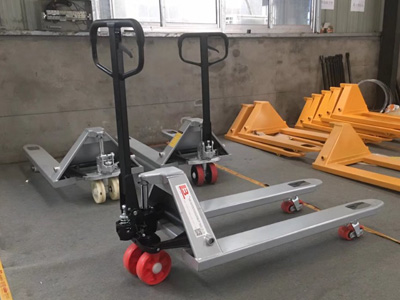
1. Daily Cleaning & Timely Decontamination
Manual hydraulic pallet trucks are exposed to dust, oil, and debris every day, especially under the forks and in wheel gaps.Spend 5 minutes each day wiping the forks, cylinder, and handle, and cleaning debris from the wheels.This prevents dust from entering the hydraulic system and bearings, avoiding component wear and reducing future breakdowns.
2. Regularly Check & Replace Hydraulic Oil
The hydraulic system is the core of the pallet truck.Low or deteriorated oil causes weak lifting and leakage.
Check hydraulic oil level monthly and refill with the same grade if low.
Change hydraulic oil every 6 months and clean the tank to avoid blockages.This ensures smooth lifting and reduces cylinder wear.
3. Inspect Wheels & Bearings, Lubricate on Time
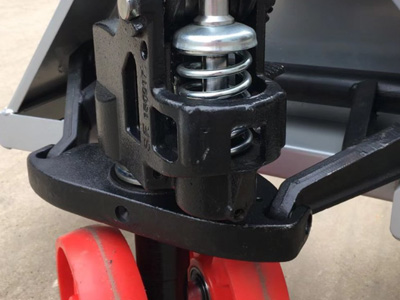
Mobility and stability depend on wheels and bearings.
Check wheels weekly for wear, deformation, or rough rotation; replace worn wheels promptly.
Lubricate wheel bearings and steering shaft monthly to reduce friction.This makes pushing easier and extends wheel life.
4. Avoid Overloading & Follow Standard Operation
Overloading severely damages the hydraulic cylinder and forks, causing failure, deformation, or oil leakage.Always operate within the rated load.Insert forks fully into the pallet, keep loads stable, and avoid sudden stops or sharp turns to reduce equipment wear.
5. Proper Storage for Long-Term Idle
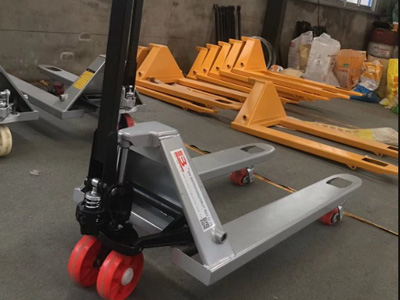
If the manual hydraulic pallet truck is not in use for a long time:
Lower forks to the minimum position to release residual pressure.
Clean the entire machine.
Store in a dry, ventilated area to prevent rust.
Do not place heavy objects on forks to avoid deformation.
These manual pallet truck maintenance tips are simple but effective.Following them will significantly reduce wear and extend the life of your equipment.For SMEs, this means safer operation, lower costs, and less frequent replacement or repair.
-
 Reliability Of Newnewton Warehouse Forklifts For Heavy-Duty ShiftsWarehouse forklift reliability relies on industrial parts, reinforced frames and factory durability tests. Proper operation and maintenance reduce unexpected downtime.
Do you like ?0
Read more -
 Forklift Configuration Strategy For Dense Warehousing, Warehouse ForkliftDense warehousing needs matched forklifts besides racks. Reach and trilateral stackers fit different layouts, coordinate aisle, load curve and floor for smooth handling.
Do you like ?0
Read more -
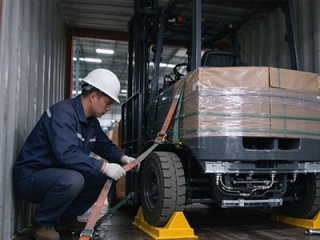 Full Container Supply For Export Forklifts, Forklift ManufacturerBulk forklift orders for overseas can ship by FCL or LCL. Newnewton FCL offers stable freight, safer packing and mixed models for large purchases.
Do you like ?0
Read more -
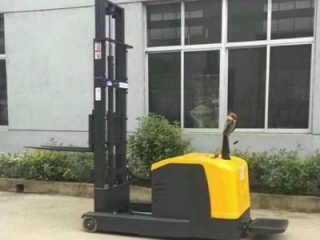 Stand-on Reach Stacker For Narrow Aisle Stacking, Mast Reach StructureStand-on reach stackers feature sliding masts that stay outside racks. They boost storage density in narrow aisles and require flat floors and standard pallets.
Do you like ?0
Read more -
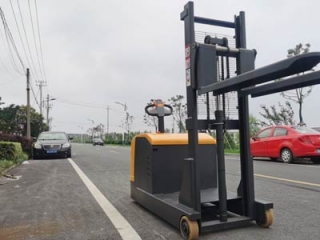 Stand-on Counterbalance Stacker For Various Pallets, Why No Leg RestrictionCounterbalance stackers have no front outriggers, using rear counterweight to avoid pallet interference. They fit various odd pallets yet need wider warehouse aisles.
Do you like ?0
Read more -
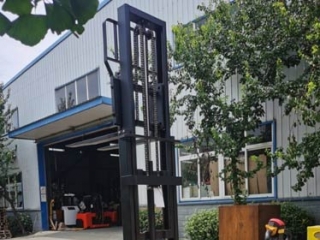 Custom Walk-Behind Counterbalance Stacker | Non-Standard ModificationsStandard walk-behind counterbalance stackers struggle with non-standard pallets and tight aisles. Customize load, lift, forks and structure, share working conditions for safe design.
Do you like ?0
Read more